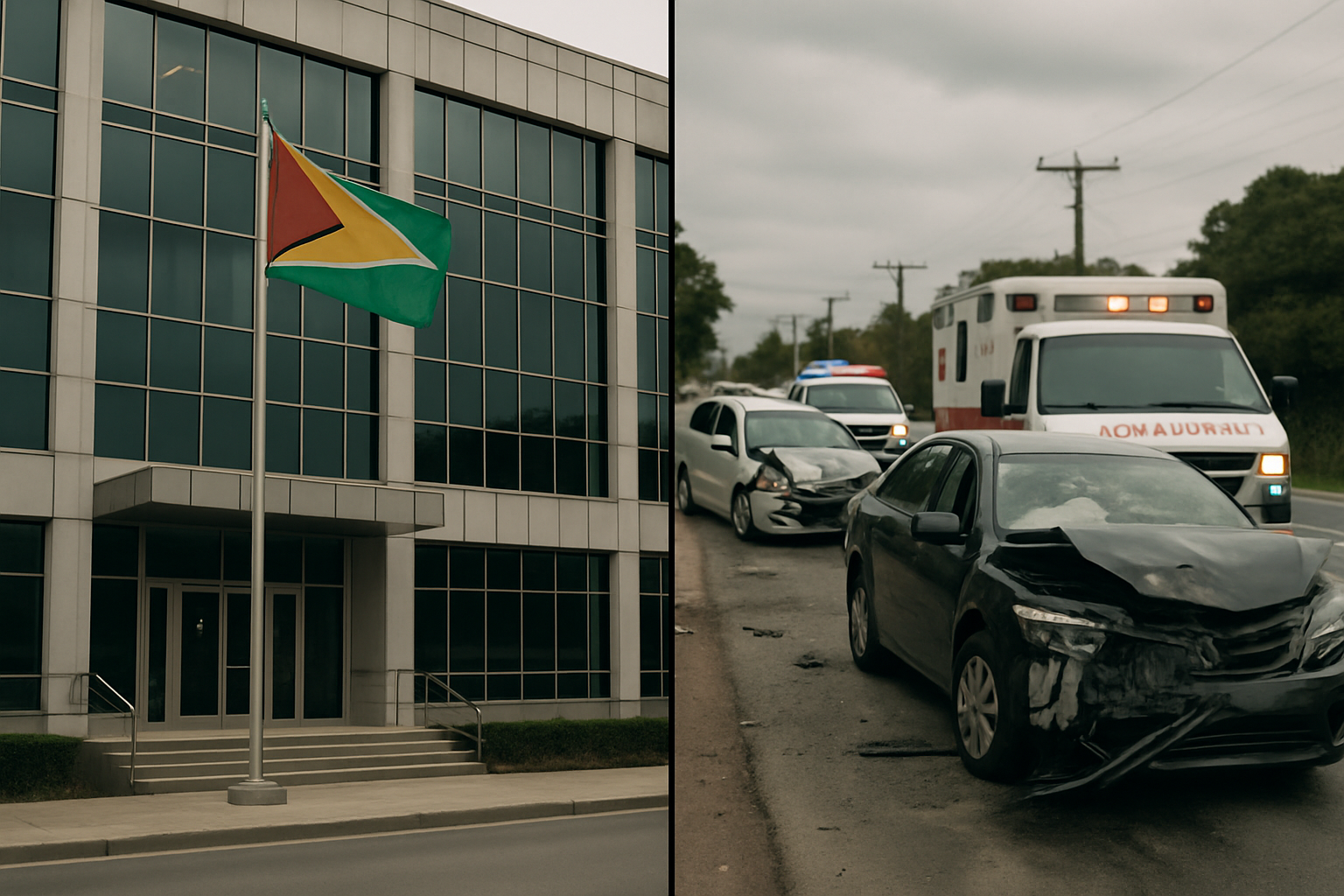
Guyana faces a stark paradox in March 2026: unprecedented economic opportunities creating new employment prospects while a mounting traffic safety crisis claims lives across the nation's roadways.
Senior Minister with Responsibility for Finance Dr. Ashni Singh emphasized Guyana's economic transformation during his recent BBC World Questions appearance, declaring the nation has created "an unprecedented wave of opportunities for all citizens, especially young people." However, this optimistic economic narrative unfolds against a troubling backdrop of fatal traffic accidents that have claimed multiple lives in recent days.
Economic Renaissance Amid Global Recognition
Dr. Singh's appearance on the BBC program, hosted by Jonny Dymond in Georgetown, positioned Guyana as a regional economic powerhouse alongside panelists including Opposition MP Tabitha Sarabo-Halley, Private Sector Commission Secretary Clinton Urling, and businesswoman Ayodele Dalgety Dean. The Finance Minister's message resonated with broader evidence of Guyana's remarkable economic evolution since 2020.
The transformation reflects Guyana's strategic positioning as the Caribbean's leading force in regional food security, a status Minister Zulfikar Mustapha confirmed during recent FAO discussions. This agricultural dominance, combined with significant oil discoveries and renewable energy investments, has created what Singh describes as an "era of opportunities" for the nation's youth.
Recent infrastructure developments underscore this economic momentum. The Wismar-Mackenzie Bridge project has reached 97% completion, representing a US$35 million investment targeting June 2026 opening that will transform connectivity for tens of thousands of residents in Region Ten. This milestone joins other major infrastructure achievements, including Guyana Power and Light's US$422 million project to expand transmission networks supporting the Gas-to-Energy project.
Traffic Safety Crisis Demands Immediate Action
Despite economic progress, Guyana confronts a serious traffic safety emergency that mirrors global transportation challenges documented across multiple continents throughout 2026. Recent fatal accidents highlight systemic vulnerabilities in the nation's road infrastructure and safety protocols.
Two individuals lost their lives in separate road accidents on Saturday, including Deryck Singh of St Lawrence, East Bank Essequibo, and Carlos Eliber, a 34-year-old Venezuelan construction worker from Mon Repos, East Coast Demerara. The first incident occurred around 21:10h on Greenwich Park Public Road involving multiple vehicles, while the second tragedy involved an electric bike collision.
Perhaps most concerning is the case of David Oliver Mentore, a 27-year-old motorcyclist found unconscious near the Bharrat Jagdeo Demerara River Bridge and Heroes Highway. Mentore later died at Diamond Regional Hospital, prompting family demands for a thorough investigation into the circumstances surrounding his death. His mother's anguished plea - "I want to know how my son died" - reflects broader community concerns about road safety and accident investigation protocols.
"The family remains suspicious about the circumstances and demands answers about how this young man lost his life."
— Family spokesperson for David Oliver Mentore
Global Transportation Safety Context
Guyana's traffic challenges align with documented global transportation safety patterns that have emerged throughout 2026. International data reveals motorcyclists represent 41% of traffic fatalities despite comprising a smaller percentage of road users, while inadequate infrastructure, enforcement gaps, and delayed emergency response convert survivable accidents into fatalities.
Countries implementing comprehensive safety measures have demonstrated significant improvements. Sweden's Vision Zero approach, Netherlands' Safe System methodology, and Australia's urban speed management programs provide templates for effective intervention. These models emphasize infrastructure investment in roads, lighting, and emergency response capabilities rather than solely relying on individual driver responsibility.
The economic impact of traffic deaths extends far beyond immediate human costs, with each fatality generating hundreds of thousands in lost productivity, medical expenses, and legal proceedings. For a developing economy like Guyana, these losses represent substantial opportunity costs that could otherwise support continued economic development.
Infrastructure Investment vs. Safety Requirements
Guyana's infrastructure renaissance, part of a documented $570+ billion global infrastructure surge in 2026, incorporates sophisticated technology integration including real-time monitoring, predictive maintenance, and climate adaptation measures. The Karpowership-GTI AutoCAD Laboratory launch demonstrates commitment to technical education advancement, while the Georgetown Seafront Resort and Convention Centre project represents the largest hospitality development in the Caribbean region.
However, these investments highlight the urgent need for comprehensive safety protocol integration alongside economic development initiatives. Modern infrastructure projects increasingly incorporate "build back better" principles designed for future rather than historical conditions, including enhanced drainage, weather-resistant materials, and backup safety systems.
Success factors identified in international infrastructure development include sustained political commitment, transparent governance, comprehensive stakeholder engagement, and adaptive management strategies. Most critically, projects must balance immediate economic benefits with long-term community safety and environmental sustainability.
Path Forward: Balancing Progress and Protection
Guyana's economic transformation provides unprecedented opportunities for addressing systemic transportation safety challenges. The nation's documented success in agricultural innovation, educational technology advancement, and infrastructure development demonstrates institutional capacity for comprehensive safety system reforms.
Prevention-first approaches have proven more effective and economical than crisis intervention strategies. Countries implementing comprehensive early intervention report improved community resilience and reduced long-term social service demands. For Guyana, this translates to immediate investments in road infrastructure, emergency response capabilities, traffic enforcement, and public education campaigns.
The convergence of economic opportunity and safety challenges represents a critical juncture for Guyana's development trajectory. The nation can leverage current economic momentum to build comprehensive transportation safety infrastructure that protects citizens while supporting continued growth.
International Cooperation and Knowledge Sharing
Guyana's positioning as a regional leader in economic development provides opportunities for international cooperation in transportation safety. The nation's success in agricultural transformation, educational innovation, and infrastructure development demonstrates capacity for adapting global best practices to local contexts.
Successful safety interventions require coordinated approaches addressing multiple risk factors simultaneously: adequate emergency response capabilities, improved road design, vehicle safety standards, driver education, and consistent traffic regulation enforcement. International cooperation through knowledge sharing, technical assistance, and coordinated procurement can accelerate implementation of proven safety measures.
As Finance Minister Singh emphasized the nation's unprecedented opportunities for young people, ensuring their safety on Guyana's roads becomes paramount to realizing the full potential of this economic transformation. The intersection of economic development and public safety will likely determine whether Guyana's current opportunities translate into sustainable, inclusive prosperity for all citizens.
The challenge ahead requires sustained political commitment, adequate resource allocation, and comprehensive community engagement to ensure that Guyana's era of unprecedented opportunities includes the fundamental right to safe transportation for all citizens.