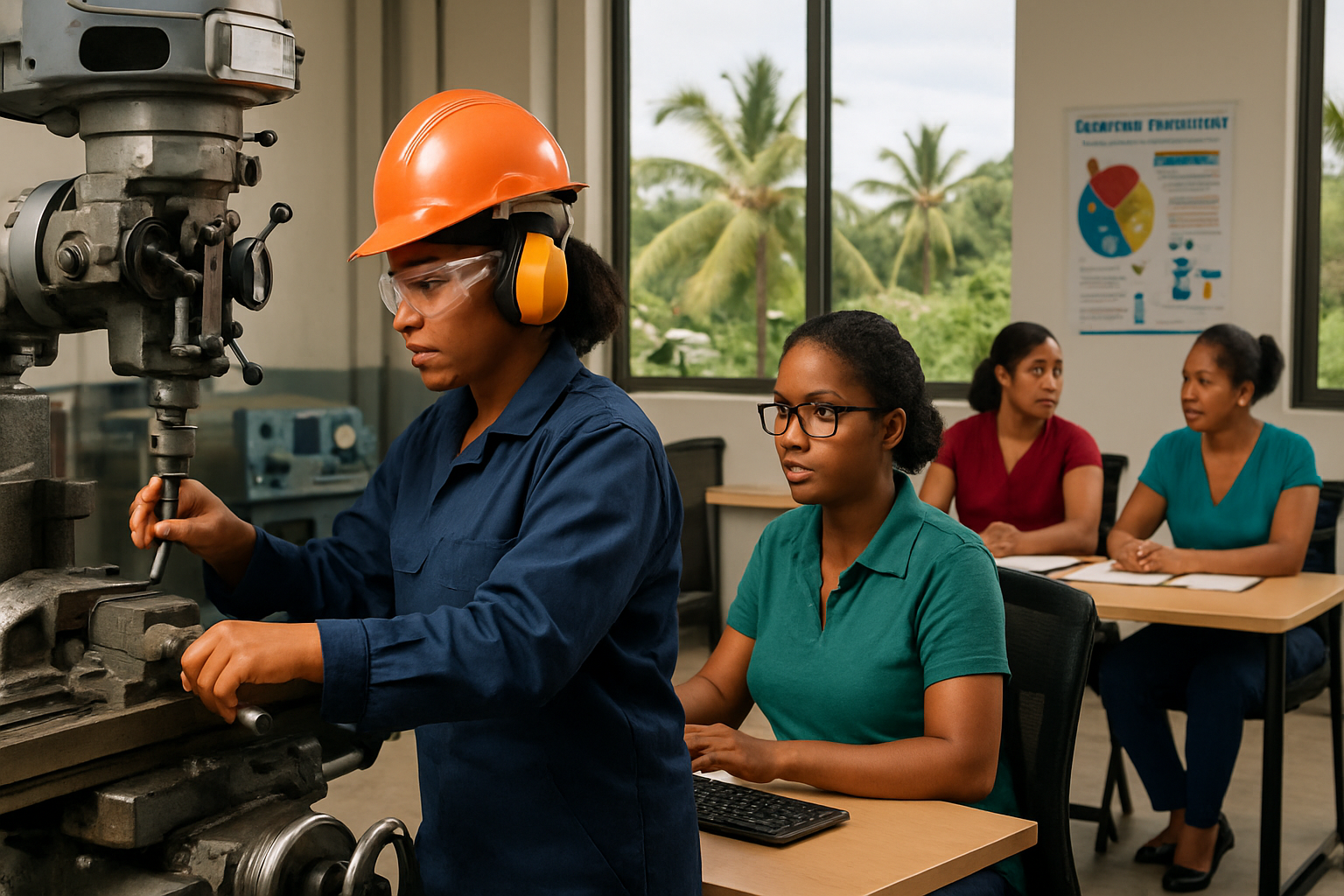
Guyana is experiencing a remarkable transformation in women's technical education, with over 9,300 women trained in traditionally male-dominated fields over the past five years, even as the nation confronts mounting concerns about antibiotic resistance creating potentially deadly superbugs.
Labour and Manpower Planning Minister Keoma Griffith revealed on the Starting Point podcast that women now comprise the majority of the more than 16,000 people trained through the Ministry's Board of Industrial Training (BIT) during the last five years. This represents a paradigm shift in Guyana's workforce development, positioning women as "direct participants in the transformation of Guyana" rather than passive beneficiaries of economic growth.
Breaking Barriers in Technical Fields
The success of Guyana's women's technical training program reflects broader global trends documented in Planet News' comprehensive analysis of international developments. Similar to initiatives seen in Cyprus, where Universal Life launched comprehensive reforestation programs as part of corporate social responsibility, and Mozambique's innovative biodiversity financing through the BCI-BIOFUND partnership, Guyana's approach demonstrates how developing nations are becoming solution providers rather than merely aid recipients.
"Guyanese women are now playing a direct role in the transformation of Guyana, with many of them leading in technical fields that were traditionally considered male-dominated," Minister Griffith emphasized, highlighting how this educational revolution extends beyond individual advancement to national development.
The program encompasses diverse technical specializations including:
- Industrial machinery operation and maintenance
- Computer-aided design and engineering
- Construction and infrastructure development
- Energy sector technical operations
- Agricultural technology and processing
Health Crisis Lurking Beneath Success
However, this educational triumph unfolds against a troubling backdrop of growing antibiotic resistance. Dr. Tariq Jagnarine, a family medicine and public health specialist, has issued stark warnings about the emergence of dangerous superbugs that could undermine decades of medical progress.
"Antibiotics are increasingly ineffective because they are used incorrectly and too often. Around the world, bacteria are becoming resistant to these medicines. This means infections that were once easy to treat are becoming increasingly difficult, and sometimes impossible, to cure."
— Dr. Tariq Jagnarine, Public Health Specialist
The antimicrobial resistance crisis represents a global phenomenon that Planet News has documented across multiple countries. From Romania's discovery of 5,000-year-old bacteria naturally resistant to modern antibiotics to Australia's drug-resistant gonorrhea "superbugs" spreading across Sydney, the challenge transcends national boundaries.
The Global Context of Progress and Peril
Guyana's dual narrative—educational advancement coupled with health system vulnerabilities—mirrors patterns observed worldwide during what experts term the "Therapeutic Revolution of 2026." This period has been characterized by remarkable medical breakthroughs alongside persistent infrastructure challenges.
The success of women's technical training in Guyana aligns with international trends toward prevention-first approaches in human capital development. Similar to Finland's educational reforms balancing academic achievement with psychological wellbeing, or Estonia's AI integration in medical training, Guyana's investment in women's technical skills represents proactive workforce development rather than reactive crisis management.
Yet the antibiotic resistance challenge demonstrates how everyday habits and healthcare practices can create systemic vulnerabilities. Dr. Jagnarine's warnings about "everyday habits making common infections harder to treat" echo concerns raised by healthcare professionals globally, from Costa Rica's specialized bacteria detection systems to Latvia's focus on preventive health screenings.
Economic and Social Implications
The economic impact of training over 9,300 women in technical fields extends far beyond individual employment opportunities. This represents a fundamental shift in Guyana's human capital development strategy, creating multiplier effects throughout the economy. Women trained in technical fields contribute to:
- Infrastructure development and modernization projects
- Energy sector expansion and renewable energy initiatives
- Manufacturing and industrial production
- Technology transfer and innovation capabilities
- Regional expertise development and knowledge sharing
The healthcare challenges, conversely, could undermine these gains if not addressed systematically. Antimicrobial resistance threatens not only individual health outcomes but also economic productivity, healthcare system sustainability, and international competitiveness.
Regional Leadership and International Cooperation
Guyana's approach to women's technical education has positioned the country as a regional leader in gender-inclusive workforce development. This success builds on previous achievements, including the implementation of 461,000+ health vouchers since 2024, which represented innovative public-private partnerships expanding healthcare access.
The nation's experience with healthcare voucher programs, as documented in Planet News' coverage, demonstrated the effectiveness of prevention-first approaches. Health Minister Dr. Frank Anthony's leadership in expanding access through partnerships with 67 private health facilities created a model for sustainable healthcare delivery that other Caribbean nations have begun to study.
However, the antibiotic resistance challenge requires international cooperation of a different magnitude. As global health experts have noted, bacteria do not respect national boundaries, and resistant strains can spread rapidly across populations and continents.
Technology Integration and Future Challenges
The success of women's technical training reflects Guyana's sophisticated approach to technology integration—what experts term "human-centered innovation." Rather than simply adopting external technologies, the program demonstrates thoughtful adaptation that preserves cultural values while building technical capabilities.
This approach mirrors successful technology integration documented globally, from Malaysia's AI-integrated Islamic schools to Singapore's WonderBot 2.0 heritage education programs. The key factor is maintaining human relationships and cultural sensitivity while leveraging technological advancement.
For addressing antibiotic resistance, similar integration principles apply. Effective solutions require combining advanced diagnostic capabilities, educational interventions, and community engagement strategies that respect local health practices while promoting evidence-based medical protocols.
Prevention-First Healthcare Strategy
The antimicrobial resistance challenge highlights the critical importance of prevention-first healthcare strategies that have proven successful globally during 2026. Countries implementing comprehensive prevention programs, from Montana's mobile crisis teams achieving 80% reduction in police mental health calls to Luxembourg's systematic community health education, have demonstrated superior cost-effectiveness compared to reactive treatment models.
For Guyana, addressing antibiotic resistance requires educational initiatives that parallel the success of women's technical training. This includes:
- Public education about appropriate antibiotic use
- Healthcare provider training on resistance prevention
- Community health worker deployment for medication management
- Integration of resistance awareness into technical training curricula
- Development of local diagnostic capabilities for resistant infections
Building Resilient Systems
The contrast between Guyana's educational success and health system vulnerabilities illustrates the complexity of sustainable development. Technical training achievements demonstrate the country's capacity for systematic human capital development, while antibiotic resistance challenges reveal areas requiring similar systematic attention.
Success in women's technical training provides a template for addressing health system challenges. The same principles that enabled over 9,300 women to enter technical fields—sustained political commitment, adequate resources, community engagement, and international cooperation—can be applied to antimicrobial resistance prevention.
The Board of Industrial Training's success in transforming educational access for women offers lessons for transforming healthcare approaches. Both require long-term vision, systematic implementation, cultural sensitivity, and measurement of outcomes beyond immediate outputs.
International Recognition and Future Prospects
Guyana's achievements in women's technical education have gained international recognition as part of global trends toward gender-inclusive development strategies. The country's approach demonstrates how developing nations can lead in specific areas while learning from international experience in others.
The healthcare challenges, similarly, position Guyana to contribute to global solutions if addressed proactively. Small nations often serve as laboratories for innovative approaches that can be scaled globally. Guyana's experience with health voucher programs and now women's technical training demonstrates this potential.
Moving forward, the key lies in applying the systematic approach that made women's technical training successful to the challenge of antibiotic resistance. This requires treating antimicrobial stewardship as essential infrastructure, comparable to the technical training infrastructure that has produced such remarkable results.
Conclusion: Integrating Success and Addressing Challenges
Guyana's experience in March 2026 encapsulates the broader global moment—remarkable progress in human development coupled with persistent systemic challenges requiring coordinated responses. The success in training over 9,300 women in technical fields demonstrates the country's capacity for transformative change when adequate resources, political commitment, and systematic approaches are applied.
The antibiotic resistance challenge represents an opportunity to apply these same principles to health system strengthening. As global health experts have noted, the window for effective action on antimicrobial resistance is narrowing, but the tools and knowledge exist for successful intervention.
The convergence of educational success and health system challenges in Guyana reflects broader international patterns during the "Therapeutic Revolution of 2026." Countries that successfully integrate prevention-first approaches, international cooperation, and human-centered technology are positioned to thrive in an increasingly complex global environment.
For Guyana, the path forward involves building on demonstrated strengths in systematic human capital development while addressing health system vulnerabilities with the same commitment and resources that made women's technical training such a remarkable success story.