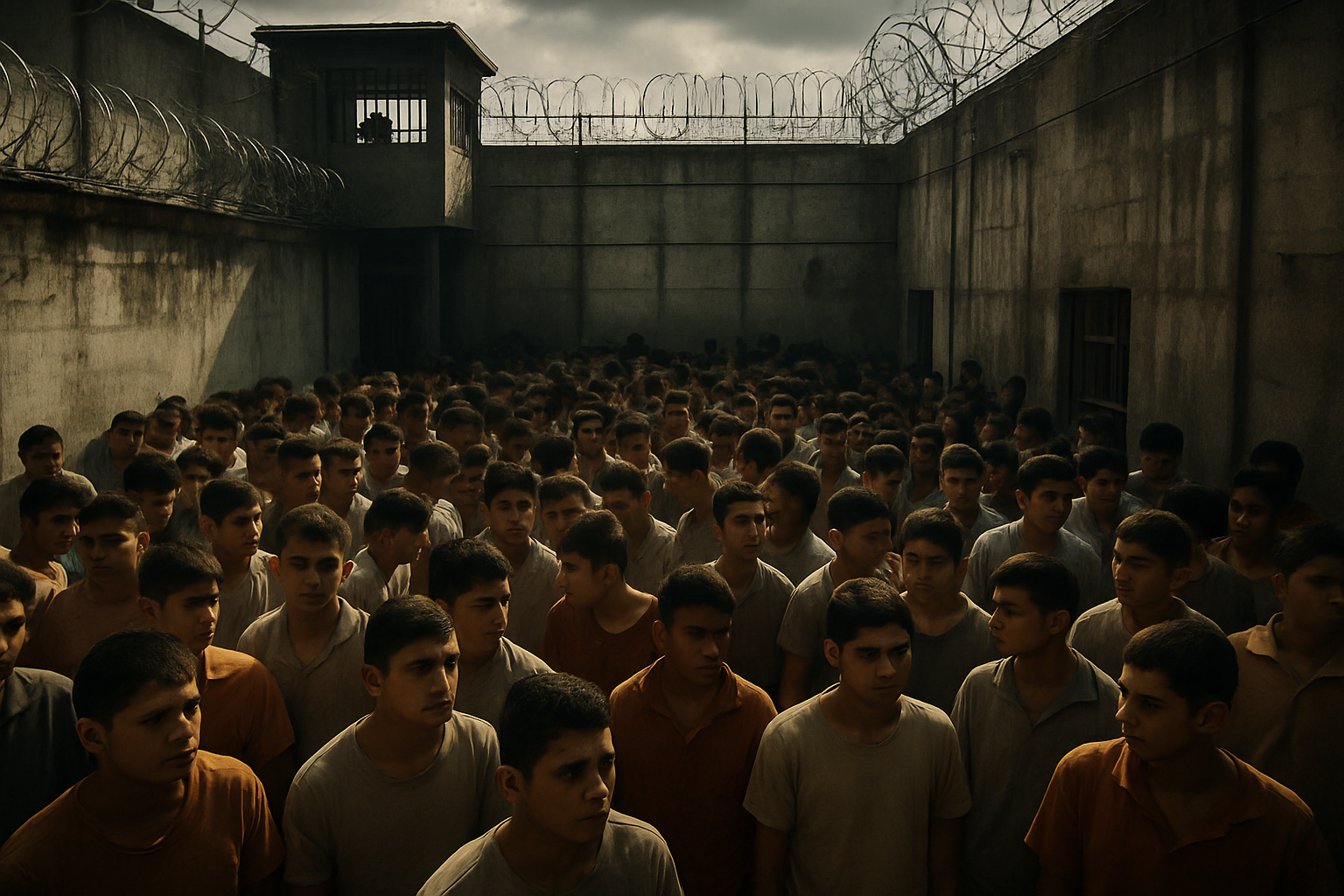
The Haitian National Network for the Defense of Human Rights (RNDDH) has raised urgent concerns about the dramatic deterioration of conditions at Haiti's Center for Reeducation of Minors in Conflict with the Law (CERMICOL), where the incarcerated population has multiplied by seven, creating a humanitarian crisis within the country's juvenile justice system.
The RNDDH expressed deep concern about the general conditions under which people are detained at CERMICOL and their legal status, making it their duty to draw public attention to the issue and demand that state authorities immediately end cruel, inhuman and degrading treatment inflicted on detainees.
Overcrowding Reaches Critical Levels
According to the RNDDH's latest investigation, the prison population at CERMICOL has expanded dramatically, creating conditions that human rights advocates describe as a severe violation of basic human dignity. The sevenfold increase in the detained population has overwhelmed the facility's capacity, designed to house a fraction of its current occupants.
The overcrowding at CERMICOL reflects broader challenges within Haiti's correctional system, which has struggled to maintain adequate facilities and humane conditions amid ongoing political instability and economic collapse. The facility, originally intended as a center for juvenile rehabilitation and reintegration, now faces operational challenges that undermine its fundamental mission.
Human Rights Violations Documented
The RNDDH's report highlights multiple concerns about the treatment of minors at the facility, including:
- Severe overcrowding leading to unsafe and unsanitary living conditions
- Inadequate access to basic necessities including food, water, and medical care
- Failure to maintain proper legal procedures for detained minors
- Lack of appropriate educational and rehabilitation programs
The organization has characterized the current conditions as constituting cruel, inhuman and degrading treatment, calling for immediate intervention from Haitian authorities to address the crisis.
"We are deeply concerned by the general conditions in which people incarcerated at CERMICOL are being held, as well as their legal status."
— Réseau National de Défense des Droits Humains (RNDDH)
Juvenile Justice System Under Strain
The crisis at CERMICOL occurs within the context of Haiti's broader challenges with juvenile justice. The facility, whose name translates to "Center for Reeducation of Minors in Conflict with the Law," was established to provide rehabilitation services for young offenders, focusing on education, vocational training, and social reintegration.
However, the dramatic increase in population has made it nearly impossible to maintain these rehabilitative programs. The overcrowding has created an environment where basic human needs cannot be met, let alone the specialized services required for effective juvenile rehabilitation.
The legal status of many detainees has also become a significant concern, with the RNDDH noting irregularities in detention procedures and case processing. This has led to situations where minors may be held without proper legal justification or adequate access to legal representation.
Call for Immediate Action
The RNDDH has issued urgent demands for Haitian state authorities to take immediate action to address the crisis at CERMICOL. The organization's recommendations include:
- Immediate assessment and reduction of the facility's population to safe levels
- Implementation of emergency measures to improve living conditions
- Review of the legal status of all detainees to ensure proper procedural compliance
- Restoration of rehabilitation and educational programs
- Increased oversight and monitoring of conditions at the facility
The human rights organization has emphasized that the current situation represents not just a failure of the correctional system, but a broader failure to protect the rights and welfare of Haitian youth who come into conflict with the law.
Broader Context of Haiti's Institutional Crisis
The crisis at CERMICOL reflects wider challenges facing Haiti's institutions amid ongoing political instability, economic collapse, and security concerns. The country has struggled to maintain basic government services, including its correctional system, as gang violence has expanded to control significant portions of the capital, Port-au-Prince.
The deterioration of conditions at juvenile detention facilities is particularly concerning given the vulnerability of the population involved. International human rights standards emphasize that detention of minors should be used only as a last resort and for the shortest appropriate period, with priority given to rehabilitation and reintegration.
The sevenfold increase in CERMICOL's population suggests significant breakdowns in alternative approaches to juvenile justice, including community-based programs, family support services, and preventive interventions that could address underlying causes of youth involvement in criminal activity.
International Attention and Response
The RNDDH's public statement is designed to draw both national and international attention to the crisis, calling on the broader human rights community to pressure Haitian authorities for immediate action. The organization has emphasized that the situation requires urgent intervention to prevent further deterioration of conditions and potential long-term harm to the young people detained at the facility.
International human rights organizations have consistently highlighted the importance of maintaining appropriate standards in juvenile justice systems, particularly in contexts of political and social instability. The situation at CERMICOL represents a test case for Haiti's commitment to protecting the rights of its most vulnerable populations.
Looking Forward: The Need for Systemic Reform
While the immediate focus must be on addressing the crisis at CERMICOL, experts note that meaningful long-term solutions will require broader reforms to Haiti's juvenile justice system. This includes investment in alternative programs, improved legal procedures, enhanced oversight mechanisms, and addressing the underlying social and economic factors that contribute to youth involvement in criminal activity.
The RNDDH's intervention represents a critical moment in highlighting the human cost of Haiti's institutional challenges. The organization's call for immediate action reflects the urgent need to ensure that even amid broader national crises, the fundamental rights and dignity of Haiti's youth are protected.
As Haiti continues to navigate complex political and security challenges, the treatment of vulnerable populations like the minors at CERMICOL will serve as a measure of the country's commitment to human rights principles and the rule of law. The response to this crisis will have implications not only for the young people directly affected but for the broader trajectory of Haiti's institutional development and human rights protection.