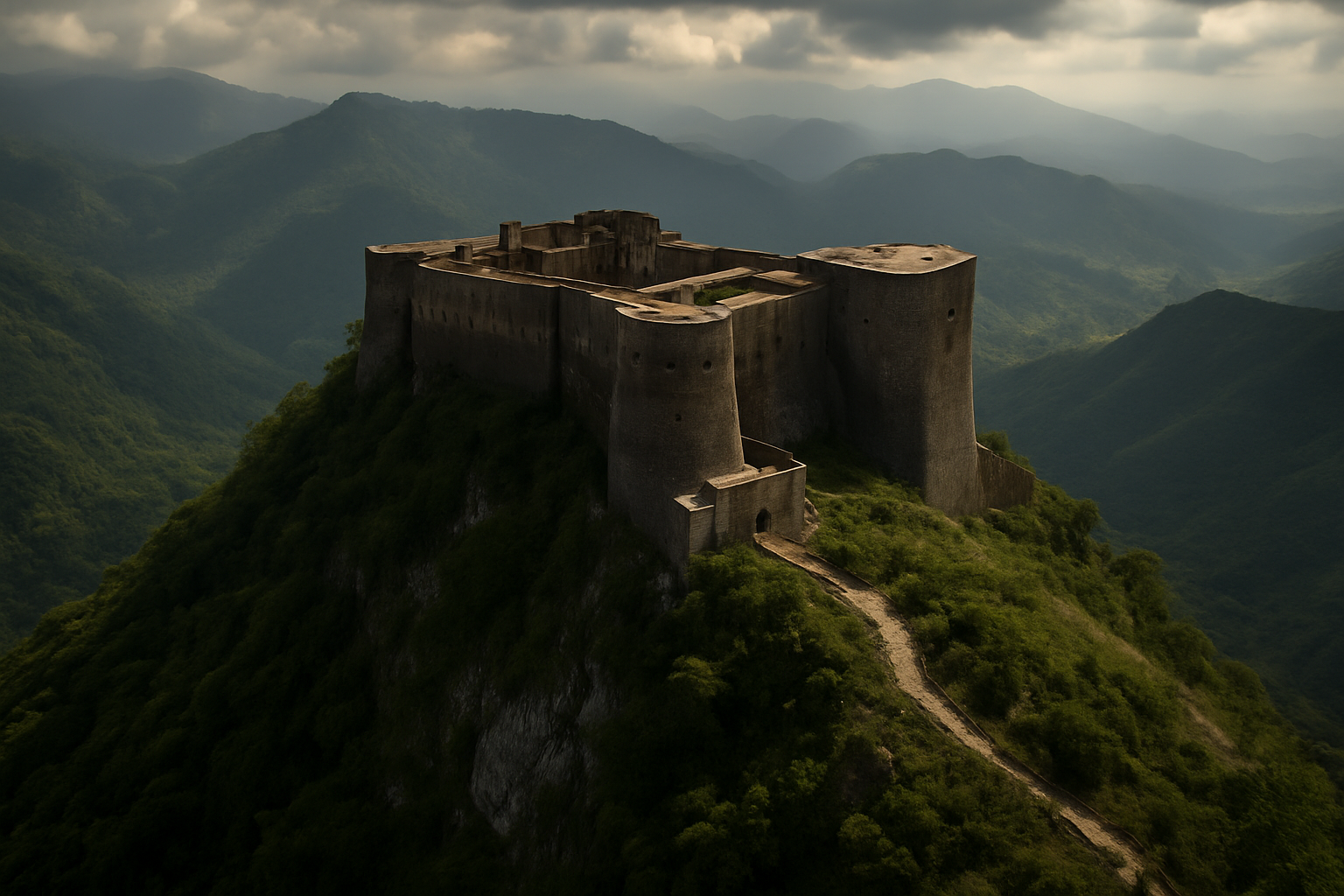
At least 30 people died and dozens more were injured in a tragic stampede at Haiti's historic Citadelle Laferrière fortress on Saturday, April 11, 2026, during what was supposed to be a celebration of the nation's revolutionary heritage at the UNESCO World Heritage site.
The incident occurred around 4 p.m. local time at the mountaintop fortress near Milot in northern Haiti, transforming a day dedicated to cultural heritage and traditional festivities into one of the country's most devastating crowd disasters. Prime Minister Alix Didier Fils-Aimé confirmed the death toll, with authorities warning the number could rise as rescue operations continue.
Culture Minister Emmanuel Ménard told Agence France-Presse that many victims died from asphyxiation during the crush, while others were trampled as crowds surged toward the fortress gates. The stampede reportedly involved several young visitors, with many of the deceased being school-age children as young as 12 years old.
The Gathering That Turned Tragic
The fatal incident began during an annual heritage celebration that had been promoted on social media platform TikTok. Heavy rains reportedly triggered panic among attendees, leading to the deadly surge as visitors attempted to evacuate the site simultaneously. The fortress's narrow defensive pathways, designed for 19th-century military purposes rather than large-scale civilian evacuations, created fatal bottlenecks.
According to Milot Mayor Wesner Joseph, the death toll could rise further, noting that the town lacks adequate emergency resources, including ambulance services. He added that officials were awaiting the arrival of justices of the peace to formally process casualties.
A third bulletin released by Minister Ménard revealed that 32 people were injured in the incident, including a pregnant woman in grave condition. A ministerial delegation is expected to arrive Monday to assess the situation and coordinate response efforts.
Emergency Response Challenges
The Citadelle Laferrière's remote mountaintop location, perched 3,000 feet above sea level, presented significant challenges for emergency responders attempting to reach the site. The fortress, accessed only through limited pathways originally designed for 19th-century defense, proved inadequate for rapid evacuation or emergency medical response.
Despite Prime Minister Fils-Aimé's official statement that "all competent authorities are fully mobilized and placed on maximum alert to provide, without delay, assistance, care and necessary support to affected persons and their families," disturbing images circulated on social media appeared to contradict this official communication, showing scenes of distress and apparent abandonment of victims.
Jean Henri Petit, head of Civil Protection for the Nord Department, confirmed the casualties and warned that the death toll could continue to rise as rescue operations proceeded throughout the weekend.
A Symbol of Freedom Under Strain
The Citadelle Laferrière, also known as Citadelle Henri Christophe or the Citadel, stands as one of the most remarkable monuments to freedom in the Western Hemisphere. Built between 1805 and 1820 under King Henri Christophe following Haiti's independence, the fortress was constructed by former enslaved people as a defense against potential French invasion attempts to restore colonial rule.
Designated as a UNESCO World Heritage Site in 1982, the fortress has long served as a powerful symbol of successful slave rebellion and anti-colonial resistance. The annual celebrations bring together Haitians from across the nation and diaspora to honor this heritage of freedom and resilience.
However, the fortress's original defensive design, which has helped it survive earthquakes, hurricanes, and political upheavals over more than 200 years, proved tragically inadequate for modern crowd management during emergency situations.
"After such a tragedy, occurring at the heart of a major heritage site, in a functional state of law, a failure of such magnitude in supervision and security should lead to consequences at the highest level of responsibilities."
— Editorial commentary, Rezo Nòdwès
Haiti's Ongoing Crisis Context
The Citadelle tragedy occurs amid Haiti's deepest security and humanitarian crisis in recent memory. Gang violence now controls approximately 60% of Port-au-Prince, with over 5,500 deaths recorded between March 2025 and January 2026, and 1.45 million people displaced from their homes.
Prime Minister Fils-Aimé is operating with executive authority following the expiration of the Transitional Presidential Council, with Chad peacekeeping forces recently deployed to assist with security. Elections planned for August 30, 2026, remain uncertain amid the ongoing violence.
The nation's emergency response capabilities have been severely strained by the prolonged crisis, making the coordination of rescue operations at remote locations like the Citadelle even more challenging. Over 17.8 million Haitians are currently accessing winter support programs, highlighting the breadth of the humanitarian emergency.
International Concern and Investigation
The U.S. Embassy's Chargé d'Affaires Henry Wooster extended sincere condolences to the victims' families, offering "thoughts and prayers" for the affected communities. The tragedy has drawn international attention not only to this specific incident but to Haiti's broader challenges in maintaining safety at cultural heritage sites.
An investigation has been announced into the circumstances that led to the stampede, with particular focus on where state oversight was during the event planning and execution. Questions are being raised about the adequacy of emergency preparedness protocols at UNESCO World Heritage sites, especially those in challenging geographical locations.
Heritage experts globally are calling for comprehensive emergency preparedness reviews at UNESCO sites, particularly those in difficult-to-access locations. The incident highlights the complex challenge of balancing historical site authenticity with modern safety requirements.
Implications for Heritage Tourism
The tragedy represents a devastating blow to Haiti's struggling tourism sector, which was already severely impacted by security concerns and infrastructure challenges. Tourism revenue is crucial for local communities around the Citadelle, and international visitors are likely to be further discouraged from exploring Haiti's remarkable cultural heritage.
The incident underscores the urgent need for improved safety infrastructure and emergency response capabilities at heritage sites in developing nations. International assistance may be required to support safety infrastructure improvements while preserving the cultural authenticity of these irreplaceable monuments to human history.
A Call for Action
Heritage preservation experts emphasize that sites of immense cultural value can become dangerous when visitor management fails to account for emergency scenarios. The Citadelle stampede demonstrates the critical intersection between cultural heritage preservation and public safety in the 21st century.
Recommended improvements include implementing crowd monitoring systems, enhancing evacuation procedures, improving crisis communications, and conducting regular safety drills for site management and emergency services. The challenge lies in balancing these modern safety requirements with the preservation of historical authenticity.
The tragedy at this symbol of freedom and resistance serves as a stark reminder that protecting cultural heritage sites requires not only preserving their historical integrity but ensuring the safety of those who come to honor the legacy they represent. As Haiti continues to face multiple crises, the international community's support for both immediate humanitarian needs and long-term safety infrastructure improvements remains crucial for preserving this irreplaceable piece of world heritage while protecting future visitors.