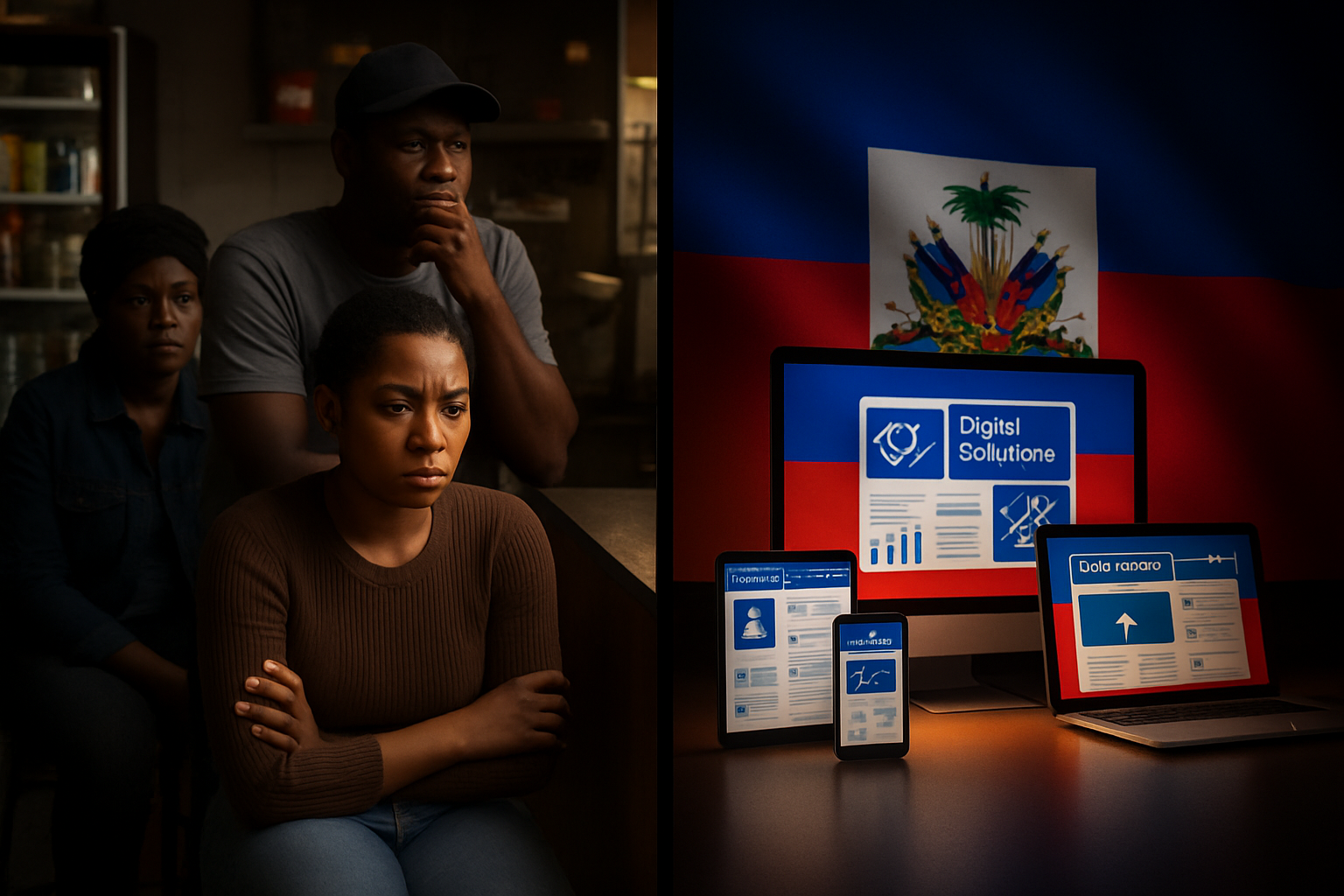
As Haitian diaspora communities launch groundbreaking digital platforms to drive Haiti-led solutions, the prolonged uncertainty surrounding Temporary Protected Status (TPS) continues to strain businesses and families in Springfield, Ohio, creating a stark contrast between innovation abroad and hardship at home.
The divergent experiences of Haitian communities in March 2026 illustrate the complex reality facing Haitian Americans: while diaspora entrepreneurs are pioneering digital solutions for homeland development, established communities like Springfield face mounting economic pressures from immigration policy uncertainty that has persisted for over a year.
Digital Innovation Drives Diaspora Leadership
The Haitian diaspora's latest wave of digital initiatives represents a significant evolution in community-led development strategies. New platforms are being launched to connect diaspora resources directly with Haiti-based solutions, bypassing traditional aid structures that have often failed to deliver sustainable results.
These digital platforms focus on creating direct channels for investment, education, and knowledge transfer between diaspora communities and Haiti. The initiatives build on successful models like Kaw Academy, which has made online learning accessible in Haitian Creole worldwide, and dyaspora.ht's mobile application that enables real-time conversations among users globally.
"The diaspora is no longer content to be passive observers," explained Karyll Hyacinthe, a key figure in the digital platform movement. "These tools represent a fundamental shift toward Haitian-led solutions that respect our cultural identity while leveraging modern technology."
Springfield's Economic Strain Deepens
Meanwhile, in Springfield, Ohio, the Haitian community continues to grapple with the economic fallout from TPS uncertainty that began in early 2025. Local businesses that once thrived as community gathering places now report significantly reduced foot traffic and revenue.
La Bendita Food Market, a cornerstone of Springfield's Haitian community, exemplifies the challenges facing local businesses. The market, which traditionally served as both a retail space and cultural center, has seen customers become "fewer and farther between" as Haitian families either leave the area or severely curtail their spending in response to the ongoing uncertainty.
The economic impact extends beyond individual businesses to the broader Springfield economy. Many Haitian TPS recipients, who contribute an estimated $4.8 billion annually to the U.S. economy according to previous economic analyses, have scaled back major purchases and investments while their legal status remains in limbo.
Federal Court Battles Continue
The Springfield community's struggles occur against a backdrop of ongoing legal challenges surrounding TPS designations. Federal Judge Ana Reyes's February 2026 ruling blocking TPS termination for 350,000 Haitians cited "discriminatory intent," providing temporary relief but no long-term certainty.
The legal uncertainty has created what community advocates describe as "suspended animation" for families who cannot plan for the future while their legal status remains contested in federal courts. Many report delaying major life decisions, from home purchases to career investments, while awaiting resolution.
"It's incredibly difficult to build a business or plan for your children's future when you don't know if you'll be here next year,"
— Local Springfield Business Owner
Community Adaptation Strategies
Despite the challenges, Springfield's Haitian community has developed sophisticated adaptation strategies documented in previous analyses of Ohio Haitian communities. These include expanded legal clinics, enhanced communication systems for enforcement alerts, and accelerated entrepreneurship programs designed to create economic security diversification.
Educational initiatives have also expanded, with parents enrolling children in supplementary programs that emphasize both academic achievement and cultural preservation. Adult education programs focus on English proficiency, technical training, and business skills development through community organizations.
The community has maintained civic engagement despite uncertainties, with continued participation in neighborhood watch programs, local cultural events, city council meetings, and political advocacy. Local officials note sustained civic contributions across Ohio communities even amid enforcement concerns.
Technology Bridging Distances
The contrast between diaspora digital innovation and local community struggles reveals both opportunities and challenges in the Haitian American experience. Digital platforms launched by diaspora entrepreneurs offer potential solutions for economic connection and cultural maintenance that could benefit communities like Springfield.
Technology-enabled commerce, education, and communication tools provide ways for geographically dispersed communities to maintain economic and cultural ties regardless of physical location or legal status uncertainty. The platforms represent a mature understanding of how technology can amplify rather than replace authentic cultural connections.
However, the benefits of these digital innovations have yet to fully reach communities grappling with immediate economic pressures. The digital divide and immediate survival concerns often take precedence over long-term technological solutions.
Economic Contributions Under Pressure
The economic data surrounding Haitian TPS recipients reveals the broader implications of community uncertainty. Beyond the $4.8 billion in annual economic contributions, Haitian TPS recipients work in essential industries including manufacturing, logistics, healthcare, construction, and food service sectors experiencing labor shortages.
In Ohio specifically, Haitian TPS recipients play critical roles in industries fundamental to the state's economy. The uncertainty surrounding their legal status creates both immediate hardship for families and potential long-term economic disruption for employers and communities that depend on their contributions.
The ripple effects extend to the over 200,000 U.S. citizen children with Haitian TPS holder parents, who face uncertain futures regarding educational investments, career planning, and family stability. Parents report making difficult decisions about whether to pursue long-term investments in their communities while developing contingency plans for potential family separation or relocation.
Cultural Preservation Through Crisis
Both the digital platform initiatives and the Springfield community's adaptation strategies demonstrate remarkable commitment to cultural preservation during crisis. The diaspora's digital platforms explicitly incorporate Haitian Creole language and cultural values, while Springfield's community has maintained cultural institutions despite economic pressures.
Organizations like Rose Goute Creole Restaurant in Springfield continue to serve as cultural anchors for the community, though with lighter crowds reflecting the broader uncertainty affecting daily life patterns. These institutions represent the intersection of economic necessity and cultural preservation that characterizes much of the Haitian American experience.
Cultural events, language education, and traditional practices continue despite uncertainties, demonstrating community resilience and the importance of cultural identity maintenance during periods of institutional instability.
Looking Forward: Innovation and Uncertainty
The March 2026 developments in both diaspora digital innovation and Springfield community challenges illustrate the complex, multifaceted nature of contemporary Haitian American experiences. While diaspora entrepreneurs are creating new models for transnational engagement and development, established communities face immediate challenges that require sustained attention and support.
The success of digital platforms in connecting diaspora resources with homeland needs could potentially be adapted to support communities facing domestic challenges like those in Springfield. However, such adaptation requires addressing immediate legal and economic uncertainties that currently dominate community attention and resources.
The contrast also highlights broader questions about immigration policy, community resilience, and the role of technology in maintaining cultural and economic connections across geographic and legal boundaries. As federal court battles continue and digital platforms evolve, both tracks of the Haitian American experience will likely continue to influence each other and the broader conversation about immigration, technology, and community development in the United States.
The innovations emerging from diaspora communities and the resilience demonstrated by places like Springfield offer valuable insights for policymakers, community leaders, and technology developers working to create more equitable and sustainable approaches to immigration, economic development, and cultural preservation in an increasingly connected but uncertain world.