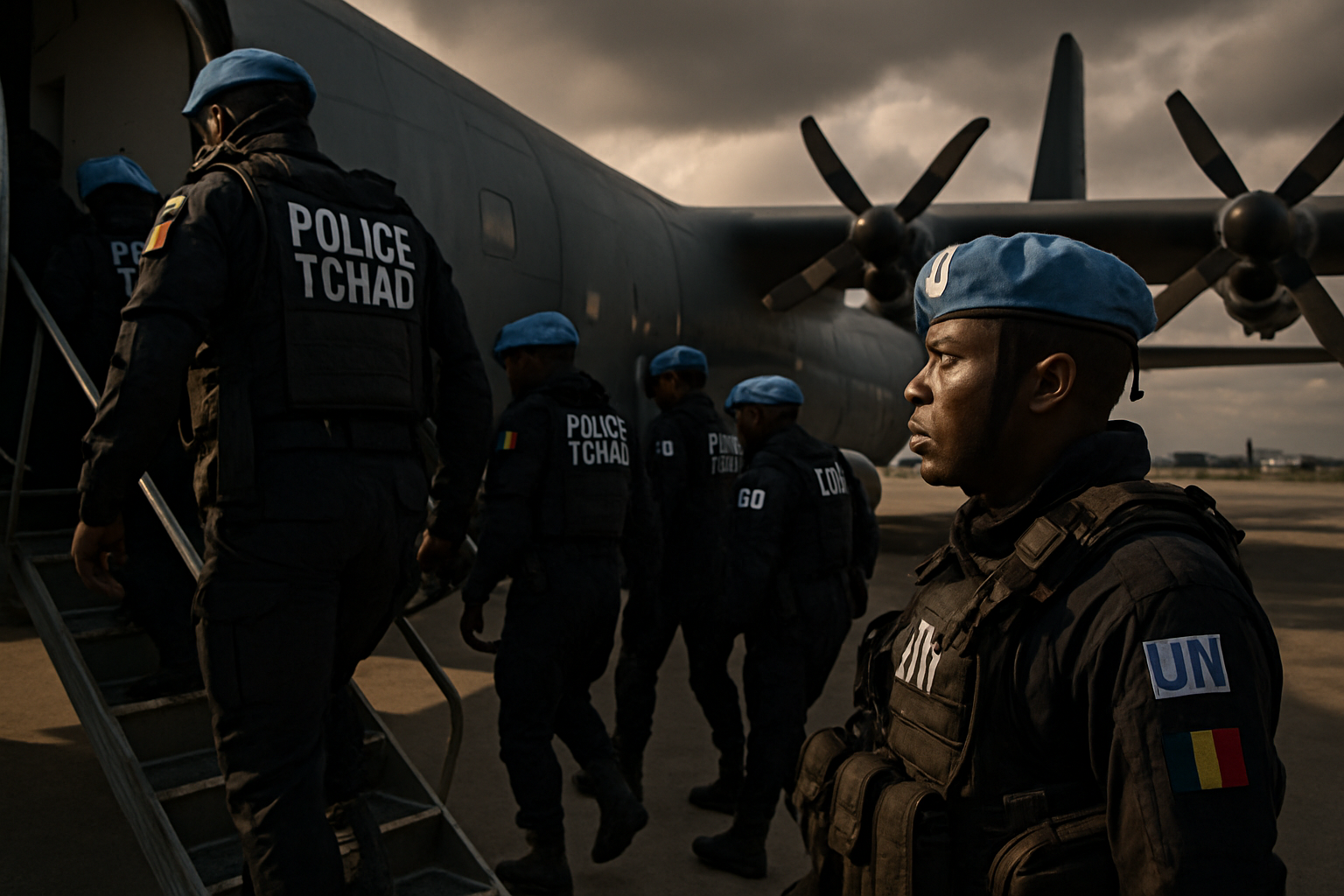
The first foreign troops from the UN-backed Gang Suppression Force (GSF) arrived in Haiti on Wednesday, marking the formal beginning of a new international mission to combat escalating gang violence that has devastated the Caribbean nation.
A Chadian police contingent landed at Port-au-Prince's Toussaint Louverture International Airport, initiating the deployment of the Gang Suppression Force, which is designed to replace the previous multinational mission led by Kenya. The arrival represents the first concrete engagement since the GSF's approval in September 2025.
According to mission statements, this deployment opens the formal phase of the GSF's operations, a UN-supported security structure intended to succeed the Kenyan-led multinational force that has struggled to contain Haiti's spiraling security crisis. The international promises for contributions had remained largely unfulfilled until this breakthrough deployment.
Critical Security Situation
The new mission arrives amid Haiti's worst security crisis in decades, with gangs now controlling approximately 60% of Port-au-Prince and key transportation routes throughout the country. The humanitarian situation has reached catastrophic levels, with over 1.45 million people internally displaced—a 33% increase within the past year alone.
Recent violence has intensified dramatically. On March 30, 2026, the Gran Grif gang conducted devastating coordinated attacks in the Jean-Denis area of the Artibonite region, killing at least 70 people according to local human rights organizations, though Haiti National Police reported only 16 deaths—highlighting the massive discrepancy between official reporting and documented reality on the ground.
UN documentation from March 2025 to January 2026 reveals the staggering toll: 5,519 people killed and 2,608 injured during this period. Of these casualties, 1,424 deaths and 790 injuries resulted directly from gang violence, while 3,497 deaths and 1,742 injuries occurred during security operations against gangs, and 598 deaths with 76 injuries from self-defense group attacks.
International Response and Previous Challenges
The deployment comes after months of international deliberation and unfulfilled commitments. Chad has committed 800 police officers to the gang suppression force, stepping forward as Kenya scaled back its involvement in the previous mission. This represents a significant shift in African engagement with global security challenges, positioning Chad as a willing international peacekeeping partner despite its own domestic security concerns.
The Gang Suppression Force operates under an initial 12-month mandate specifically aimed at addressing the widespread gang violence ahead of Haiti's planned elections. The mission's success is considered crucial for restoring basic governmental authority and enabling democratic processes in a country where state institutions have largely collapsed.
"This arrival constitutes the first concrete engagement since the approval of the GSF in September 2025, while international contribution promises had remained unfulfilled until now."
— Gang Suppression Force Mission Statement
Humanitarian Crisis Deepens
The security vacuum has created a humanitarian catastrophe of unprecedented proportions. Armed groups have systematically targeted essential infrastructure, creating what aid organizations describe as "medical deserts" across much of the country. Healthcare facilities, schools, and water treatment plants have been systematically attacked as part of territorial expansion strategies.
The police response to recent attacks has been severely limited, with interventions often occurring only after violence has concluded. This demonstrates the extent to which gangs have assumed quasi-governmental functions, including tax collection, security services, and control of basic necessities in areas under their control.
Women and children bear a disproportionate burden of the violence, with 88% of female-headed households unable to meet minimum requirements. Sexual violence has become a systematic weapon of territorial control, while educational institutions face repeated closures and healthcare facilities operate under constant threat.
Political Landscape and Leadership
The mission arrives during a period of concentrated political power under Prime Minister Alix Didier Fils-Aimé, who has assumed unprecedented executive authority following the expiration of the Transitional Presidential Council's mandate. He now operates with dual roles as PM and significant economic sector influence, governing without traditional democratic checks and balances during the institutional collapse.
The success of the new international force will be crucial for the planned August 30, 2026 elections, which represent a critical opportunity for democratic renewal in Haiti. However, the mission faces enormous challenges in establishing security conditions necessary for credible electoral processes.
Regional and Global Implications
Haiti's crisis has created significant regional migration pressures affecting Caribbean and North American countries. The success or failure of the Gang Suppression Force will influence international approaches to similar crises globally, particularly as climate change and economic instability create conditions for state fragility in vulnerable nations worldwide.
The deployment occurs amid competing global emergencies, with international attention divided between multiple simultaneous crises. This has limited resources available for Haiti, despite the UN's description of the situation as "catastrophic."
Template for International Intervention
The Gang Suppression Force represents a critical test of international responsibility to protect civilian populations when traditional state structures cease functioning. The mission's approach—combining police-focused interventions with support for institutional rebuilding—offers a potential template for addressing similar challenges in other vulnerable states facing organized crime, economic instability, and climate impacts.
Chad's willingness to deploy significant personnel demonstrates the potential for innovative South-South cooperation in addressing global security challenges. The success of this approach could establish new models for international peacekeeping operations beyond traditional Western-led frameworks.
As the first troops begin their mission in Haiti, the international community watches closely to see whether this renewed intervention can succeed where previous efforts have struggled, offering hope for millions of Haitians trapped in one of the world's most severe humanitarian crises.