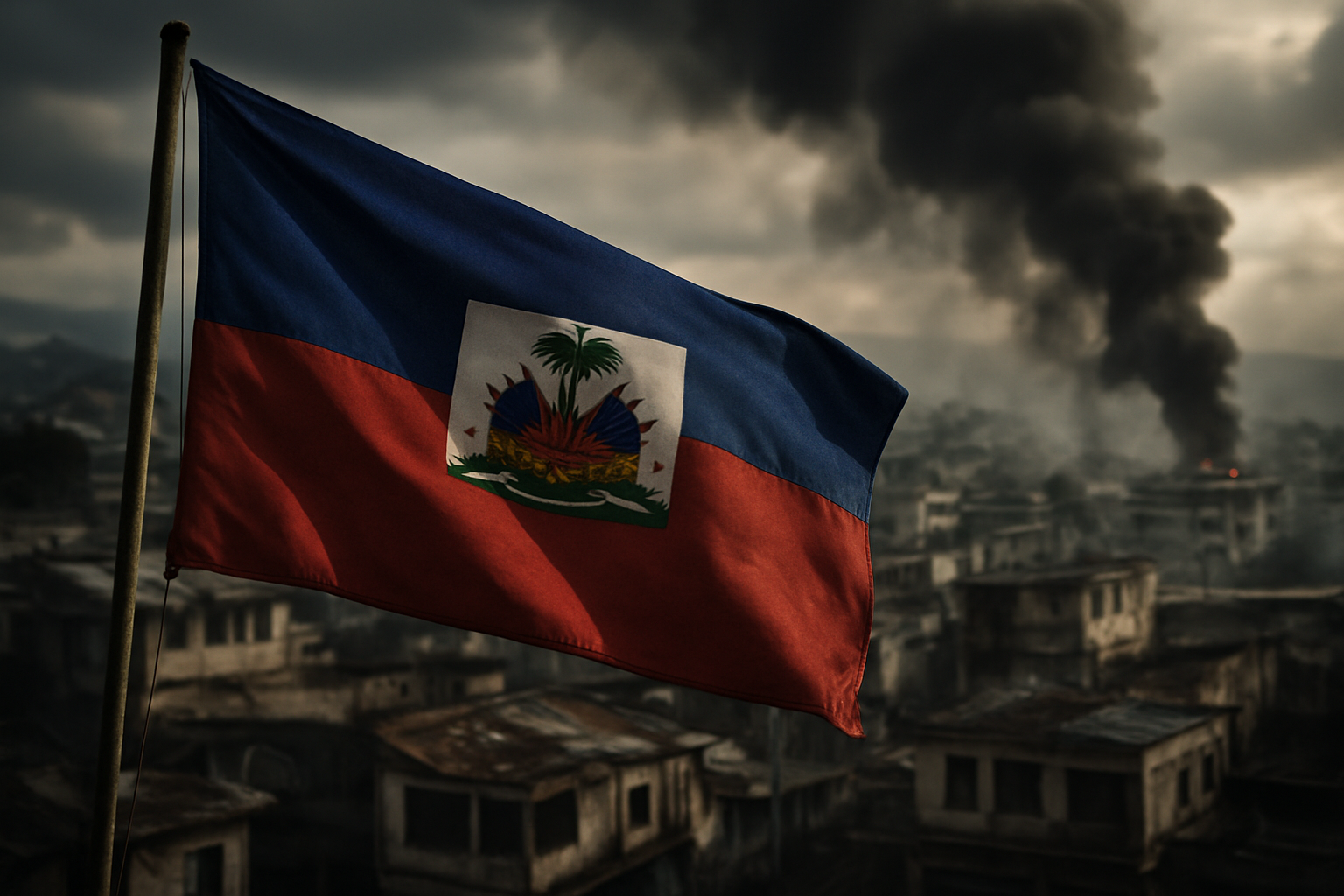
The United Nations has documented over 5,500 deaths in Haiti due to gang violence in less than a year, marking one of the most severe humanitarian crises in the Caribbean nation's modern history as criminal organizations expand their territorial control and state institutions continue to collapse.
According to a comprehensive report from the UN High Commissioner for Human Rights presented to the 61st session of the Human Rights Council, between March 2025 and January 2026, at least 5,519 people were killed and 2,608 injured in a context of widespread violence that has transformed Haiti into one of the world's most dangerous countries.
The staggering casualty figures represent a dramatic escalation from previous years, with the UN describing Haiti's human rights situation as remaining "alarmante" (alarming), marked by persistent gang violence and a deterioration of living conditions that affects millions of Haitians.
Breakdown of Violence and Perpetrators
The UN report reveals a complex web of violence involving multiple actors across Haiti's fractured security landscape. Gang violence alone resulted in at least 1,424 deaths and 790 injuries during the reporting period. However, the crisis extends beyond criminal organizations to encompass broader institutional breakdown.
Security operations against gangs, led by national forces, caused at least 3,497 deaths and 1,742 injuries, while attacks by self-defense groups against criminal organizations resulted in 598 deaths and 76 injuries. These figures underscore how the violence has created a cycle of retribution and counter-violence that has spiraled beyond government control.
The gangs continue to impose their control through murders, kidnappings, and sexual violence, while acts of "popular justice" and abuses attributed to security forces have further aggravated the humanitarian situation. The UN documented systematic violations of human rights across multiple spheres of Haitian society.
Territorial Expansion and Criminal Control
Criminal gangs have significantly expanded their territorial reach, now controlling key sea and road routes that are vital for Haiti's economic survival. This expansion has effectively fragmented the country, with gangs controlling an estimated 60% of Port-au-Prince, the capital, and extending their influence into rural areas previously considered safe havens.
The gangs' control over transportation networks has created severe humanitarian access challenges, limiting the ability of aid organizations to reach vulnerable populations and disrupting supply chains for essential goods including food and medical supplies. This territorial control represents a fundamental challenge to state sovereignty and has contributed to the country's ongoing economic collapse.
International observers note that the gangs have evolved beyond traditional criminal organizations into quasi-governmental entities that collect taxes, control territory, and provide rudimentary services in areas under their control, filling the vacuum left by state institutional collapse.
Institutional Collapse and Political Crisis
The violence crisis unfolds against a backdrop of complete institutional breakdown that has been developing since the 2021 assassination of President Jovenel Moïse. The current political situation has been further complicated by the concentration of power in Prime Minister Alix Didier Fils-Aimé, who has assumed unprecedented executive authority following the expiration of the Transitional Presidential Council's mandate.
Haiti's correctional system exemplifies the broader institutional crisis, with the juvenile detention facility CERMICOL experiencing severe overcrowding that has multiplied its population by seven times capacity. The Haitian National Network for the Defense of Human Rights (RNDDH) has called for immediate action to address what it characterizes as cruel, inhuman, and degrading treatment of detained minors.
The breakdown extends to essential services, with civil defense operations severely hampered by resource constraints and security threats. The Gaza Civil Defense, responsible for emergency response, has faced complete shutdowns due to fuel shortages, leaving populations without critical emergency services during violent incidents.
International Response and Intervention Challenges
The international community has struggled to develop an effective response to Haiti's multi-dimensional crisis. Chad has announced an unprecedented deployment of 800 police officers to Haiti as part of an international gang suppression force, representing a significant shift in African engagement with global security challenges as Kenya scales back its involvement.
This intervention represents one of the most substantial international peacekeeping commitments to Haiti in recent years, but faces significant operational challenges given the complexity of the security situation and the gangs' sophisticated capabilities. The timing coincides with broader international reluctance to commit resources to what many view as an intractable crisis.
The United States has implemented expanded immigration restrictions affecting Haitian nationals, with internal documents confirming Haiti's inclusion in "high risk" countries under Presidential Proclamation 10998. These measures effectively suspend immigration benefit applications from Haiti, affecting thousands of nationals with pending family reunification, employment, and humanitarian cases.
Humanitarian Emergency and Population Impact
The security crisis has created a cascading humanitarian emergency affecting all aspects of Haitian society. The UN report documents systematic violations affecting access to basic services, education, healthcare, and economic opportunities. Women and children bear a disproportionate burden of the violence, with systematic sexual violence documented as a weapon of territorial control.
Educational institutions have been forced to close repeatedly due to security threats, creating an educational emergency that affects an entire generation of Haitian children. Healthcare facilities face regular attacks and are forced to operate under extreme security constraints, limiting access to essential medical services for millions of people.
The economic impact has been severe, with normal commercial activities disrupted across large portions of the country. Small businesses, which form the backbone of Haiti's informal economy, have been devastated by extortion, kidnapping, and territorial restrictions imposed by criminal organizations.
Regional and Global Implications
Haiti's crisis has significant implications beyond its borders, contributing to regional migration pressures and affecting Caribbean stability. The breakdown of state institutions in the Western Hemisphere's poorest country creates security concerns for neighboring Dominican Republic and broader Caribbean nations.
The crisis occurs within a global context of increasing fragility, with international attention and resources divided among multiple simultaneous emergencies including conflicts in Ukraine, Gaza, Sudan, and Afghanistan. This competition for international attention has limited the scope and effectiveness of international responses to Haiti's multifaceted crisis.
The situation also reflects broader challenges in international intervention strategies, with traditional peacekeeping models proving inadequate for addressing the complex intersection of criminal violence, institutional collapse, and humanitarian emergency that characterizes contemporary Haiti.
Looking Forward: Urgent Need for Comprehensive Response
The UN report's documentation of over 5,500 deaths represents more than statistical tragedy; it reflects the urgent need for a comprehensive international response that addresses both immediate security concerns and longer-term institutional reconstruction. The current trajectory suggests that without significant intervention, the crisis will continue to deepen with devastating consequences for Haiti's 11 million people.
Experts emphasize that effective response requires coordination between security interventions and development assistance, with particular attention to strengthening state institutions, restoring basic services, and addressing the root causes of violence including poverty, inequality, and lack of economic opportunities.
The international community faces a critical decision point: commit significant resources to a comprehensive intervention that addresses Haiti's multidimensional crisis, or risk the complete collapse of state institutions in a country whose instability has regional and global implications. The UN's stark documentation of 5,500 deaths serves as a urgent call for action before the situation deteriorates further.