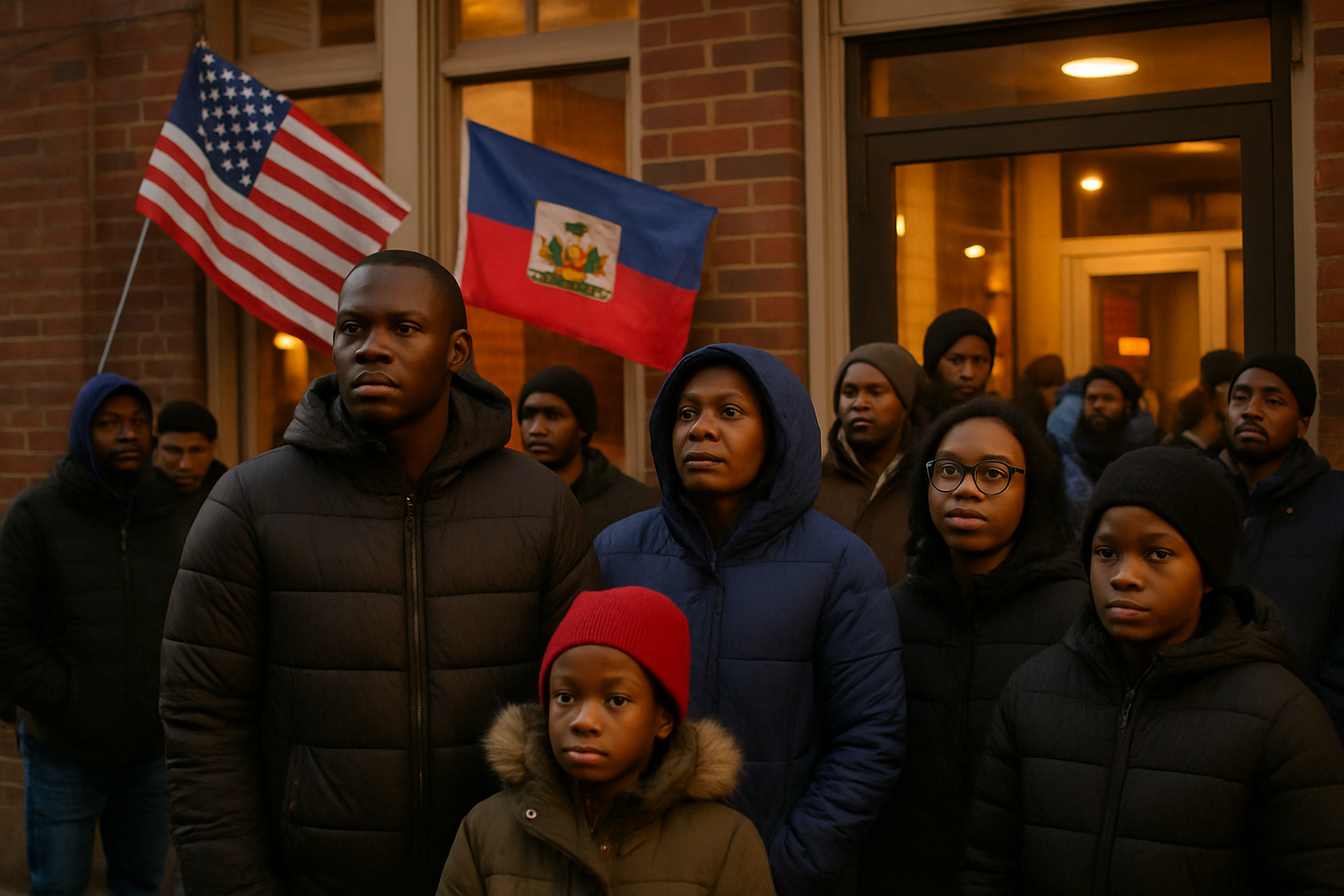
Across Ohio's cities and towns, Haitian immigrants are quietly reshaping their daily routines and developing new skills to navigate an increasingly uncertain immigration landscape, building resilience while contributing to their communities despite ongoing federal policy upheaval.
In Springfield, Ohio, the interior of Rose Goute Creole Restaurant tells a story of adaptation and perseverance. The establishment, which has served as a cultural hub for the local Haitian community, has experienced lighter crowds as uncertainty around immigration policies has taken hold, according to regular customers. Yet the restaurant continues to serve as a gathering place where community members share information, support each other, and maintain cultural connections amid challenging times.
Building Resilience Through Community Networks
The Haitian community in Ohio has developed sophisticated support networks that extend far beyond traditional mutual aid. These networks have proven essential as federal immigration enforcement has intensified, with deportations quadrupling during the first nine months of the current administration according to a University of California study.
Community leaders report that Haitians are increasingly taking proactive steps to protect themselves and their families. This includes organizing legal clinics, sharing information about rights during immigration encounters, and establishing communication systems to alert community members about enforcement activities in their areas.
Federal Judge Ana Reyes's recent ruling blocking the termination of Temporary Protected Status (TPS) for approximately 350,000 Haitians, citing discriminatory considerations, has provided temporary relief. However, the ruling has also highlighted the precarious legal position many community members face.
Economic Adaptation and Skill Development
Beyond legal uncertainties, Haitians in Ohio are demonstrating remarkable economic adaptability. Many are diversifying their skill sets, pursuing additional certifications, and exploring entrepreneurship opportunities that can provide more stable income streams.
The community's economic contributions remain substantial. Haitian TPS recipients contribute $4.8 billion annually to the U.S. economy and work in essential industries including healthcare, construction, and food service. In Ohio specifically, Haitian workers fill critical roles in manufacturing, logistics, and service sectors that have faced labor shortages.
Local business owners report that uncertainty has led some community members to accelerate plans for business ownership or professional development. "People are thinking about their long-term security," explains one Springfield business owner who requested anonymity. "They're not just waiting to see what happens – they're actively preparing for different scenarios."
Educational and Cultural Preservation
Educational initiatives within the Haitian community have taken on new urgency. Parents are increasingly enrolling children in supplementary educational programs that emphasize both academic achievement and cultural preservation. These programs aim to ensure that young Haitians maintain connections to their heritage while fully integrating into American society.
Language acquisition has become a particular focus, with many adults pursuing English classes not just for basic communication but for professional advancement. Community organizations have expanded their offerings to include technical training, computer literacy, and business skills development.
"We're teaching our children to be proud of where they come from while also preparing them to succeed wherever their future takes them."
— Marie Joseph, Community Leader
Navigating Daily Life Under Policy Uncertainty
The practical impacts of immigration policy uncertainty extend into the most routine aspects of daily life. Community members report being more cautious about travel, even within Ohio, and some have modified work schedules to avoid peak enforcement hours.
Healthcare access has become another area of adaptation. With some community members reluctant to seek medical care due to immigration concerns, community health workers have expanded their roles, providing basic health education and connecting people with culturally competent healthcare providers who understand the unique challenges facing immigrant communities.
The psychological toll of uncertainty cannot be understated. Mental health support within the community has evolved to address the specific stresses of living with precarious immigration status while trying to maintain normal family and work life.
Legal Strategy and Advocacy
Recent federal court decisions have provided both hope and complexity for the Haitian community. While Judge Reyes's TPS ruling offers protection, ongoing legal challenges and policy changes at the federal level mean that community members must stay informed about rapidly evolving immigration law.
Local legal aid organizations report increased demand for services ranging from TPS renewal assistance to family reunification cases. The community has also become more organized in its advocacy efforts, with representatives regularly attending city council meetings and engaging with local political leaders.
The current policy environment, including the administration's targeted restrictions on immigration benefit applications from Haiti and other designated "high risk" countries, has created additional bureaucratic hurdles that require navigation with professional legal assistance.
Impact on Children and Families
Perhaps nowhere is the impact of policy uncertainty more profound than on Haitian families with mixed immigration status. Over 200,000 U.S. citizen children have Haitian TPS holder parents, creating complex family situations where children's futures are directly tied to immigration policy outcomes.
Parents report making difficult decisions about educational investments, home purchases, and career advancement while uncertain about their family's long-term ability to remain in the United States. Some have developed contingency plans that include financial preparations for potential family separation or relocation.
Despite these challenges, many families are choosing to invest in their communities, contributing to local schools, participating in civic organizations, and building lasting relationships with neighbors and colleagues.
Community Contributions Continue
Throughout this period of uncertainty, Haitian contributions to Ohio communities have remained steady and significant. From healthcare workers who served on the frontlines during the COVID-19 pandemic to small business owners who have revitalized neighborhood commercial districts, the community's economic and social impact extends far beyond their numbers.
Local officials in cities with significant Haitian populations have noted the community's civic engagement, including participation in community policing initiatives, neighborhood watch programs, and local cultural events that enrich the broader community.
Looking Forward
As immigration policy continues to evolve at the federal level, Ohio's Haitian community demonstrates a pattern of proactive adaptation rather than passive waiting. This approach encompasses everything from skill development and business planning to legal preparedness and community organizing.
The resilience strategies being developed may serve as models for other immigrant communities facing similar uncertainties. Through formal and informal networks, community members are sharing knowledge about everything from navigating bureaucratic systems to building economic security in an uncertain environment.
While the future remains uncertain, one thing is clear: Ohio's Haitian community is not merely surviving the current policy environment – they are actively adapting, growing, and contributing, demonstrating the kind of resilience that has characterized the Haitian diaspora throughout history. Their daily decisions to invest in education, pursue opportunities, and build community connections represent a form of quiet resistance to the uncertainty that surrounds them.
As federal courts continue to weigh the legality of various immigration policies and Congress debates comprehensive reform, the lived experience of communities like those in Ohio provides essential context for understanding the human impact of these policy debates. Their stories of adaptation and perseverance offer insights into both the challenges and opportunities that immigration policy creates for American communities.