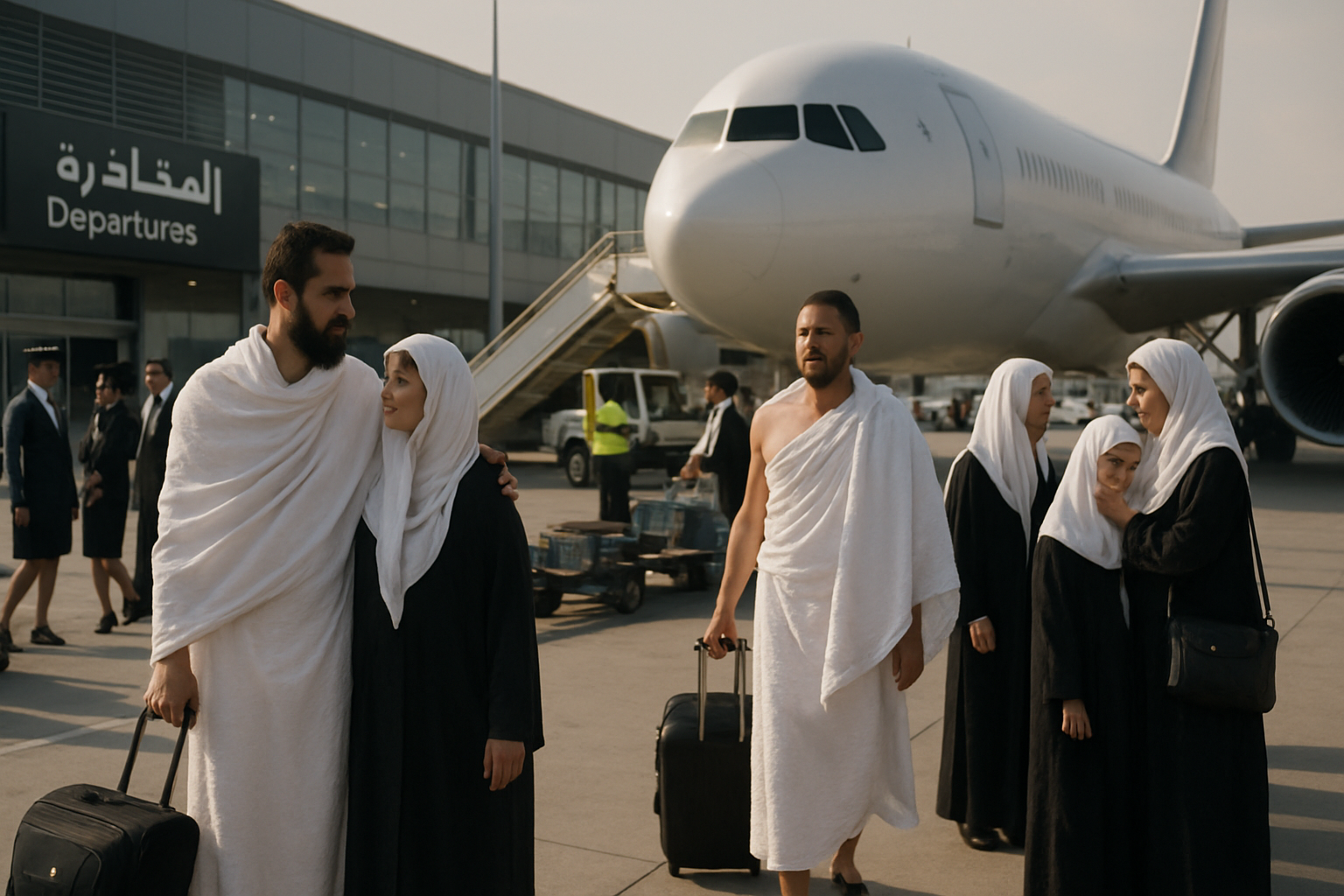
Afghanistan, Pakistan, and Saudi Arabia have launched massive coordinated airlift operations to transport over 200,000 pilgrims to the Holy Cities of Mecca and Medina for Hajj 2026, representing one of the most complex international aviation logistics efforts undertaken for religious purposes.
Afghan authorities have confirmed plans to airlift 30,000 pilgrims to Saudi Arabia through a carefully orchestrated operation involving 96 flights departing from four key air zones across Afghanistan. The operation, carried out in collaboration with Ariana Afghan Airlines and Kam Air, will see 15,000 pilgrims flown directly to Medina, while the remaining 15,000 will be transported to Jeddah, both crucial entry points for the annual pilgrimage.
Meanwhile, Pakistan International Airlines (PIA) has announced the commencement of its pre-Hajj operation beginning April 19, with plans to transport over 55,000 pilgrims through 191 flights from airports across Pakistan. The first flight, PK-747, will depart from Sialkot for Medina at 1:55 AM on April 19, carrying over 390 pilgrims.
Saudi Arabia's Infrastructure Readiness
In preparation for the massive influx of pilgrims, Saudi Arabia has announced the complete readiness of all its international entry points to welcome the faithful. The General Directorate of Passports confirmed that all air, land, and sea ports are prepared to facilitate the smooth entry of pilgrims, ensuring they arrive "with ease and reassurance."
The Kingdom's announcement influences neighboring Gulf states and global Muslim communities, building on extensive international coordination that has become a hallmark of modern Hajj preparation. Earlier this year, Saudi Arabia distributed 2.2 million Quran copies to 120 countries, 1,000 tons of dates, and deployed 91 imams to 49 countries as part of unprecedented religious diplomacy efforts.
Saudi authorities have emphasized their commitment to utilizing the latest technologies and human resources to facilitate entry procedures for pilgrims. This year's preparations reflect the Kingdom's Vision 2030 objectives, which include enhancing the experience of pilgrims visiting the Holy Cities.
Pakistan's Comprehensive Operation
Pakistan's operation represents a significant logistical undertaking, with PIA managing flights from multiple cities across the country. Under the government scheme, 49,000 pilgrims will travel, while over 6,000 pilgrims through private Hajj group operators will also be facilitated via PIA flights.
The airline will transport over 15,400 pilgrims from Islamabad to Saudi Arabia through 46 flights, while Karachi will see over 15,000 pilgrims flown through 55 flights. Lahore contributes 12,377 pilgrims through 34 flights, with additional operations from Faisalabad (3,680 pilgrims, 23 flights), Multan (5,383 pilgrims, 13 flights), and Sialkot (2,075 pilgrims, 5 flights).
Afghanistan's Coordinated Effort
The Afghan operation marks a significant effort to facilitate religious practices for its citizens despite ongoing political challenges. Afghan authorities have dispatched special delegations to Saudi Arabia to oversee the logistical arrangements and ensure smooth operations throughout the pilgrimage period.
The coordinated airlift demonstrates Afghanistan's ongoing commitment to supporting religious practices for its citizens, with the operation representing a major undertaking that requires careful coordination between airlines, government agencies, and Saudi authorities.
Regional and Global Context
These massive airlift operations come amid a period of significant international coordination in the Islamic world. The scale of preparation for Hajj 2026 builds on the successful coordination seen during Ramadan 2026, which began in February with unprecedented global cooperation involving nearly 2 billion Muslims worldwide.
The current aviation operations represent a remarkable achievement in international cooperation and logistics, with multiple countries coordinating their efforts to ensure the spiritual journey of hundreds of thousands of faithful Muslims. The operations require not only aircraft and crew but also complex coordination of schedules, documentation, health protocols, and ground support services.
Technological Integration and Modern Capabilities
The 2026 Hajj preparations showcase a sophisticated synthesis of traditional spiritual practices with contemporary technological capabilities. Mobile applications for prayer times, religious guidance, and logistical support enable global coordination across diverse time zones and cultural contexts.
Saudi Arabia's utilization of advanced technologies, including enhanced communication systems and modern airport facilities, demonstrates the Kingdom's commitment to providing world-class services to pilgrims from around the globe. The integration of traditional religious practices with modern aviation and logistics capabilities represents a template for international religious cooperation.
Economic and Social Impact
Beyond the spiritual significance, the massive airlift operations generate substantial economic activity across multiple sectors. The aviation industry, hospitality services, ground transportation, and various support services all benefit from the coordinated movement of hundreds of thousands of pilgrims.
The operations also strengthen diplomatic and cultural ties between Islamic nations, demonstrating successful international cooperation on a scale that serves both spiritual and practical needs of Muslim communities worldwide.
Historical Significance
The 2026 Hajj preparations represent one of the most sophisticated examples of international religious coordination in modern history. The successful coordination between Afghanistan, Pakistan, Saudi Arabia, and other nations demonstrates the capacity of Islamic countries to organize complex multinational operations serving fundamental religious obligations.
This level of coordination, involving hundreds of flights, multiple airlines, and complex logistics across several countries, establishes new standards for international religious cooperation and provides a template for future large-scale spiritual gatherings.
As the first flights prepare for departure in the coming days, the massive airlift operations for Hajj 2026 stand as a testament to the enduring power of faith to unite people across borders and the remarkable logistical capabilities of modern aviation to serve spiritual purposes on an unprecedented scale.