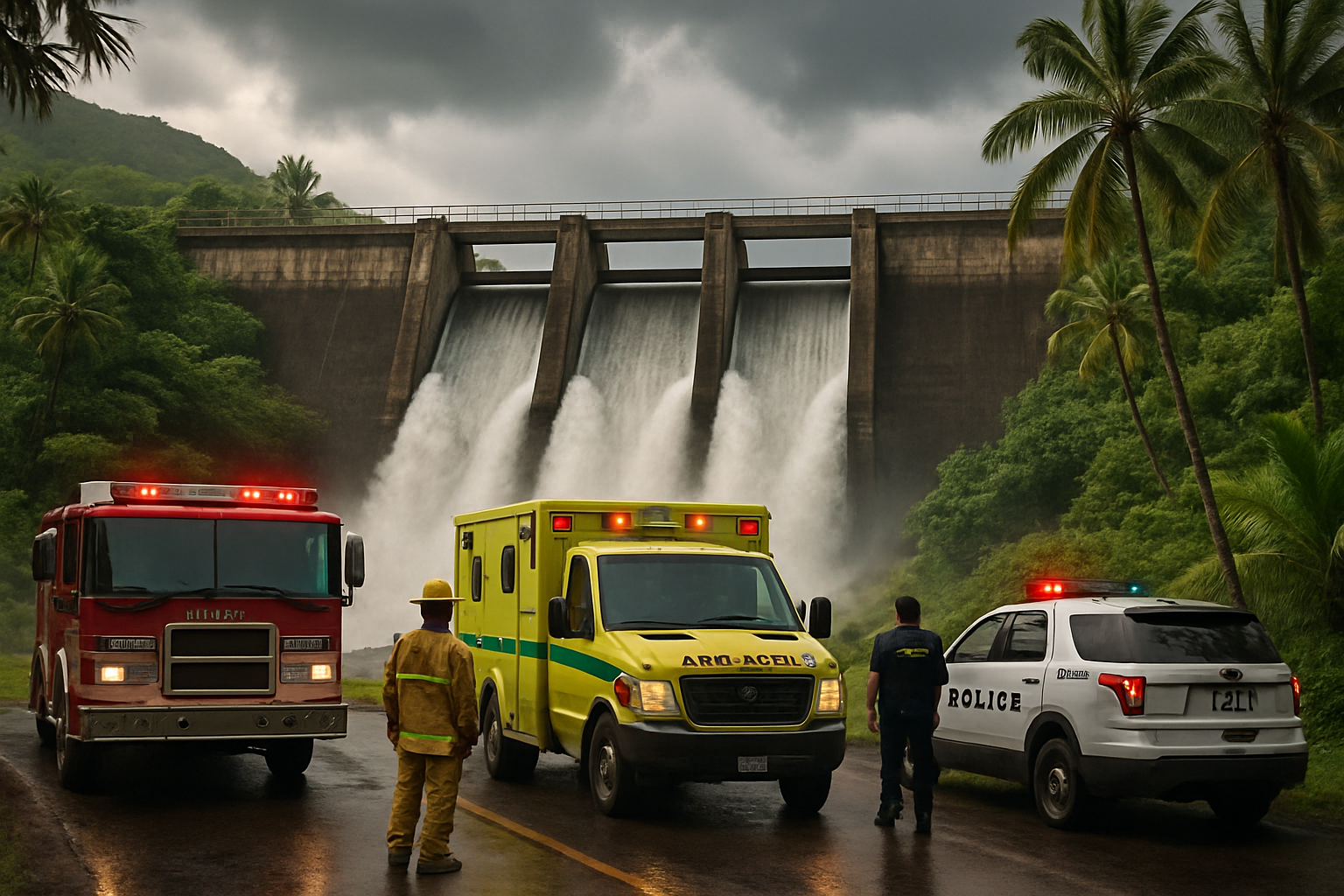
More than 5,500 residents have been evacuated from areas surrounding Hawaii's Wahiawa dam as authorities warn the 120-year-old structure could catastrophically fail amid severe flooding conditions affecting much of Oahu's northern regions.
The emergency evacuation order was issued as the century-old dam, located in the heart of Oahu, shows alarming signs of structural compromise following days of intense rainfall that has overwhelmed the island's drainage infrastructure. Officials describe the situation as "particularly dangerous" with flood alerts extending across large portions of Hawaii.
Critical Infrastructure Under Siege
The Wahiawa dam, constructed in the early 1900s during Hawaii's territorial period, has served as a crucial component of Oahu's water management system for over a century. However, the aging infrastructure was not designed to handle the intensity of precipitation currently battering the Hawaiian Islands.
According to emergency management officials, the dam's structural integrity has been compromised by the unprecedented volume of water flowing through the system. The facility, which has operated continuously for 120 years, is now facing conditions that exceed its original design parameters.
"We are dealing with a perfect storm of circumstances," said a Hawaiian emergency management spokesperson. "The infrastructure we're relying on was built over a century ago for different climate conditions than what we're experiencing today."
Mass Evacuation Operations
Emergency services have mobilized comprehensive evacuation procedures affecting thousands of residents in the dam's potential flood zone. The 5,500 people ordered to evacuate represent one of the largest emergency displacements in recent Hawaiian history.
Evacuation centers have been established across Oahu to accommodate displaced families, with emergency shelters activated throughout the island. Transportation networks are being managed to facilitate safe movement away from high-risk areas while maintaining access for emergency responders.
Local authorities are working around the clock to ensure all residents in the danger zone are safely relocated. Door-to-door notifications have been conducted in vulnerable neighborhoods, with particular attention paid to elderly residents and those with mobility challenges.
Climate Crisis Context
The current emergency occurs within the context of increasingly severe weather patterns affecting the Pacific region. The crisis unfolds as global temperatures continue their unprecedented streak, with recent months marking some of the hottest conditions on record.
Hawaii's infrastructure, much of which dates to the early-to-mid 20th century, faces mounting challenges from climate-driven extreme weather events. The intensity and frequency of severe precipitation events have increased significantly, placing aging systems under tremendous stress.
Emergency management experts note that traditional infrastructure was designed for historical weather patterns rather than current climate conditions. This mismatch between infrastructure capacity and environmental demands creates dangerous vulnerabilities across the island chain.
Emergency Response Coordination
Hawaiian Civil Defense has activated its highest alert levels, coordinating with federal emergency management agencies to address the crisis. Military assets may be deployed to support evacuation and emergency response operations if conditions continue to deteriorate.
The state's emergency management system is operating at full capacity, with all available resources directed toward ensuring public safety. Coordination centers have been established to manage the complex logistics of mass evacuation while maintaining essential services across the island.
Weather monitoring systems are providing continuous updates on precipitation patterns and water levels, allowing emergency managers to make real-time decisions about evacuation zones and safety measures.
Infrastructure Vulnerability Assessment
The Wahiawa dam crisis highlights broader concerns about aging infrastructure across Hawaii and the Pacific region. Many of the islands' critical facilities were constructed decades ago and require significant upgrades to handle current environmental conditions.
Engineering assessments of the dam's condition have revealed concerning signs of structural stress that could lead to catastrophic failure if water levels continue to rise. The facility's age and original construction standards create particular vulnerabilities under extreme loading conditions.
State officials acknowledge that comprehensive infrastructure modernization will be necessary to address climate resilience across Hawaii's water management systems. The current crisis may serve as a catalyst for accelerated investment in upgraded facilities.
Community Response and Support
Local communities have demonstrated remarkable resilience and mutual aid during the evacuation process. Neighbors are assisting neighbors, volunteer organizations are supporting emergency operations, and local businesses are providing resources for displaced families.
Community centers, schools, and religious facilities have been converted into temporary shelters, with volunteers helping to coordinate food, clothing, and other essential supplies for evacuees. The spirit of "aloha" is evident in the widespread support for affected families.
Social media platforms have become crucial communication tools, with community groups sharing real-time updates about evacuation procedures, shelter availability, and volunteer opportunities.
Economic and Social Implications
The evacuation and potential dam failure carry significant economic implications for Oahu and the broader Hawaiian economy. Agriculture, tourism, and local businesses face disruptions that could extend well beyond the immediate emergency period.
Educational institutions in affected areas have suspended operations, impacting thousands of students. Healthcare facilities are implementing contingency plans to maintain essential services while preparing for potential patient evacuations.
The tourism industry, a cornerstone of Hawaii's economy, faces uncertainty as transportation networks and accommodations adjust to emergency conditions. Visitor safety remains a top priority for state and local authorities.
Long-Term Recovery Planning
Even as immediate safety concerns dominate current operations, officials are beginning to consider long-term recovery and infrastructure improvement strategies. The crisis underscores the urgent need for comprehensive climate adaptation planning across Hawaii's infrastructure systems.
Recovery efforts will likely require federal support and may take months or years to complete, depending on the extent of damage from the current emergency. The "build back better" approach will be essential to creating more resilient infrastructure for future extreme weather events.
Environmental scientists and engineers are already analyzing lessons from this crisis to inform future infrastructure development and emergency preparedness strategies. The experience will contribute to broader understanding of climate adaptation needs in island environments.
Looking Ahead
As emergency operations continue, the focus remains on immediate safety and evacuation completion. Weather forecasters are monitoring conditions closely, providing updated projections for rainfall and flood risks throughout the region.
The Wahiawa dam crisis serves as a sobering reminder of the challenges facing aging infrastructure in an era of climate change. Hawaii's experience may provide valuable insights for other coastal and island communities facing similar vulnerabilities.
State and federal authorities are committed to comprehensive support for affected communities, with recovery and rebuilding efforts expected to incorporate enhanced climate resilience measures. The current emergency, while challenging, represents an opportunity to build more robust and sustainable infrastructure for Hawaii's future.