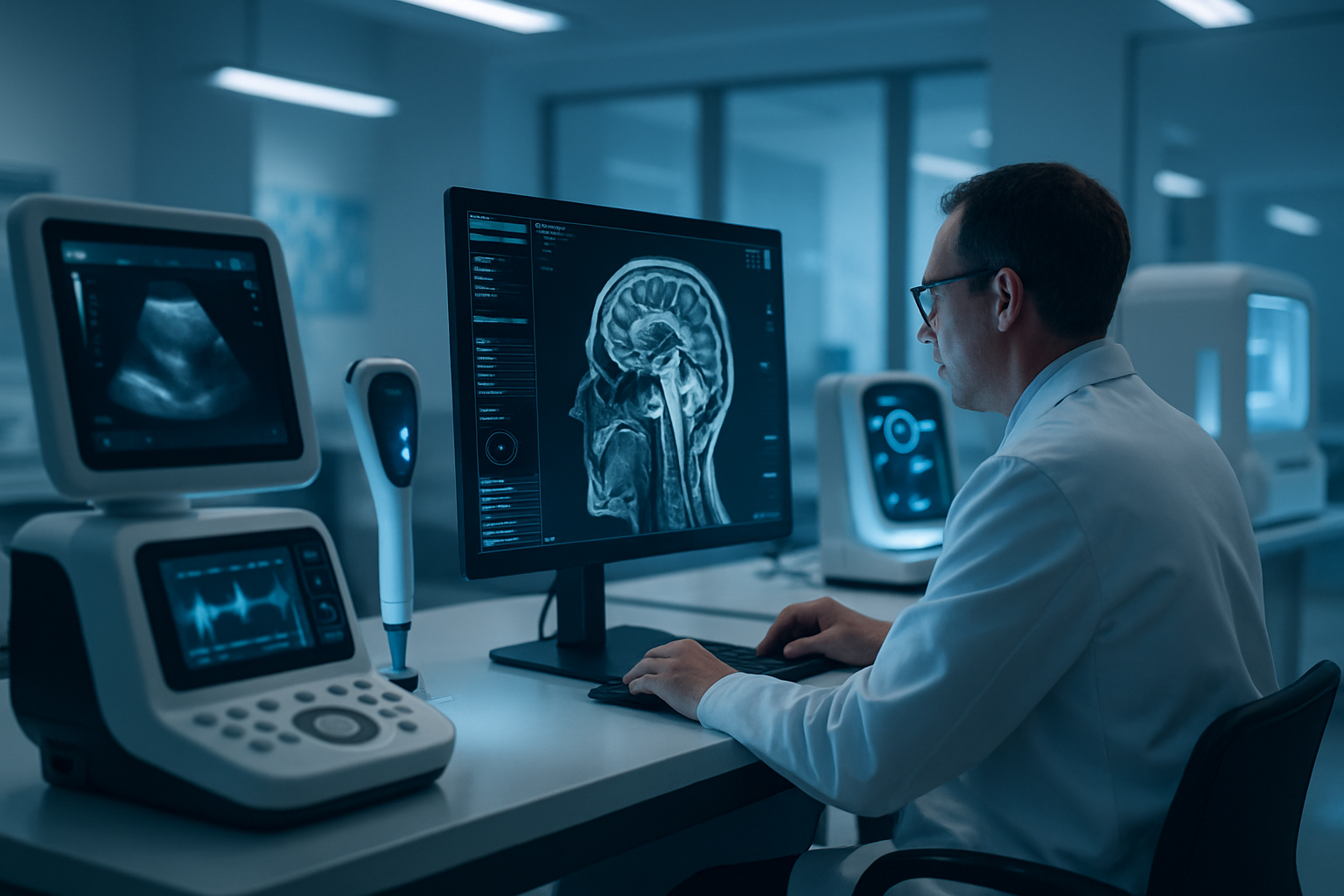
A wave of revolutionary health technology innovations is transforming medical care globally, with China achieving a historic milestone by approving its first brain implant system for paralyzed patients while researchers worldwide develop breakthrough diagnostic tools that could reshape healthcare delivery.
China's Historic Brain-Computer Interface Approval
China has achieved a significant medical technology breakthrough by granting approval for its first implantable brain-computer interface system, designed to restore partial mobility to paralyzed patients. The miniature coin-sized module is surgically implanted directly into the patient's brain, where it records electrical brain activity and translates neural signals into movement commands.
This groundbreaking development positions Chinese neurotechnology companies as serious competitors to established players like Neuralink, marking China's aggressive push into the neurotechnology sector. The brain-computer interface represents years of research and development, offering new hope for patients with spinal cord injuries and other paralytic conditions.
The implant works by detecting the brain's electrical signals when patients think about moving, then transmitting these signals to external devices or stimulation systems that can help restore function to paralyzed limbs. Early trials have shown promising results in helping patients regain some degree of hand and arm movement.
Costa Rica's Antibiotic Resistance Detection Revolution
Researchers at the University of Costa Rica (UCR) have successfully redesigned a molecular testing system that enables more accurate detection of antibiotic-resistant bacteria, addressing a critical gap in Latin American healthcare systems. The breakthrough focuses on identifying the IMP-18 genetic variant, which is common in Costa Rica and other Latin American countries but was previously undetectable by commercial diagnostic systems.
This advancement represents a crucial development in the global fight against antibiotic resistance, which the World Health Organization considers one of the top threats to public health worldwide. The improved testing system allows for earlier diagnosis of resistant bacterial infections, enabling healthcare providers to select appropriate treatments more quickly and effectively.
"This development facilitates early diagnosis and improves the treatment of serious infections by identifying resistance patterns that were previously invisible to our diagnostic tools."
— UCR Research Team
The collaboration between UCR and Costa Rica's Social Security Fund (CCSS) demonstrates how targeted research can address specific regional health challenges while contributing to global medical knowledge. The enhanced detection capability is particularly important in hospitals and intensive care units where rapid identification of resistant bacteria can be life-saving.
Slovakia's AI-Powered Hand Analysis Breakthrough
In a remarkable advancement in artificial intelligence diagnostics, researchers in Slovakia have developed an AI system capable of identifying serious hormonal diseases from photographs of patients' hands. This revolutionary approach promises to make medical diagnosis more accessible and efficient, requiring only a single photograph to detect certain conditions.
The AI system has been trained to recognize subtle visual markers in hand appearance that correlate with various hormonal disorders. This represents a significant shift toward non-invasive diagnostic methods that could particularly benefit underserved populations with limited access to traditional medical testing facilities.
The technology builds on growing evidence that many diseases manifest in visible ways that human observers might miss but that trained AI systems can detect with high accuracy. Similar approaches have been successfully developed for detecting other conditions through facial analysis, retinal scans, and skin examinations.
The Global Context of Healthcare Innovation
These breakthrough developments occur within what medical researchers are calling the "Therapeutic Revolution of 2026" – a period characterized by unprecedented international cooperation in healthcare innovation despite challenges facing traditional global health organizations like the WHO.
The momentum builds on recent advances documented throughout 2026, including Swedish AI trials for breast cancer detection, Hong Kong's novel antibody therapies for liver cancer, and revolutionary diagnostic tools emerging from research institutions worldwide. Countries are increasingly developing bilateral partnerships and regional cooperation networks to share medical knowledge and accelerate breakthrough discoveries.
Prevention-First Healthcare Transformation
A fundamental shift is occurring from reactive treatment to prevention-focused healthcare strategies. Countries implementing comprehensive prevention programs report superior cost-effectiveness compared to traditional treatment-focused approaches, with substantial long-term cost reductions through decreased crisis interventions and improved population health outcomes.
The new technologies exemplify this trend: brain-computer interfaces prevent further deterioration in paralyzed patients, advanced bacterial detection enables early intervention before infections become critical, and AI-powered diagnostics catch diseases in early stages when they're most treatable.

Technology Integration and Human-Centered Care
Successful healthcare innovations demonstrate sophisticated integration of advanced technology with human-centered care approaches. These developments enhance rather than replace clinical judgment, ensuring that medical progress benefits diverse populations regardless of geographic or economic constraints.
The brain implant technology requires extensive training for neurosurgeons and ongoing monitoring systems. The Costa Rican bacterial detection system supports laboratory technicians in making more accurate diagnoses. The Slovakian AI system assists physicians in recognizing conditions they might otherwise miss.
Economic and Social Implications
The economic implications of these medical breakthroughs are substantial. Prevention-focused strategies demonstrate measurable cost reductions while medical innovations save healthcare systems millions through improved outcomes. Initial prevention investments are justified through long-term savings and enhanced population outcomes.
Countries developing these technologies are also positioning themselves as leaders in medical tourism and regional healthcare hubs. The expertise gained from implementing cutting-edge medical technologies creates substantial economic multiplier effects beyond direct healthcare improvements.
Implementation Challenges and Success Factors
Despite the promise of these innovations, successful implementation requires sustained political commitment to healthcare investment, comprehensive professional training, and international cooperation for knowledge sharing and resource optimization. Regulatory frameworks must balance enabling innovation while ensuring patient safety.
The global semiconductor crisis, which has driven memory chip prices sixfold higher, presents additional challenges for technology-dependent medical devices. However, these constraints are also spurring innovation in memory-efficient algorithms and hybrid processing approaches.
Looking Forward: The Future of Medical Technology
March 2026 represents a transformative period in global healthcare, demonstrating how coordinated international action can achieve significant improvements even under resource constraints. The convergence of precision medicine advances, international cooperation models, and prevention-focused strategies provides a foundation for resilient healthcare systems addressing 21st-century challenges.
These breakthroughs offer hope for more effective, accessible, and sustainable medical care. Success depends on healthcare systems' ability to balance scientific innovation with equitable access, ensuring that medical advances benefit all populations while maintaining the human connections that make healthcare truly effective.
The integration of brain-computer interfaces, advanced bacterial detection, and AI-powered diagnostics represents just the beginning of a healthcare transformation that could reshape how societies approach human health and longevity through coordinated international medical cooperation and innovation.