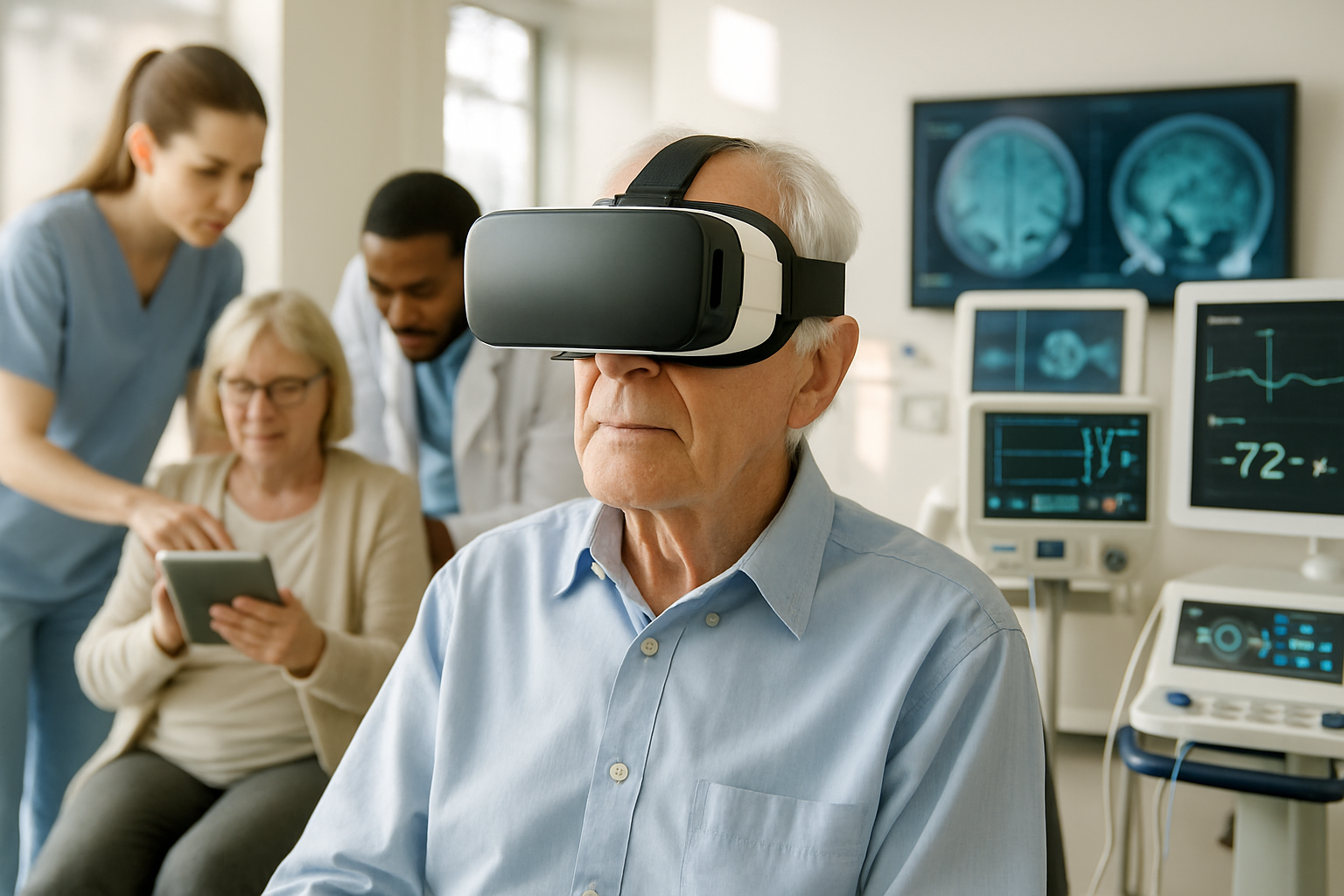
Revolutionary health technology initiatives across Canada and Austria are transforming senior care through virtual reality gaming for dementia patients and comprehensive digital literacy programs, representing the cutting edge of the global "Therapeutic Revolution of 2026" that emphasizes prevention-first healthcare and human-centered technology integration.
At Wilfrid Laurier University's Bioadaptive Interface Lab in Brantford, Ontario, researchers are pioneering groundbreaking applications of VR gaming technology specifically designed for individuals with dementia. Professor John Muñoz, an assistant professor of user experience design, leads this innovative research initiative that combines exercise games with therapeutic interventions to help dementia patients maintain physical fitness and cognitive engagement.
VR Gaming Breakthrough for Dementia Care
The Canadian research project, conducted in partnership with Brantford's Adult Recreation Therapy Centre and funded by the Alzheimer Society: Brant, Haldimand Norfolk, Hamilton Halton, represents a paradigm shift in dementia treatment approaches. Traditional dementia care has often focused on managing decline, but this VR gaming initiative actively promotes physical activity and cognitive stimulation.
The therapeutic VR system creates immersive environments that encourage patients to engage in physical movements while playing games, addressing one of the most significant challenges in dementia care: maintaining physical activity and preventing the rapid physical decline often associated with cognitive deterioration. The games are specifically calibrated to accommodate varying levels of cognitive function while ensuring safety and enjoyment for participants.
"These VR systems provide step-by-step guidance for daily activities and object identification, significantly improving quality of life for patients and reducing caregiver burden."
— Professor John Muñoz, Wilfrid Laurier University
The research builds on growing evidence that physical exercise can slow cognitive decline in dementia patients. By gamifying exercise through virtual reality, the program makes physical activity more engaging and accessible for individuals who might otherwise resist traditional exercise regimens. The system monitors patient movements and adjusts difficulty levels automatically, ensuring that each session provides appropriate challenge without causing frustration or physical strain.
Austria's Digital Literacy Revolution
Meanwhile, in Salzburg, Austria, a comprehensive digital literacy program is addressing another critical aspect of senior wellness: bridging the digital divide that increasingly isolates older adults from modern society. The Austrian initiative, detailed in Der Standard, focuses on teaching seniors aged 70-80 how to navigate smartphones, internet services, and digital communication platforms.
The program recognizes that digital exclusion has become a significant health and wellness issue, as essential services increasingly move online and social connections depend heavily on digital platforms. Without smartphone and internet access, seniors face barriers to healthcare, banking, shopping, and maintaining relationships with family members, particularly younger generations who primarily communicate through digital channels.
Austrian program coordinators report that participants often express profound gratitude for learning digital skills, with many describing feelings of empowerment and renewed connection to contemporary society. The initiative goes beyond basic technical training to address the psychological and social aspects of digital adoption, helping seniors overcome anxiety about technology while building confidence in their ability to learn new skills.
Human-Centered Technology Integration
Both the Canadian VR gaming project and Austrian digital literacy program exemplify the principles of human-centered technology integration that define the 2026 Therapeutic Revolution. Rather than replacing human connections or professional care relationships, these technologies enhance existing support systems while preserving the essential human elements that make healthcare effective.
The VR gaming system maintains strong therapeutic relationships between patients, caregivers, and healthcare professionals, using technology as a tool to facilitate better care rather than automating human interaction. Similarly, the Austrian digital literacy program emphasizes peer learning and community building, creating social connections among participants while teaching technical skills.
Prevention-First Healthcare Economics
These innovative programs align with growing evidence that prevention-first healthcare strategies offer superior cost-effectiveness compared to traditional reactive treatment models. By maintaining physical activity and cognitive engagement in dementia patients, VR gaming programs may delay the need for institutional care, reducing healthcare costs while improving quality of life.
Digital literacy programs generate similar economic benefits by enabling seniors to access telehealth services, manage prescriptions online, and maintain social connections that support mental health. Countries implementing comprehensive prevention programs report substantial cost reductions through decreased crisis interventions while achieving superior population health outcomes.
The economic implications extend beyond immediate healthcare savings. Maintaining seniors' independence for longer periods reduces strain on family caregivers and social services while contributing to overall community resilience. Research from successful prevention-first programs shows economic multiplier effects that include improved workforce productivity, reduced emergency service demands, and enhanced international competitiveness through healthier populations.
International Cooperation and Innovation
These health technology innovations emerge within a broader context of international cooperation driving medical advancement despite traditional funding challenges facing organizations like the WHO. The Canadian VR research and Austrian digital literacy initiatives demonstrate how bilateral partnerships and peer-to-peer knowledge sharing can accelerate innovation while ensuring advances benefit diverse populations.
The distributed cooperation model represented by these programs allows flexible, culturally responsive approaches that maintain evidence-based standards while adapting to local needs. Canadian research methodologies inform European applications, while Austrian community engagement strategies provide models for North American programs.
"Technology should enhance rather than replace clinical judgment and personal medical relationships, ensuring diverse population benefits regardless of geographic or economic constraints."
— International Health Technology Assessment Panel
Addressing Digital Age Challenges
The Austrian digital literacy program particularly addresses the challenge of digital age adaptation for vulnerable populations. Research shows that 96% of children aged 10-15 use social media, with 70% experiencing harmful content exposure, yet many seniors remain completely disconnected from digital platforms that increasingly dominate social and economic life.
This digital divide creates intergenerational communication barriers and excludes older adults from essential services. The Austrian program's success demonstrates that with appropriate support, seniors can successfully adopt digital technologies, improving their wellness and maintaining social connections across generations.
Cultural Adaptation and Sustainability
Both programs demonstrate the importance of cultural adaptation in healthcare technology implementation. The Canadian VR gaming system accommodates cultural preferences and cognitive capabilities specific to dementia patients, while the Austrian digital literacy program respects traditional values while embracing technological advancement.
Evidence consistently shows that healthcare innovations integrating local cultural wisdom achieve superior outcomes compared to standardized Western frameworks. Authentic community connections prove more effective than performance-based metrics, with sustainable wellness approaches that accommodate human struggle and imperfection rather than demanding constant progress.
Success factors identified across both programs include sustained political commitment beyond electoral cycles, comprehensive professional training in prevention approaches, robust community engagement that respects cultural contexts, and continued international cooperation despite funding constraints.
Future Implications for Global Healthcare
These innovative health technology applications represent templates for addressing 21st-century healthcare challenges through coordinated international action that honors scientific rigor while embracing human complexity. The convergence of VR gaming therapy, digital literacy education, and prevention-first healthcare strategies provides unprecedented opportunities for comprehensive wellness promotion.
The success of these programs could influence global healthcare policy by demonstrating that technology can enhance human-centered care rather than replacing essential therapeutic relationships. As healthcare systems worldwide grapple with aging populations and resource constraints, these models show how strategic technology adoption can improve outcomes while controlling costs.
Mental health professionals increasingly recognize that the constant pursuit of technological optimization can create psychological exhaustion rather than genuine healing. The Austrian and Canadian programs avoid this "wellness paradox" by emphasizing authentic emotional expression, sustainable approaches, and community connection over individual achievement metrics.
Implementation Requirements
Scaling these innovations globally requires addressing several critical implementation factors. Healthcare institutions must invest in comprehensive professional training that emphasizes technology limitations alongside capabilities. Staff need to understand how to integrate VR gaming systems and digital literacy support into existing care frameworks without disrupting essential human relationships.
Regulatory frameworks must ensure patient safety while enabling innovation. Age verification systems, data privacy protections, and quality assurance protocols become essential as healthcare technology becomes more sophisticated and widespread.
Community engagement strategies proven successful in Austria and Canada emphasize peer support networks, family involvement, and gradual skill building that respects individual learning pace and cultural preferences.
Conclusion: A New Era of Health Technology
The VR gaming programs for dementia patients and digital literacy initiatives for seniors represent more than technological advancement—they exemplify a fundamental transformation in how societies approach healthcare and aging. By combining cutting-edge technology with human-centered care principles, these programs demonstrate that innovation can enhance rather than diminish the essential human connections that make healthcare effective.
As the Therapeutic Revolution of 2026 continues to evolve, these Canadian and Austrian innovations provide valuable templates for healthcare systems worldwide. They show that with sustained commitment, cultural sensitivity, and international cooperation, technology can serve human flourishing rather than corporate convenience.
The success of these programs offers hope that healthcare transformation can achieve the ambitious goal of organizing societies around human flourishing rather than merely treating illness after it develops. For the millions of seniors facing dementia or digital exclusion, these innovations represent not just technological advancement but genuine pathways to maintaining dignity, independence, and connection in an increasingly complex world.