Healthcare systems across the globe are experiencing a transformative wave of technological advancement, with medical institutions in Kuwait, the Caribbean, and Cyprus leading the charge in implementing AI-driven solutions and digital health innovations that promise to revolutionize patient care and operational efficiency.
The latest developments span three continents, showcasing how different regions are addressing healthcare challenges through cutting-edge technology, from advanced robotic surgical systems to comprehensive digital health platforms and internationally recognized quality standards.
Kuwait Pioneers Military Medical Innovation
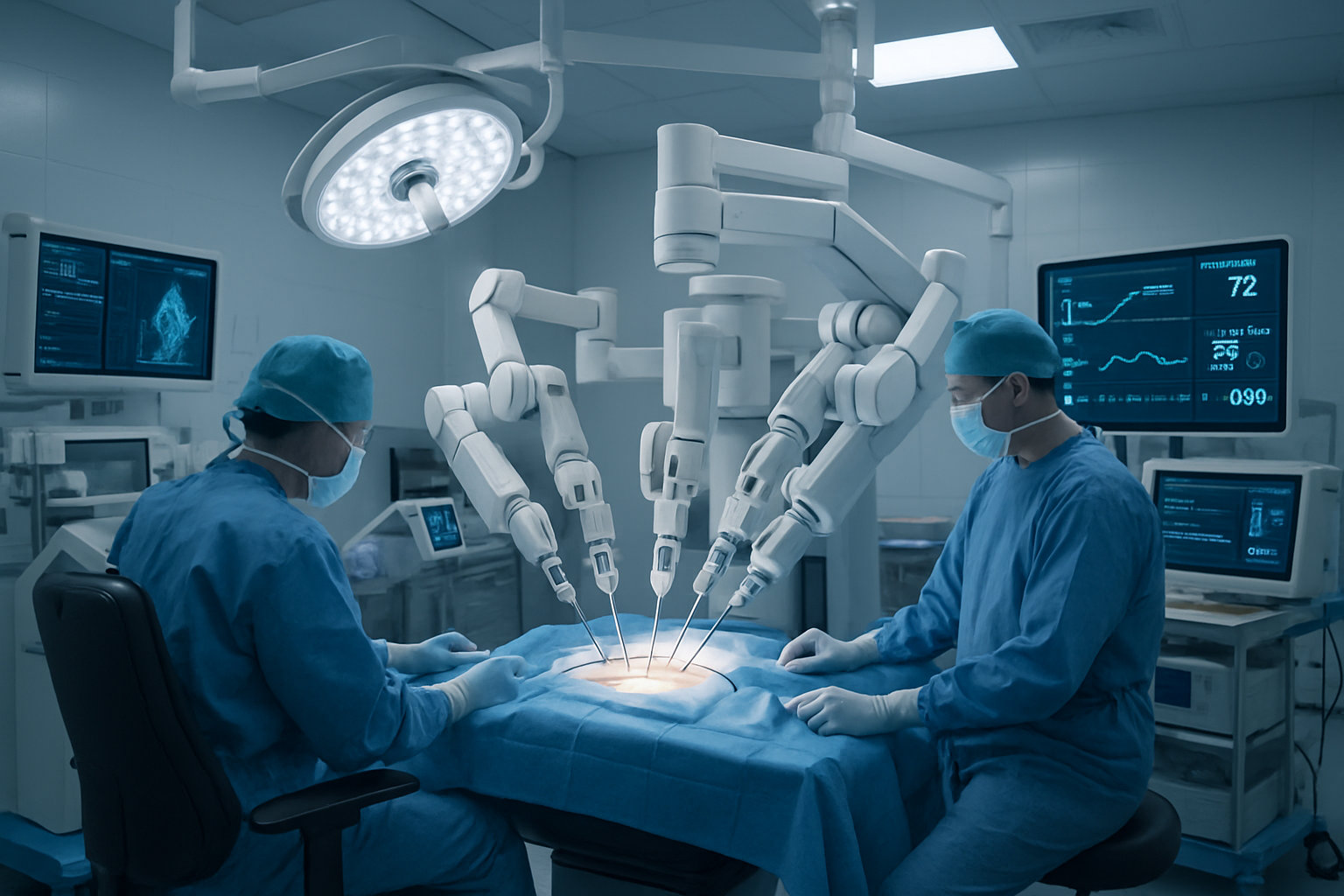
Kuwait's Defense Ministry has taken a significant step forward in military healthcare by unveiling the Hugo robotic surgical system at Jaber Al-Ahmad Hospital for the Armed Forces. Defense Minister Sheikh Abdullah Ali Abdullah Al-Salem Al-Sabah inaugurated the state-of-the-art technology, marking a milestone in the country's commitment to advancing military medical capabilities.
The Hugo system represents one of the most advanced surgical technologies currently available, enabling medical personnel to perform operations with unprecedented precision. This implementation aligns with Kuwait's broader strategy to elevate its military healthcare system to meet the latest international medical standards while supporting the development of its military medical sector.
"We must continuously strive to enhance the healthcare system of the Armed Forces and support the development of the military medical sector in line with the latest medical standards."
— Sheikh Abdullah Al-Sabah, Kuwait Defense Minister
The installation reflects Kuwait's recognition of the critical importance of advanced medical technology in military settings, where precision and reliability can be matters of life and death. The Hugo system's capabilities extend beyond traditional surgical methods, offering minimally invasive procedures that can reduce recovery times and improve patient outcomes.
Caribbean Digital Health Platform Launch
In the Caribbean region, technological innovation is taking a different but equally impactful form. A Vincentian computer scientist, known for previously developing the Voter Analysis System (VALSY) that provided online voter registration verification ahead of last year's general election, has launched Caridoctor, a groundbreaking digital healthcare platform.
Caridoctor represents a significant leap forward in Caribbean healthcare accessibility, designed to help people find medical services and healthcare providers across the region. The platform addresses a critical need in the Caribbean, where healthcare access can be challenging due to geographic dispersion and resource limitations.
This development builds on the creator's proven track record of successful digital solutions, demonstrating how technology expertise developed in one sector can be effectively applied to address healthcare challenges. The platform's launch comes at a crucial time when digital health solutions are becoming increasingly important for improving healthcare access in remote and underserved communities.
Bridging Healthcare Gaps Through Technology
The Caribbean healthcare landscape has long faced challenges related to geographic isolation and resource distribution. Caridoctor's approach to creating a comprehensive healthcare lookup system could serve as a model for other island nations and regions facing similar challenges.
The platform's development by a local expert ensures cultural relevance and understanding of regional healthcare needs, factors that are often overlooked when implementing foreign-developed health technology solutions.
Cyprus Achieves International Healthcare Excellence
Meanwhile, in Cyprus, IASIS Private Hospital has reached a significant milestone by achieving accreditation according to internationally recognized CHKS Healthcare Accreditation Standards. This achievement places the hospital among elite medical institutions worldwide that meet the most stringent quality and safety requirements in healthcare delivery.
The CHKS accreditation confirms that IASIS Private Hospital meets strict international standards across multiple critical areas, including quality management, patient safety, clinical care, and organizational processes. This comprehensive evaluation process ensures that the hospital operates at the highest levels of medical excellence.
As a member of the Leptos Group, IASIS Private Hospital's achievement represents more than institutional recognition—it demonstrates the facility's ongoing commitment to delivering responsible, reliable, and high-quality healthcare services to the Cypriot community and international patients.
"This distinction represents a significant milestone for the Hospital and further strengthens its position as a modern and trusted healthcare centre."
— IASIS Private Hospital Statement
Global Context and Implications
These developments occur against a backdrop of accelerating healthcare innovation worldwide. Recent advances documented in early 2026 include breakthrough AI applications in cancer detection, precision medicine developments, and the integration of artificial intelligence into routine healthcare operations.
The convergence of robotic surgery, digital health platforms, and international quality standards represents a comprehensive approach to healthcare modernization. Each development addresses different aspects of the healthcare continuum: Kuwait's focus on surgical precision, the Caribbean's emphasis on accessibility, and Cyprus's commitment to comprehensive quality standards.
Technology Integration Challenges and Opportunities
The implementation of advanced healthcare technologies presents both opportunities and challenges. While robotic surgical systems like Kuwait's Hugo offer unprecedented precision, they require significant training investments and ongoing technical support. Digital platforms like Caridoctor must navigate regulatory requirements across multiple jurisdictions while ensuring data security and patient privacy.
International accreditation standards, such as those achieved by IASIS Private Hospital, provide frameworks for quality assurance but require continuous monitoring and improvement processes to maintain certification levels.
Future Healthcare Landscape
The global healthcare industry is witnessing a fundamental shift toward technology-enabled care delivery. The developments in Kuwait, the Caribbean, and Cyprus illustrate different pathways toward this transformation, each tailored to specific regional needs and capabilities.
Robotic surgery systems are expected to become increasingly common in military and civilian hospitals worldwide, driven by their ability to perform complex procedures with enhanced precision and reduced invasiveness. Digital health platforms are likely to expand beyond simple lookup services to comprehensive care coordination systems.
International accreditation standards will continue to evolve, incorporating new technologies and methodologies while maintaining focus on patient safety and care quality. The success of these initiatives will depend on continued investment in healthcare infrastructure, training, and technology integration.
Economic and Social Impact
The economic implications of these healthcare innovations extend beyond immediate medical benefits. Advanced surgical capabilities can attract medical tourism, digital platforms can reduce healthcare costs through improved efficiency, and international accreditation can enhance a country's reputation as a healthcare destination.
From a social perspective, these developments represent progress toward more equitable healthcare access. Robotic surgery can provide consistent quality regardless of individual surgeon variability, digital platforms can connect patients with appropriate care providers, and accreditation standards ensure consistent quality across different healthcare facilities.
Looking Ahead
The healthcare innovations emerging across Kuwait, the Caribbean, and Cyprus represent just the beginning of a broader global transformation. As AI technology continues to advance and digital health solutions become more sophisticated, we can expect to see even more dramatic changes in how healthcare is delivered and accessed worldwide.
The success of these early implementations will provide valuable data and insights for other healthcare systems considering similar technological upgrades. The lessons learned from robotic surgery integration, digital platform development, and international quality standard achievement will inform future healthcare innovation strategies globally.
As healthcare systems worldwide grapple with aging populations, resource constraints, and evolving patient expectations, the technologies and approaches demonstrated in these three regions offer promising pathways toward more effective, efficient, and accessible healthcare delivery for all.