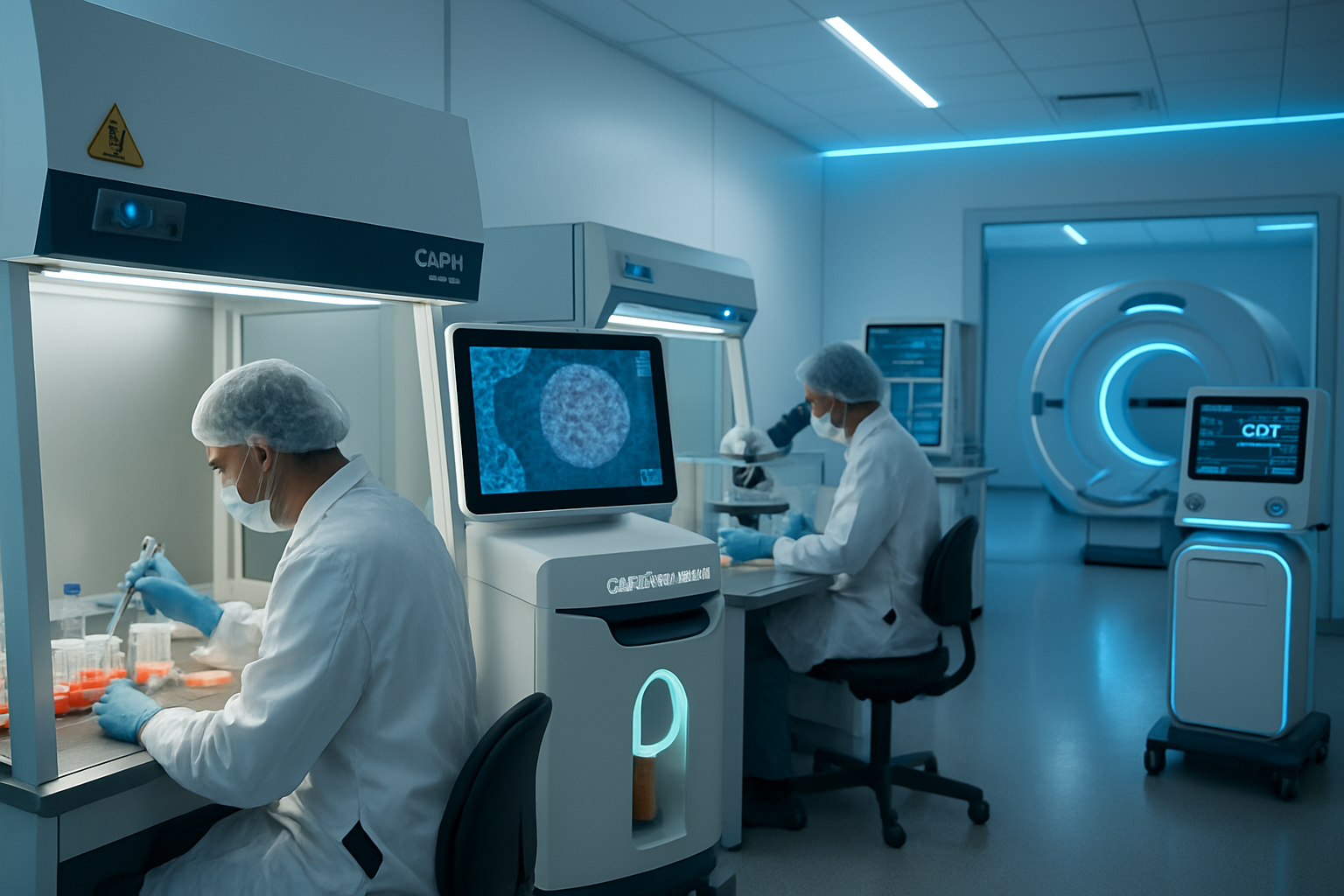
A groundbreaking medical achievement has emerged from Portugal as CAR-T cell therapy successfully treated multiple autoimmune diseases in a single patient, while simultaneously, Canada pioneers nature prescriptions for healthcare and Malta invests heavily in advanced MRI technology, demonstrating the accelerating pace of the global Therapeutic Revolution of 2026.
CAR-T Cell Therapy Breakthrough: From Cancer to Autoimmune Diseases
Portuguese medical researchers have achieved what many considered impossible just months ago: successfully applying CAR-T cell therapy to treat autoimmune diseases. CAR-T (Chimeric Antigen Receptor T-cell) therapy, traditionally used as a form of immunotherapy that harnesses a patient's own immune cells to attack harmful cells in cancer treatment, has now demonstrated remarkable efficacy in achieving remission of three distinct autoimmune diseases in a female patient.
This revolutionary breakthrough represents a paradigm shift in autoimmune disease treatment, moving from symptom management to potentially curative interventions. The therapy works by extracting the patient's T-cells, genetically modifying them to better target specific disease-causing mechanisms, and reinfusing them to restore immune system balance.
"CAR-T therapy uses the patient's own immune cells to attack harmful cells and has been utilized to treat various types of cancer."
— PÚBLICO Medical Report
The success comes at a critical time when autoimmune diseases are on the rise globally, affecting millions of people with conditions ranging from rheumatoid arthritis to multiple sclerosis. Traditional treatments often require lifelong immunosuppressive medications with significant side effects, making this personalized cellular therapy approach particularly promising.
Canada's Innovative Nature Prescription Program
Meanwhile, in Canada, a revolutionary healthcare initiative is taking root that prescribes nature itself as medicine. The PaRx program, now available for Hamilton Conservation Authority (HCA) sites, allows healthcare providers to prescribe nature passes to patients as a legitimate therapeutic intervention.
This groundbreaking program recognizes the scientifically-proven mental health benefits of nature exposure, addressing everything from anxiety and depression to stress-related physical ailments. Healthcare providers can now formally prescribe time in nature as part of comprehensive treatment plans, providing patients with structured access to conservation areas and outdoor spaces.
The initiative represents a significant shift toward preventive healthcare strategies, acknowledging that mental wellness and physical health are intrinsically connected to environmental factors. Early implementation has shown promising results in reducing healthcare costs while improving patient outcomes through this innovative approach to holistic healing.
Malta's Medical Infrastructure Investment
In Malta, healthcare infrastructure is receiving a substantial boost with the inauguration of a new MRI scanner at St Vincent de Paul Hospital, following an investment of approximately €1.8 million, co-financed through European funds. The ceremony was attended by Minister Jo Etienne Abela, Minister Stefan Zrinzo Azzopardi, and Parliamentary Secretary Malcolm Paul Agius Galea.
This 1.5T MRI scanner represents a significant leap forward in diagnostic capabilities, enabling more complex examinations with unprecedented precision. The technology will facilitate improved diagnoses and more effective treatments for patients across Malta, with services beginning operation this week.
The investment demonstrates Malta's commitment to medical sovereignty and advanced healthcare delivery, positioning the island nation as a regional leader in diagnostic imaging technology. This advancement will reduce the need for international medical referrals while providing world-class diagnostic services to the Maltese population.
The Therapeutic Revolution of 2026 Context
These developments occur within the broader context of what medical historians are calling the "Therapeutic Revolution of 2026," characterized by unprecedented international cooperation in medical innovation despite traditional funding challenges facing global health organizations.
Key characteristics of this revolution include:
- Prevention-first strategies showing superior cost-effectiveness over reactive treatment models
- International cooperation through bilateral partnerships and peer-to-peer knowledge sharing
- Technology integration enhancing rather than replacing clinical judgment and human-centered care
- Personalized medicine approaches tailored to individual patient genetic profiles and needs
Economic analyses consistently demonstrate that prevention-focused healthcare strategies offer substantial cost reductions through decreased crisis interventions while achieving superior population health outcomes. Countries implementing comprehensive prevention programs report enhanced community resilience, reduced social service demands, and improved workforce productivity.
Global Healthcare Infrastructure Evolution
The simultaneous developments in Portugal, Canada, and Malta illustrate a coordinated global shift toward comprehensive healthcare transformation. Portugal's cellular therapy breakthrough represents the cutting edge of precision medicine, while Canada's nature prescription program exemplifies innovative preventive care approaches, and Malta's diagnostic imaging investment demonstrates commitment to healthcare infrastructure modernization.
This convergence reflects a maturing understanding that effective healthcare requires both technological advancement and holistic approaches to human wellness. The integration of advanced cellular therapies with nature-based interventions and state-of-the-art diagnostic equipment creates a comprehensive ecosystem addressing the full spectrum of human health needs.
Implementation Challenges and Success Factors
Despite remarkable progress, implementing these innovations faces several challenges including regulatory approval processes, healthcare workforce training requirements, sustainable financing mechanisms, and ensuring equitable access regardless of geographic or economic constraints.
Success factors identified across these initiatives include:
- Sustained political commitment to healthcare investment beyond electoral cycles
- Comprehensive professional training programs for new technologies and approaches
- Authentic community engagement building trust and cultural appropriateness
- International cooperation for knowledge sharing and resource optimization
- Balance between technological innovation and human-centered care principles
Economic and Social Implications
The economic implications of these healthcare advances extend far beyond immediate medical costs. CAR-T therapy for autoimmune diseases could dramatically reduce long-term healthcare expenses for millions of patients currently requiring lifelong treatments. Nature prescription programs demonstrate measurable cost reductions through decreased emergency interventions and improved mental health outcomes. Advanced diagnostic imaging investments generate medical tourism potential while reducing international referral dependency.
Countries developing breakthrough technologies position themselves as leaders in emerging high-value medical markets while contributing to global knowledge bases. The expertise gained from implementing cutting-edge medical technologies creates economic multiplier effects extending beyond direct healthcare improvements to educational achievement, workplace productivity, and social stability.
Future Trajectory and Global Impact
April 2026 represents a critical juncture in global healthcare evolution, with evidence-based innovations successfully translating into accessible, effective treatments. The convergence of precision medicine advances, international cooperation models, and prevention-focused strategies provides a foundation for resilient healthcare systems addressing 21st-century challenges.
These developments demonstrate that the Therapeutic Revolution of 2026 is not merely about individual breakthrough treatments, but rather a comprehensive transformation in how societies approach human health and wellness. The integration of cellular therapy innovations, nature-based interventions, and advanced diagnostic capabilities offers unprecedented opportunities for improving human health outcomes on a global scale.
Success in scaling these innovations globally requires continued coordination between nations, sustained commitment to evidence-based medicine principles, and recognition that healthcare transformation extends beyond immediate medical improvements to encompass educational achievement, workforce productivity, social stability, and international competitiveness with decades-lasting impacts.
The templates emerging from Portugal, Canada, and Malta provide practical models for comprehensive healthcare transformation that serves diverse populations while addressing complex modern health challenges through coordinated international action, scientific excellence, and human-centered care delivery principles.