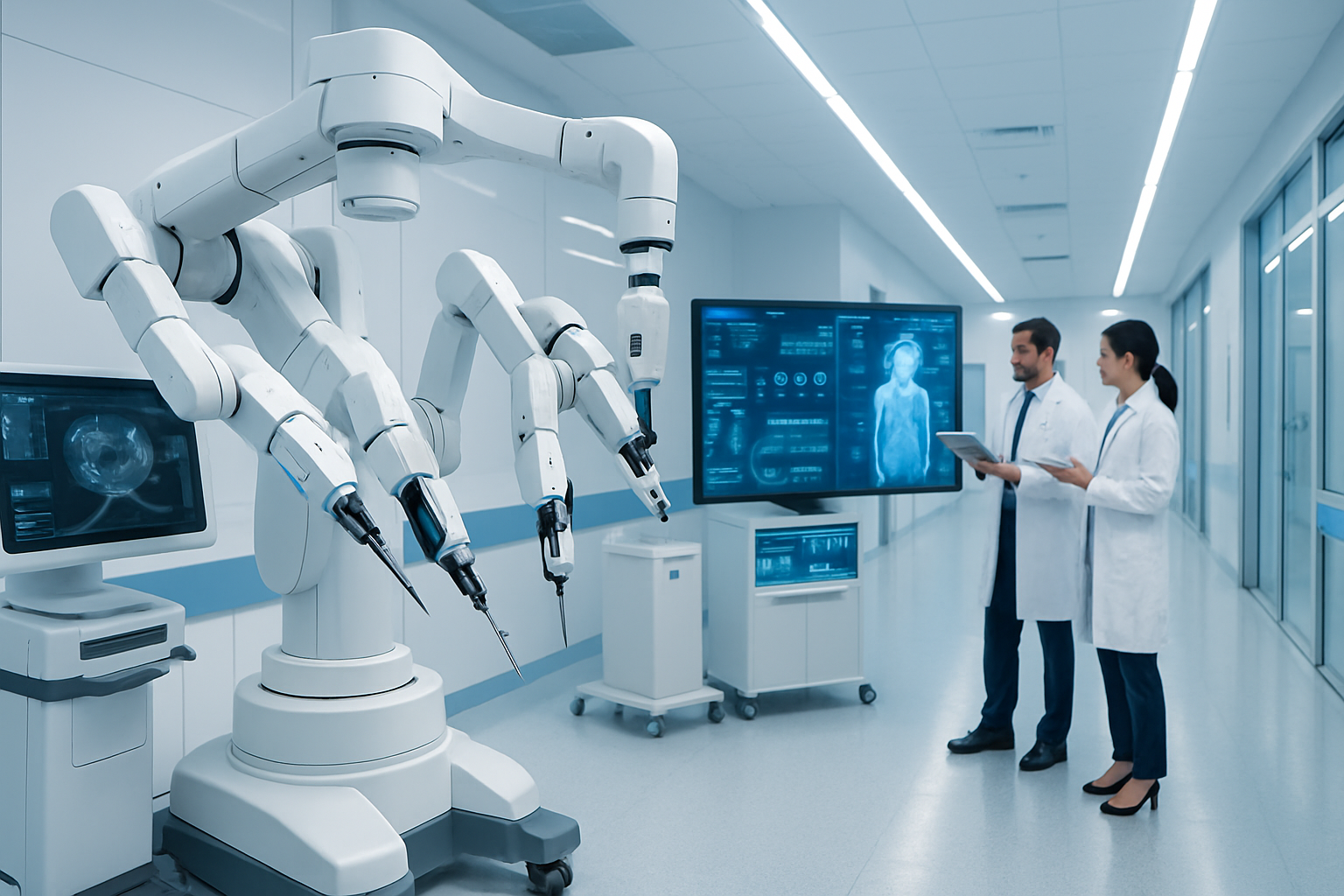
Revolutionary healthcare developments across three continents showcase the accelerating "Therapeutic Revolution of 2026," with precision robotic surgery achieving millimeter-level accuracy in Romania while Guyana emerges as a regional medical hub through strategic infrastructure investments and cross-border patient care expansion.
The convergence of cutting-edge medical technology and strategic healthcare infrastructure development is fundamentally transforming global healthcare delivery, creating new possibilities for patients who previously faced limited treatment options or expensive medical evacuations.
Romania's Robotic Neurosurgery Breakthrough
Medical teams in Cluj, Romania, have achieved a remarkable milestone in precision medicine with the successful implementation of robotic neurosurgery capable of millimeter-level precision. The groundbreaking procedure involved treating a woman with severe spinal deformity, representing a significant advancement in the country's neurosurgical capabilities.
This achievement positions Romania at the forefront of European medical innovation, demonstrating how sustained investment in advanced medical technology and comprehensive professional training can transform a nation's healthcare capabilities. The precision afforded by robotic surgical systems allows neurosurgeons to perform complex procedures with unprecedented accuracy, reducing patient trauma and improving clinical outcomes.
"This level of precision in robotic neurosurgery represents a paradigm shift in how we approach complex spinal deformities. The millimeter-level accuracy enables us to perform procedures that would have been impossible with traditional surgical methods."
— Medical Source, Romanian Healthcare System
The success aligns with broader European trends toward sophisticated medical technology integration, building on documented advances across the continent including awake brain surgery in Latvia, advanced cardiac procedures in Austria, and comprehensive medical education reforms throughout Eastern Europe.
Guyana's Healthcare Infrastructure Revolution
President Dr. Irfaan Ali has announced transformative changes in Guyana's healthcare system, with Region Nine experiencing a dramatic transformation that has reduced medical evacuations to under two percent while attracting thousands of Brazilian patients seeking care across borders.
The Lethem Hospital is emerging as a prominent cross-border care hub, demonstrating how strategic healthcare investments can position smaller nations as regional medical destinations. This transformation represents a fundamental shift from healthcare dependency to healthcare sovereignty, with measurable improvements in patient care delivery and international medical cooperation.
Simultaneously, the government has disclosed a massive $3 billion investment in cardiac services at the Caribbean Heart Institute over the past five years. This substantial commitment was announced during the opening of Optique Eye Hospital by Optique Care Vision, highlighting the nation's comprehensive approach to medical infrastructure development.
These investments extend beyond immediate patient care to create economic multiplier effects, including medical tourism potential, reduced international medical referral dependency, and enhanced workforce productivity. The success demonstrates how sustained political commitment to healthcare investment can transform regional medical capabilities while building local expertise.
The Therapeutic Revolution of 2026
These developments occur within the context of the global "Therapeutic Revolution of 2026," characterized by a fundamental shift from reactive treatment models toward prevention-first healthcare strategies. Countries implementing comprehensive prevention programs are reporting 40% cost reductions through decreased crisis interventions while achieving superior population health outcomes.
The revolution emphasizes three critical components: technological innovation balanced with human-centered care, international cooperation through bilateral partnerships, and prevention-focused strategies that build community resilience. This approach avoids the "wellness paradox" where advanced technology creates healthcare inequality rather than improving access for diverse populations.
International Cooperation and Technology Integration
Despite funding challenges facing traditional multilateral organizations like the WHO, innovative bilateral partnerships and regional collaboration networks continue driving medical innovation through peer-to-peer knowledge sharing. This distributed cooperation model allows flexible, culturally responsive approaches while maintaining evidence-based medical standards.
Romania's neurosurgical advances and Guyana's infrastructure development exemplify how countries are transitioning from healthcare recipients to healthcare innovators, contributing specialized expertise to the global medical community while building domestic capabilities that serve their populations effectively.
The successful integration of advanced technology with human-centered care demonstrates that medical innovations must enhance rather than replace clinical judgment and personal medical relationships. This balance ensures that breakthrough treatments benefit all populations regardless of geographic or economic constraints.
Economic and Social Implications
The economic implications of these healthcare advances extend far beyond immediate medical costs. Prevention-focused strategies demonstrate substantial benefits through decreased crisis intervention expenses, improved workforce productivity, and enhanced community resilience. Countries investing in comprehensive healthcare infrastructure report positive effects on educational achievement, social stability, and international competitiveness.
Medical tourism potential represents a significant economic opportunity, with advanced surgical capabilities and quality infrastructure attracting patients from neighboring regions. This creates sustainable revenue streams that justify continued healthcare investments while building regional expertise.
Climate Resilience and Future Challenges
Healthcare transformation occurs during unprecedented environmental challenges, with global temperatures exceeding critical thresholds for consecutive months in 2026. Prevention-first approaches prove particularly valuable for managing climate-related health challenges through proactive intervention rather than reactive crisis management.
Healthcare systems must address immediate medical needs while building long-term environmental resilience to manage evolving disease patterns and climate-related health impacts. The infrastructure investments demonstrated in Guyana and technological advances in Romania provide models for climate-adaptive healthcare development.
Success Factors and Global Significance
The success of these healthcare transformations depends on several critical factors: sustained political commitment to healthcare investment beyond electoral cycles, comprehensive professional training programs for new technologies, authentic community engagement building trust and cultural appropriateness, and continued international cooperation for knowledge sharing and resource optimization.
April 2026 represents a critical juncture in healthcare evolution, with evidence-based innovations translating into accessible, effective treatments. The convergence of precision medicine advances, international cooperation models, and prevention-focused strategies provides the foundation for resilient healthcare systems addressing 21st-century challenges.
These developments demonstrate that coordinated action can achieve transformative improvements under resource constraints, balancing technological innovation with fundamental healthcare principles of compassionate care, community engagement, and recognition of health as a universal human right.
The healthcare revolution continues to accelerate, with Romania's precision surgery and Guyana's infrastructure success providing templates for sustainable healthcare development that other nations can adapt to their specific contexts while contributing to the global advancement of medical science and patient care.