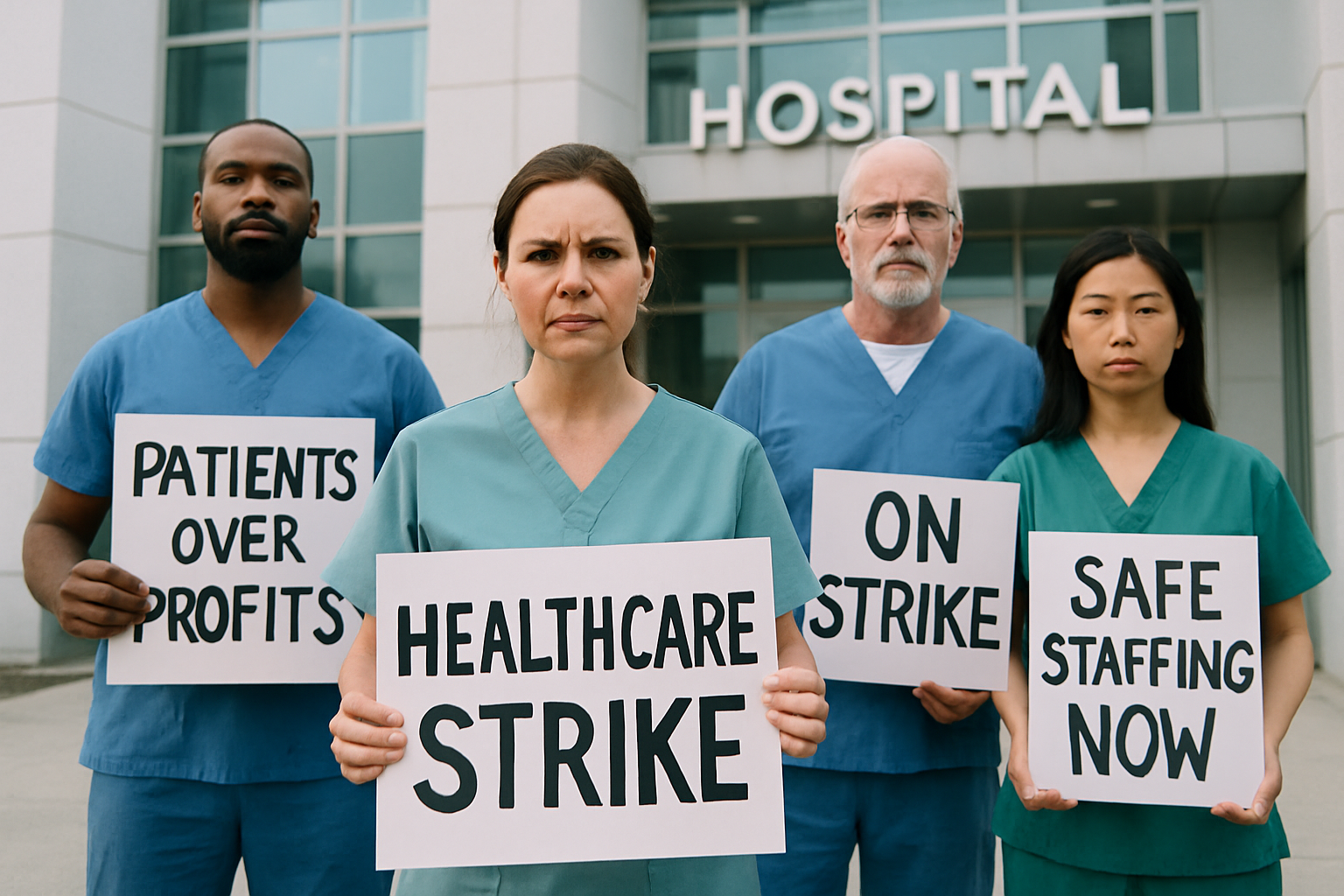
Healthcare workers in Bosnia and Herzegovina and Trinidad and Tobago have announced new strikes and protests, adding to a mounting global crisis that has seen medical professionals from Europe to North America take unprecedented action over working conditions and system failures.
The healthcare union in Canton Sarajevo announced peaceful protests for April 24, with officials warning they do not rule out entering a general strike if the Cantonal Government fails to address their demands regarding collective bargaining agreements for healthcare workers. The announcement comes as doctors in Tuzla and Central Bosnia cantons have already declared strikes over similar workplace grievances.
Simultaneously, in Trinidad and Tobago, the National Nursing Association signaled plans for a "second wave of action" to push for salary increases for nurses within the Regional Health Authorities. The association congratulated public servants on their recent salary adjustments while highlighting that healthcare workers remain trapped on 2013 income levels despite mounting responsibilities.
A Pattern of Global Healthcare Worker Rebellion
These strikes represent the latest manifestation of what healthcare experts are calling an unprecedented global healthcare workforce crisis. According to Planet News investigations spanning multiple continents, healthcare systems worldwide are experiencing simultaneous breakdowns that threaten the fundamental principle of universal healthcare access.
The Bosnia and Trinidad strikes occur within the broader context of what researchers have termed the "Therapeutic Revolution of 2026" – a paradoxical period where remarkable medical advances in precision medicine, AI diagnostics, and revolutionary surgical techniques coincide with catastrophic healthcare delivery system failures.
"We in the Regional Health Authorities (who remain on 2013 income) are indeed elated and envious of your good fortune to now be working on your 2019 salaries."
— Trinidad and Tobago National Nursing Association statement
This "wellness paradox," as healthcare experts describe it, creates two-tiered systems where sophisticated medical capabilities contrast sharply with basic service delivery failures, undermining universal healthcare principles across multiple countries.
European Healthcare Systems in Crisis
The Bosnia strikes align with a broader pattern of European healthcare worker actions. Recent investigations have documented over 50,000 patients waiting more than 24 hours in NHS emergency department corridors in the UK, while one in seven NHS workers report experiencing violence from patients and the public. In Germany, Health Minister Nina Warken announced sweeping billion-euro cost-saving proposals that have generated intense opposition from medical associations.
Cyprus faces what industry leaders describe as "ticking time bomb" nursing shortages, with approximately 600 nursing professionals needed nationwide. Private hospitals are considering department closures due to insufficient nurse-to-patient ratios required by law, while public sector unions block legislative reforms to hire qualified nurses from third countries.
Meanwhile, Iceland's Landspítali National University Hospital emergency department faces what medical professionals describe as the "worst ever" conditions, and Finland experiences dangerous medication errors costing up to €4,500 per incident while 22% of Dutch adults avoid dentist visits due to cost concerns.
Caribbean Healthcare Under Severe Strain
The Trinidad nursing crisis exemplifies broader Caribbean healthcare challenges. Healthcare workers report being trapped in mandatory overtime situations due to chronic understaffing, choosing sick leave over extended shifts that compromise both patient safety and worker wellbeing.
The situation has become so severe that in April, a senior doctor at Trinidad's Eric Williams Medical Sciences Complex died suddenly after an extended Easter weekend shift, with the nursing association describing the death as a "casualty" in the ongoing industrial relations battle with health authorities.
These conditions reflect what healthcare experts identify as common vulnerabilities across global healthcare systems: chronic workforce shortages from pandemic departures, aging infrastructure beyond design capacity, administrative complexity preventing efficient resource allocation, and sustained funding pressures limiting system responsiveness.
The Economic Case for Prevention-First Healthcare
Despite the crisis, some regions are demonstrating that alternative approaches work. Countries implementing comprehensive prevention programs are reporting superior cost-effectiveness versus reactive treatment models, with some achieving 40% cost reductions through decreased crisis interventions while improving population health outcomes.
Montana's mobile crisis teams achieved an 80% reduction in police mental health calls through proactive community intervention, while Finland's educational reforms balance academic achievement with psychological wellbeing, preventing depression patterns. These success models demonstrate that prevention-first strategies can deliver measurable benefits through enhanced community resilience and reduced emergency care demands.
International Cooperation Under Pressure
The healthcare crisis occurs amid severe funding constraints for international coordination efforts. The World Health Organization faces significant funding challenges from major contributor withdrawals, limiting its capacity to provide guidance and support during this critical period when global cooperation is most needed.
However, innovative bilateral partnerships and regional collaboration networks continue driving medical innovation through peer-to-peer knowledge sharing. This distributed cooperation model enables flexible, culturally responsive approaches while maintaining evidence-based medical standards.
Climate Change Compounds Healthcare Challenges
Healthcare systems are simultaneously confronting unprecedented environmental challenges, with January 2026 marking the 18th consecutive month that global temperatures exceeded 1.5°C above pre-industrial levels. Climate change is fundamentally altering disease patterns, creating new health challenges that require healthcare systems to address immediate medical needs while building long-term environmental resilience.
Prevention-first approaches are particularly valuable for managing climate-related health challenges through proactive intervention versus reactive crisis management, but implementation requires stable institutional frameworks that current staffing crises undermine.
Critical Juncture for Global Healthcare
Healthcare experts describe April 2026 as a critical juncture that will determine whether global healthcare systems overcome institutional crises to realize the promise of medical advances or whether mounting pressures fragment systems that millions depend upon.
The convergence of precision medicine advances, international cooperation models, and prevention-focused strategies provides a foundation for resilient healthcare systems capable of addressing 21st-century challenges. However, success requires sustained political commitment to healthcare investment, comprehensive professional training, authentic community engagement, and continued international cooperation despite institutional constraints.
Reform requirements identified by healthcare experts include administrative simplification to reduce bureaucratic barriers, massive healthcare education investment for workforce development, infrastructure modernization of facilities and equipment, technology integration that enhances rather than complicates care delivery, and strengthened international cooperation for sharing effective practices.
Stakes Extend Beyond Healthcare
The implications of the current crisis extend far beyond immediate medical costs. Healthcare system failures create educational disruption, increased social service demands, and long-term productivity losses as preventable conditions become chronic. The economic effects include reduced workforce productivity, declining international competitiveness, and erosion of public confidence in healthcare institutions.
The strikes in Bosnia and Trinidad, while focused on immediate working conditions and compensation, represent symptoms of fundamental challenges that test society's commitment to healthcare as a fundamental right versus an economic privilege. The choices made regarding prevention strategies, infrastructure investment, and international cooperation will determine whether healthcare systems achieve sustainable universal access or fragment under mounting pressure, with implications that will resonate for decades ahead.
As healthcare workers from the Balkans to the Caribbean take unprecedented action, their struggles illuminate a global system at a crossroads, where the promise of medical breakthroughs must be matched by the political will and financial commitment necessary to ensure these advances benefit all populations, regardless of geographic or economic constraints.