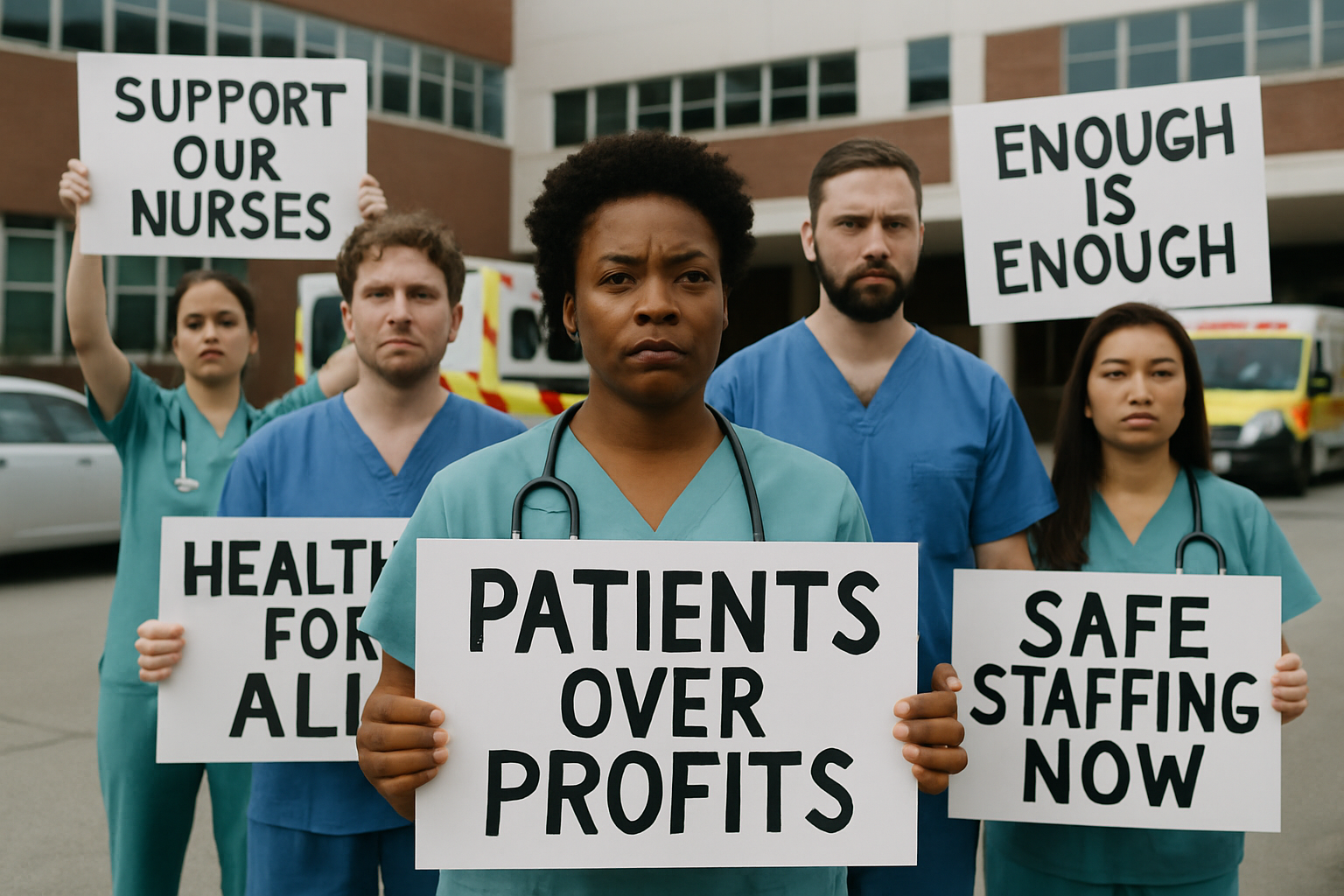
Healthcare workers across multiple European countries are organizing strikes and protests over deteriorating working conditions and inadequate pay, marking the latest escalation in a global medical crisis that has been building throughout 2026.
French Ambulance Services Set for April Strike
French private ambulance operators have announced strike action scheduled for April 2026, marking a significant escalation in ongoing disputes over compensation and working conditions. The operators, who primarily handle patient transport and non-emergency medical trips, cite long-standing grievances about fee structures that have remained inadequately addressed by health authorities.
The strike announcement comes as France's healthcare system faces mounting pressures from both financial constraints and increased demand for medical services. Private ambulance services play a crucial role in the country's medical infrastructure, particularly in rural areas where public emergency services may be stretched thin.
"We have been negotiating in good faith for months, but our concerns about fair compensation and sustainable working conditions continue to be ignored,"
— French Ambulance Operators Union Representative
Irish Hospital Cancels All Elective Procedures
At Letterkenny University Hospital in Ireland, mounting pressure on healthcare services forced the cancellation of all elective procedures on Tuesday, March 31, 2026. The hospital reported 59 emergency department presentations on that day alone, following 197 attendees the previous Monday.
The situation at Letterkenny reflects broader systemic issues plaguing Irish healthcare, where overcrowding and staff shortages have become chronic problems. Hospital administrators are directly contacting patients whose procedures have been postponed, while warning that non-urgent cases will face "very long waiting times."
The hospital acknowledged the significant impact on patients and families, stating that "all available beds in the hospital are in use" and that patients are experiencing extended waiting times for admission from emergency departments to ward beds.
UK Doctors Issue Strike Ultimatum
In the United Kingdom, the healthcare crisis has reached a political flashpoint as Prime Minister Keir Starmer delivered a 48-hour ultimatum to resident doctors to call off a planned six-day strike. The British Medical Association (BMA) rejected the government's offer of additional NHS training posts and a 7.1% pay increase without putting it to membership vote.
Starmer characterized the union's decision as "reckless," threatening to withdraw the current offer entirely if the strike proceeds after Easter. The standoff represents one of the most serious confrontations between the UK government and medical professionals in recent years.
The dispute highlights fundamental disagreements over healthcare funding and working conditions that have persisted despite multiple rounds of negotiations. With the NHS already operating under severe strain, the threatened strike could further compromise patient care across England.
Part of Global Healthcare System Crisis
These European strikes occur within the context of what healthcare experts are calling the "Therapeutic Revolution of 2026" - a period of unprecedented strain on global medical systems. From Nigeria's threatened "total shutdown" to Cyprus hospital overcrowding and Iceland's "worst ever" conditions at Landspítali, healthcare workers worldwide are experiencing what researchers term "moral distress."
The World Health Organization faces severe funding constraints from major contributor withdrawals, limiting international coordination precisely when global cooperation is most needed. This has forced individual nations to develop bilateral partnerships with mixed results.

Climate Change Adding Pressure
The healthcare crises are occurring during January 2026, which marked the 18th consecutive month of global temperatures exceeding 1.5°C above pre-industrial levels. Climate change is fundamentally altering traditional disease patterns and creating new health challenges that require healthcare systems to address immediate needs while building long-term environmental resilience.
Prevention-first healthcare strategies are showing superior cost-effectiveness compared to reactive treatment models, with some countries achieving 40% cost reductions through decreased crisis interventions. However, implementing these approaches requires the stable institutional frameworks and committed workforces that current strikes and resignations are undermining.
Economic Implications Extend Beyond Healthcare
The healthcare worker strikes and systemic failures create economic effects that extend well beyond medical costs. Educational disruption occurs when healthcare workers cannot maintain their professional development, while increased social service demands arise from preventable conditions becoming chronic.
Long-term productivity losses result as workforce health deteriorates without adequate medical support. The economic implications include reduced international competitiveness and erosion of public confidence in healthcare institutions.
Reform Requirements Urgent
Healthcare experts identify several critical areas requiring immediate attention:
- Administrative simplification to reduce bureaucratic barriers
- Massive healthcare education investment for workforce development
- Infrastructure modernization of facilities and equipment
- Technology integration that enhances rather than complicates care delivery
Success requires sustained political commitment to healthcare investment, comprehensive professional training programs, authentic community engagement, and continued international cooperation despite current institutional constraints.
Critical Juncture for Global Healthcare
March 2026 represents what UN Secretary-General António Guterres has called "the greatest test of multilateral cooperation in the modern era." The healthcare evolution moment is determining whether global systems can overcome institutional crises to realize the promise of the "Therapeutic Revolution" or whether mounting pressures will fragment systems that millions depend upon.
The convergence of precision medicine advances, international cooperation models, and prevention-focused strategies provides a foundation for resilient healthcare systems addressing 21st-century challenges. However, the window for building sustainable universal access is narrowing rapidly as healthcare workers across multiple continents organize to demand fundamental changes.
"We are at a crossroads where we must choose between maintaining the status quo that has led to widespread burnout and system failures, or implementing the comprehensive reforms necessary to serve our communities effectively,"
— European Healthcare Workers Alliance
The stakes extend far beyond healthcare, affecting educational achievement, workforce productivity, social stability, and international competitiveness. The choices made in the coming months will determine whether healthcare systems achieve sustainable universal access or fragment under mounting pressure, with implications that will last for decades.