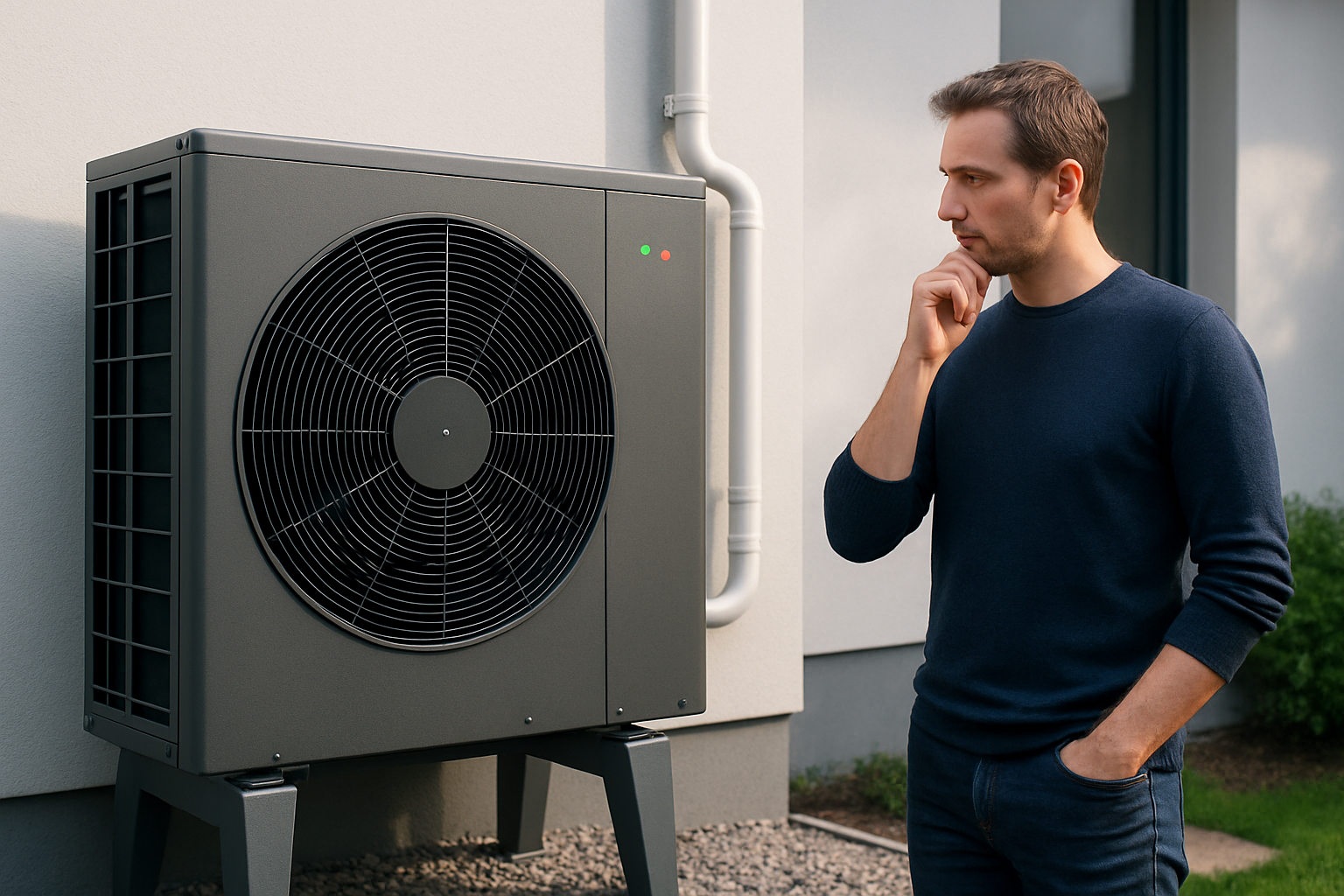
The UK government's ambitious push for heat pump adoption faces a critical reality check: while these renewable heating systems excel at keeping homes warm, they have yet to prove themselves as financially viable alternatives for the average British homeowner.
A comprehensive BBC investigation reveals the central dilemma confronting Britain's energy transition strategy. Despite government incentives and environmental benefits, heat pumps remain caught between technological success and economic practicality, raising fundamental questions about the pace and approach to decarbonizing domestic heating.
The Heat Pump Paradox
The contradiction is stark and emblematic of broader challenges facing renewable energy adoption. Heat pumps work exceptionally well as heating systems, delivering consistent warmth even in harsh winter conditions. However, their high upfront costs, combined with ongoing operational expenses and the need for home modifications, have created a financial barrier that government subsidies haven't yet overcome.
This disconnect between performance and affordability reflects deeper tensions within the UK's net-zero strategy. While Labour's government has set an ambitious target of a virtually zero-carbon power grid by 2030, the practical implementation faces resistance from homeowners weighing immediate costs against long-term environmental benefits.
Government Policy and Market Reality
The government's heat pump promotion forms part of a broader renewable energy surge that has seen record investment across multiple sectors. Recent announcements include contracts for 190 renewable energy projects, including England's largest onshore wind farm in over a decade near St Austell, Cornwall. This infrastructure investment demonstrates political commitment to clean energy transformation.
However, the domestic heating sector presents unique challenges. Unlike utility-scale renewable projects that benefit from economies of scale, heat pump installation requires individual household decisions where financial calculations often override environmental considerations. The mismatch between policy ambition and household economics has become increasingly apparent.
"While heat pumps represent proven technology for reducing carbon emissions from domestic heating, the financial case for individual homeowners remains complex and often unconvincing."
— Energy Policy Analyst, speaking to BBC
Technical Performance vs Economic Viability
From a technical standpoint, modern heat pumps have overcome many historical limitations. Advanced systems now function efficiently in temperatures as low as -30°C, addressing previous concerns about cold climate performance. Digital monitoring systems and smart grid integration have improved reliability and operational efficiency.
The technology has particularly benefited from innovations emerging from the global push toward electrification. Battery technology breakthroughs, including systems that retain 85-92% capacity after 200,000+ miles in electric vehicles, suggest similar longevity improvements for heat pump components. Enhanced insulation materials and building envelope improvements have reduced heating demands, making heat pumps more effective.
Despite these technical advances, the economic equation remains challenging. Installation costs typically range from £10,000-£20,000, while ongoing operational costs vary significantly depending on electricity prices, home insulation quality, and usage patterns. Government grants reduce but don't eliminate this financial burden.
European Context and Supply Chain Challenges
The UK's heat pump challenges exist within a broader European energy transition context. Estonia has achieved 88% renewable electricity with continental Europe's largest battery storage facility serving 90,000 households. The Netherlands demonstrates that homes with energy-saving upgrades, including heat pumps, command higher sale prices, reflecting growing environmental consciousness in property markets.
However, supply chain vulnerabilities threaten expansion plans. China controls 60% of critical materials production and 90% of refining capacity for lithium, cobalt, and rare earth elements essential for heat pump components. Memory chip shortages have driven semiconductor prices up sixfold, affecting smart heating control systems until 2027 when new fabrication facilities come online.
The US-EU-Japan Critical Minerals Partnership, involving 55 countries including seven African suppliers, represents efforts to diversify supply chains. These initiatives may eventually reduce heat pump costs, but current geopolitical tensions and supply constraints maintain price pressures.
Innovation and Alternative Approaches
Innovative heating solutions are emerging across Europe that may offer lessons for the UK market. Iceland's geothermal expertise has led to new applications, though concerns about energy infrastructure taxation could affect investment attractiveness. France and Luxembourg are exploring flexible carbon market mechanisms that could make renewable heating more financially attractive.
Small modular nuclear reactors gaining attention in Belgium, France, and other European nations may eventually provide low-cost electricity that improves heat pump economics. However, these technologies remain years from deployment, offering little immediate relief for current adoption challenges.
Community-Based Solutions
Some regions are experimenting with community heating networks that could make heat pump technology more economically viable. These approaches distribute installation and operational costs across multiple households while achieving economies of scale in equipment procurement and maintenance.
Housing Market Integration
The relationship between heat pump adoption and broader housing market trends adds complexity to the economic analysis. Recent investigations into European housing markets reveal construction industry challenges that affect energy system upgrades. Rising material costs create negative developer profit margins, constraining new construction that might incorporate heat pump systems from the design phase.
Memory chip shortages affecting smart building technologies add 20-30% to construction costs for modern developments until 2027. These supply chain disruptions make comprehensive energy system integration more expensive, potentially favoring retrofit solutions over new construction approaches.
Croatia's program to convert 600,000 empty homes for affordable rental demonstrates alternative approaches to housing and energy policy integration. Such comprehensive policy frameworks might better support heat pump adoption than isolated heating incentives.
Consumer Perspectives and Market Dynamics
Consumer research reveals the gap between environmental awareness and purchasing decisions. While surveys consistently show growing concern about climate change and energy costs, household investment decisions prioritize immediate financial returns over long-term environmental benefits.
The complexity of heat pump economics contributes to consumer hesitation. Unlike simple appliance replacements, heat pump installations often require electrical system upgrades, insulation improvements, and heating distribution modifications. These additional costs and disruptions deter many homeowners despite potential long-term savings.
Regional variations in electricity prices, local installer availability, and building stock characteristics create inconsistent value propositions across the UK. What might represent excellent value in Scotland could prove economically questionable in southern England, complicating national policy approaches.
Future Prospects and Policy Implications
The heat pump adoption challenge reflects broader questions about technology transition strategies and the role of government intervention in market transformation. Current evidence suggests that technical performance alone is insufficient to drive mass adoption without addressing economic barriers.
Successful examples from other renewable energy sectors offer potential models. The dramatic cost reductions in solar panels and wind turbines resulted from sustained policy support, technological improvement, and manufacturing scale. However, heat pumps face the additional challenge of requiring individual household decisions rather than utility-scale deployment.
Policy options under consideration include enhanced financial incentives, electricity market reforms to reduce operational costs, and integration with broader housing efficiency programs. Some analysts advocate for more comprehensive approaches that address insulation, electrical infrastructure, and heating systems simultaneously.
"The question isn't whether heat pumps can effectively heat British homes - they demonstrably can. The challenge is creating economic conditions where this environmental choice also becomes the financially sensible choice for individual families."
— Renewable Energy Economist
Climate Urgency and Pragmatic Solutions
The heat pump adoption challenge occurs against accelerating climate urgency. January 2026 marked the 19th consecutive month of global temperatures exceeding 1.5°C above pre-industrial levels, demonstrating that human-induced climate change has fundamentally altered atmospheric systems beyond natural recovery mechanisms.
This environmental context suggests that purely market-driven approaches to heat pump adoption may prove insufficient given the pace of climate change. More ambitious government intervention, similar to approaches taken during the COVID-19 pandemic or wartime mobilizations, may become necessary to achieve decarbonization timelines.
However, such interventions must account for household economic realities and energy affordability concerns. The challenge involves balancing climate action urgency with social equity and economic pragmatism in ways that build rather than undermine public support for energy transition.
Technology Integration and Smart Systems
Emerging smart home technologies may eventually improve heat pump economics through better integration with renewable electricity generation and grid management systems. Vehicle-to-grid technology allowing electric cars to serve as distributed energy storage could provide backup power for heat pumps during peak demand periods.
Advanced weather forecasting and machine learning algorithms can optimize heat pump operation to take advantage of lower electricity prices during periods of high renewable generation. These technological improvements may gradually shift the economic equation in favor of heat pump adoption.
Digital monitoring systems also provide better data on actual energy savings and system performance, potentially building consumer confidence through transparent performance tracking. Such technologies could address current uncertainties about real-world energy savings that influence household investment decisions.
Conclusion: Bridging Performance and Economics
The current state of heat pump adoption in the UK illustrates the complex relationship between technological capability and market acceptance. While these systems have proven their effectiveness at heating homes efficiently and reducing carbon emissions, they have yet to overcome the fundamental economic barriers preventing widespread adoption.
Success in closing this gap will likely require coordinated efforts addressing multiple factors simultaneously: enhanced financial incentives, electricity market reforms, supply chain improvements, and comprehensive home efficiency programs. The technical success of heat pump technology provides a foundation, but economic viability remains the critical missing element for mass market adoption.
As the UK pursues its ambitious climate goals, the heat pump experience offers important lessons about technology transition strategies. Environmental necessity alone appears insufficient to drive consumer behavior without addressing practical economic concerns that influence household investment decisions.
The path forward may require acknowledging that some environmental technologies need sustained public support through their market development phases, similar to the government backing that helped establish other renewable energy sectors. Whether such support proves politically sustainable while delivering environmental benefits at acceptable economic costs will likely determine the success of Britain's domestic heating decarbonization strategy.