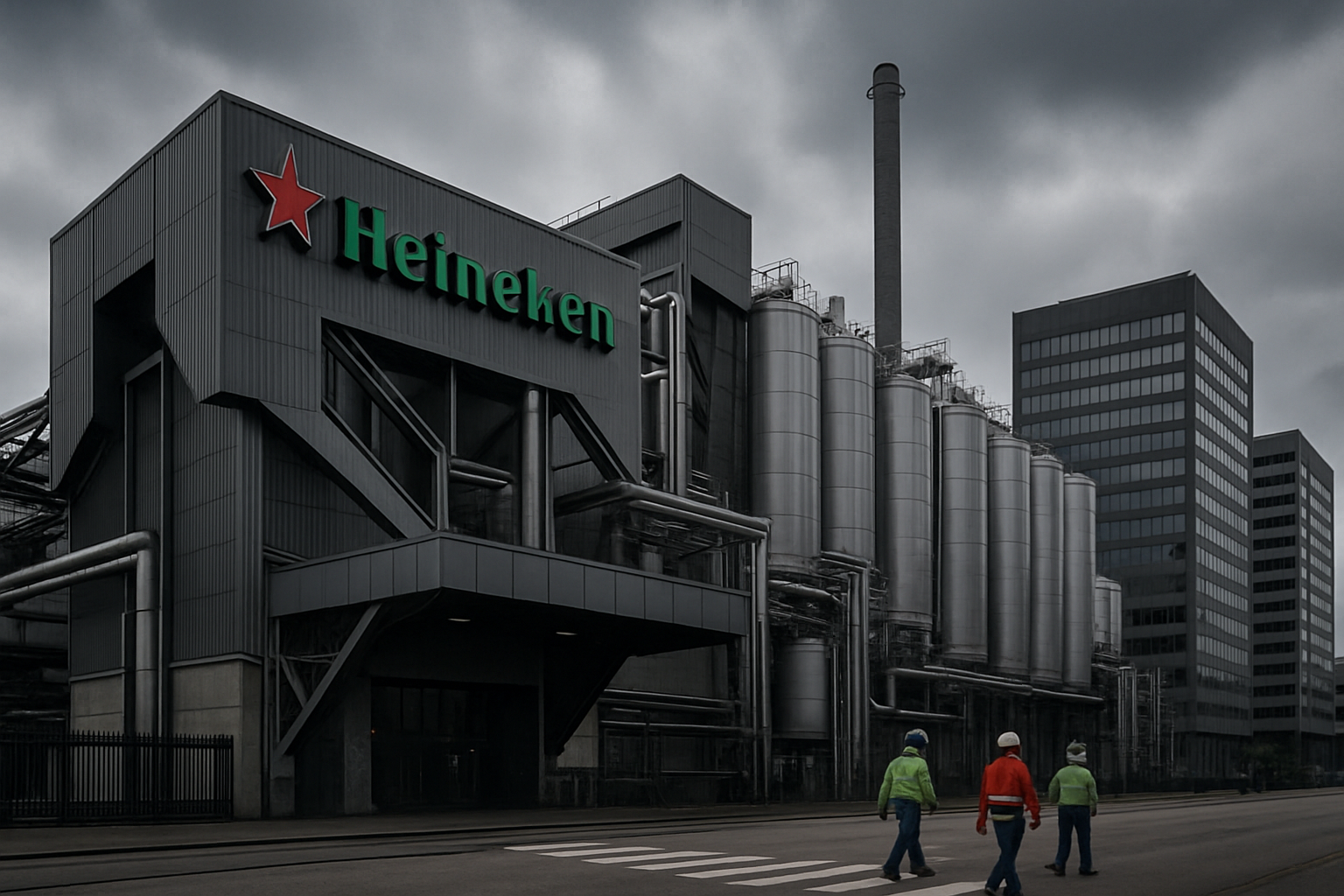
Heineken, the Dutch brewing giant behind the iconic green bottle brand, announced plans to eliminate up to 6,000 jobs globally over the next two years, representing approximately 7% of its workforce, in response to declining beer demand and mounting financial pressures.
The Amsterdam-based company confirmed the restructuring measures on Wednesday, February 11, 2026, citing weak beer consumption patterns worldwide that have forced management to scale back operations and reduce profit expectations for the coming year.
Scope and Timeline of Job Cuts
The layoffs will be implemented gradually over a 24-month period, affecting operations across Heineken's global network of breweries and corporate offices. The reduction represents roughly 7% of the company's total workforce, making it one of the most significant restructuring efforts in the brewing industry in recent years.
According to Austrian media reports, the job cuts are directly attributed to "weak demand for beer" that has prompted the company to pursue "drastic personnel reduction measures." The phased approach is designed to minimize operational disruptions while achieving the targeted cost savings.
Regional Impact and Local Responses
While the job cuts will affect operations globally, the impact varies significantly by region. In Austria, where Heineken operates through its Brau Union subsidiary, company representatives assured local media that there would be no major layoffs, instead focusing on "various efficiency measures" to address the challenging market conditions.
Hungarian reports indicate that the restructuring is part of a broader response to reduced beer consumption trends that have affected the entire brewing industry across Central and Eastern Europe. The company's decision reflects similar challenges faced by competitors in markets where traditional beer consumption patterns have shifted.
Financial Performance and Profit Outlook
Despite the challenging market conditions prompting these job cuts, Heineken reported profits of €1.9 billion in 2025, demonstrating the company's continued financial stability. However, management has lowered its profit expectations for 2026, signaling concern about sustained market headwinds.
The decision to reduce workforce comes as the company grapples with multiple economic pressures, including rising operational costs, supply chain challenges, and changing consumer preferences in key markets. Industry analysts suggest that inflationary pressures have particularly impacted the brewing sector, forcing companies to pursue aggressive cost reduction strategies.
"The weak demand for beer necessitates dramatic personnel reduction measures worldwide."
— Heineken Company Statement
Industry Context and Market Challenges
The brewing industry has faced unprecedented challenges in recent years, with traditional beer consumption declining in several key markets. Changing consumer preferences toward craft breweries, health-conscious alternatives, and premium segments have pressured large-scale commercial brewers like Heineken to adapt their business models.
Market volatility has been exacerbated by ongoing economic uncertainty, with consumers reducing discretionary spending on alcoholic beverages. The company's decision reflects broader corporate restructuring trends across the food and beverage industry, as companies seek to maintain profitability amid evolving market conditions.
Strategic Positioning and Future Outlook
The job cuts represent Heineken's attempt to position itself for long-term sustainability while navigating current market turbulence. The company's focus on efficiency measures and cost optimization suggests a strategic shift toward leaner operations that can better withstand economic fluctuations.
Industry experts note that major brewers worldwide have been forced to reconsider their operational structures as traditional beer markets mature and growth opportunities become increasingly limited. Heineken's restructuring may serve as a template for similar actions by other major brewing companies facing comparable challenges.
Corporate Responsibility and Workforce Transition
While specific details about severance packages and transition support have not been disclosed, the phased implementation suggests Heineken aims to manage the workforce reduction responsibly. The two-year timeline may provide opportunities for employee retraining, internal transfers, and voluntary departure programs.
The company's approach to the restructuring will likely be closely monitored by industry observers, labor organizations, and government officials in affected regions. How Heineken manages this significant workforce reduction could influence its reputation and relationships with key stakeholders going forward.
Implications for the Global Brewing Industry
Heineken's announcement comes at a time when the global brewing industry is undergoing fundamental changes. The move signals that even well-established, profitable companies are not immune to the pressures reshaping traditional beverage markets.
The restructuring may accelerate similar actions by competitors who have been hesitant to implement significant cost reduction measures. As one of the world's largest brewing companies, Heineken's strategic decisions often influence industry-wide trends and practices.
Looking ahead, the success of this restructuring effort will largely depend on the company's ability to maintain operational efficiency while preserving its market position in key regions. The brewing industry will be watching closely to see whether Heineken's approach provides a viable model for navigating the current market challenges while positioning for future growth opportunities.