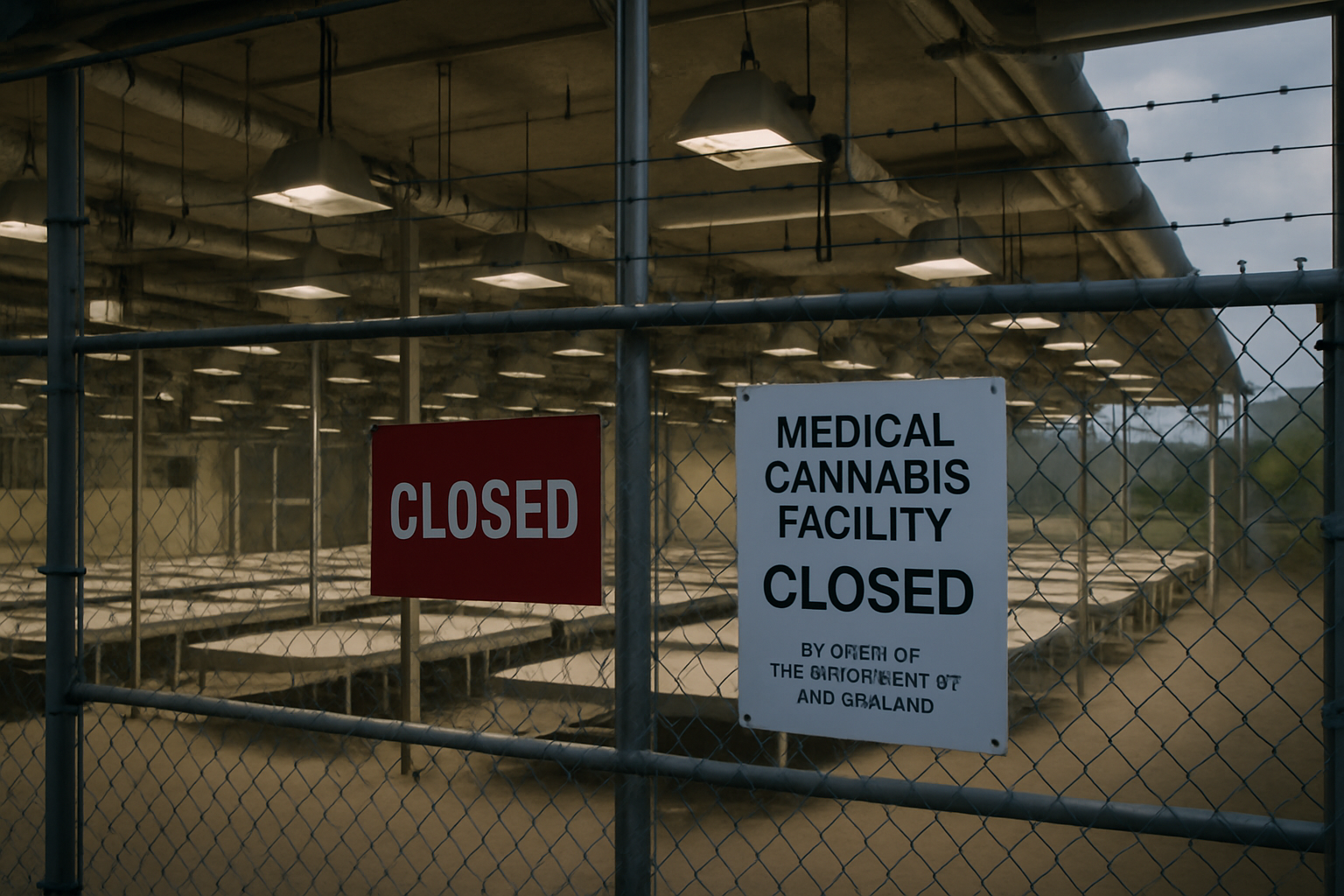
New Zealand's medical cannabis industry faces a major setback as Helius Therapeutics, one of the country's pioneering medicinal cannabis companies, has shut down operations and entered voluntary administration, leaving patients without access to treatments and investors counting significant losses.
The company cited the "very challenging" regulatory environment that has made it difficult for manufacturers to "operate sustainably at scale" in New Zealand's tightly controlled medical cannabis market. The closure represents a significant blow to the country's nascent medical cannabis sector and raises questions about the viability of the regulatory framework established under the Medicinal Cannabis Scheme.
Industry Pioneer Falls Victim to Regulatory Pressures
Helius Therapeutics was among the first companies to receive licenses under New Zealand's Medicinal Cannabis Scheme, launched in 2020 with the promise of providing regulated access to cannabis-based medicines for patients with qualifying conditions. The company had invested millions in cultivation facilities and product development, positioning itself as a leader in the emerging market.
However, the regulatory burden proved insurmountable. The Medicinal Cannabis Agency's strict requirements for good manufacturing practice (GMP) standards, extensive quality testing, and complex licensing procedures created operational costs that the company could not sustain given the limited market size and pricing constraints.
"The current regulatory environment has made it very challenging for manufacturers to operate sustainably at scale. Despite our best efforts and significant investment, we cannot continue operations under these conditions."
— Helius Therapeutics Statement
High-Profile Investor Impact
The collapse has particularly impacted prominent New Zealand entrepreneur and rich-lister Guy Haddleton, who emerged as the largest investor in Helius Therapeutics. Haddleton, known for his involvement in various technology and healthcare ventures, saw his substantial investment in the medical cannabis sector evaporate as the company entered voluntary administration.
The failure represents not just a personal financial loss for Haddleton but also signals broader challenges facing private investors in New Zealand's medical cannabis industry. The regulatory uncertainty and market constraints have made it difficult for companies to achieve the scale necessary for profitability, deterring further investment in the sector.
Patient Access Concerns Mount
The shutdown of Helius Therapeutics has immediate implications for patients who relied on the company's products for medical treatment. New Zealand's medical cannabis market remains limited, with few domestic producers and expensive imported alternatives creating access barriers for many patients.
Patient advocacy groups have expressed concern that the regulatory framework, designed to ensure safety and quality, has instead created an environment where companies cannot operate viably, ultimately limiting patient access to medicinal cannabis products. The balance between regulatory oversight and commercial viability remains a contentious issue in the industry.
Global Context: A Pattern of Challenges
The collapse of Helius Therapeutics occurs within a broader global context of medical cannabis industry consolidation and regulatory challenges. Recent international research has highlighted both the potential benefits and implementation difficulties of medical cannabis programs worldwide.
Breakthrough research from Hebrew University in Israel has demonstrated revolutionary cannabis compounds for treating fatty liver disease, showcasing the therapeutic potential of non-psychoactive cannabis components. However, the gap between scientific promise and commercial reality continues to challenge companies attempting to operate in heavily regulated markets.
Finland's public health campaigns addressing teenage cannabis use and brain development concerns reflect the complex regulatory environment that medical cannabis companies must navigate, balancing therapeutic benefits with public health considerations.
Regulatory Framework Under Scrutiny
The Helius Therapeutics closure has prompted renewed examination of New Zealand's Medicinal Cannabis Scheme. Industry observers argue that the regulatory framework, while well-intentioned in ensuring product safety and quality, may have created barriers that prevent viable commercial operations.
The scheme requires companies to meet pharmaceutical-grade manufacturing standards while serving a relatively small patient population, creating a challenging economic equation. Unlike markets such as Canada or certain U.S. states where larger patient bases can support higher regulatory costs, New Zealand's limited market size makes it difficult for companies to achieve economies of scale.
Licensing and Compliance Burden
The multi-tiered licensing system requires separate approvals for cultivation, manufacturing, and distribution, each with ongoing compliance obligations. Companies must maintain detailed records, undergo regular inspections, and meet stringent quality standards that mirror those applied to traditional pharmaceuticals.
While these standards ensure product safety, they also create significant operational overhead that smaller companies struggle to absorb. The closure of Helius Therapeutics suggests that the current regulatory model may be sustainable only for larger, well-capitalized companies or those with international operations to spread compliance costs.
Industry Consolidation and Future Outlook
The failure of Helius Therapeutics is likely to accelerate consolidation in New Zealand's medical cannabis industry, with remaining companies either scaling up significantly or exiting the market. This consolidation may ultimately result in fewer but larger operators capable of meeting regulatory requirements while maintaining commercial viability.
International companies with established operations in multiple jurisdictions may view the current environment as an opportunity to enter the New Zealand market through acquisition of distressed assets or by establishing new operations with sufficient capital backing.
Economic and Investment Implications
The collapse sends a cautionary signal to potential investors considering the New Zealand medical cannabis sector. With prominent investors like Guy Haddleton experiencing significant losses, future investment may require either larger capital commitments capable of sustaining longer development timelines or regulatory reforms that reduce operational barriers.
The failure also highlights the importance of realistic market assessment and regulatory analysis in cannabis investment decisions. Companies and investors must carefully evaluate whether regulatory frameworks provide a viable path to profitability given local market constraints.
International Lessons and Adaptation
New Zealand's experience mirrors challenges faced by medical cannabis industries worldwide, where regulatory frameworks often struggle to balance safety requirements with commercial viability. Countries implementing medical cannabis programs must consider both patient access and industry sustainability to create successful markets.
The integration of technology and traditional approaches, demonstrated in other healthcare sectors during the "Therapeutic Revolution of 2026," may offer pathways for more efficient cannabis industry operations. Digital monitoring systems, automated quality control, and streamlined compliance technologies could help reduce operational costs while maintaining regulatory standards.
Policy Response and Future Reforms
The Helius Therapeutics shutdown is likely to prompt policy discussions about potential reforms to New Zealand's Medicinal Cannabis Scheme. Stakeholders may advocate for regulatory adjustments that maintain safety standards while improving commercial viability for industry participants.
Possible reforms could include streamlined licensing processes, reduced compliance reporting requirements for smaller operators, or tiered regulatory approaches that scale requirements based on company size and production volume. Such changes would aim to preserve the scheme's safety objectives while enabling more sustainable business operations.
International Cooperation Opportunities
New Zealand may also benefit from increased international cooperation on medical cannabis regulation, sharing best practices with other jurisdictions that have successfully balanced safety and commercial considerations. Bilateral partnerships and knowledge-sharing networks could provide insights for regulatory optimization.
The global trend toward prevention-first healthcare approaches, evident in the broader "Therapeutic Revolution of 2026," may create opportunities for New Zealand to position its medical cannabis industry within larger healthcare innovation initiatives, potentially providing additional justification for regulatory reforms.
Looking Forward: Sustainable Industry Development
The closure of Helius Therapeutics marks a significant moment for New Zealand's medical cannabis industry, forcing stakeholders to confront the tension between regulatory rigor and commercial sustainability. While the immediate impact affects patients, investors, and industry confidence, the failure may ultimately catalyze necessary reforms that create a more viable regulatory environment.
Success in developing a sustainable medical cannabis industry requires continued innovation in both regulatory approaches and business models. Companies that can navigate the current environment while advocating for sensible reforms may emerge stronger, while policymakers must balance safety imperatives with practical considerations for industry development.
As New Zealand's medical cannabis sector evolves, the lessons from the Helius Therapeutics closure will likely influence both regulatory policy and business strategy for years to come. The challenge remains creating an environment that ensures patient safety and product quality while enabling commercially viable operations that can serve patient needs sustainably over the long term.