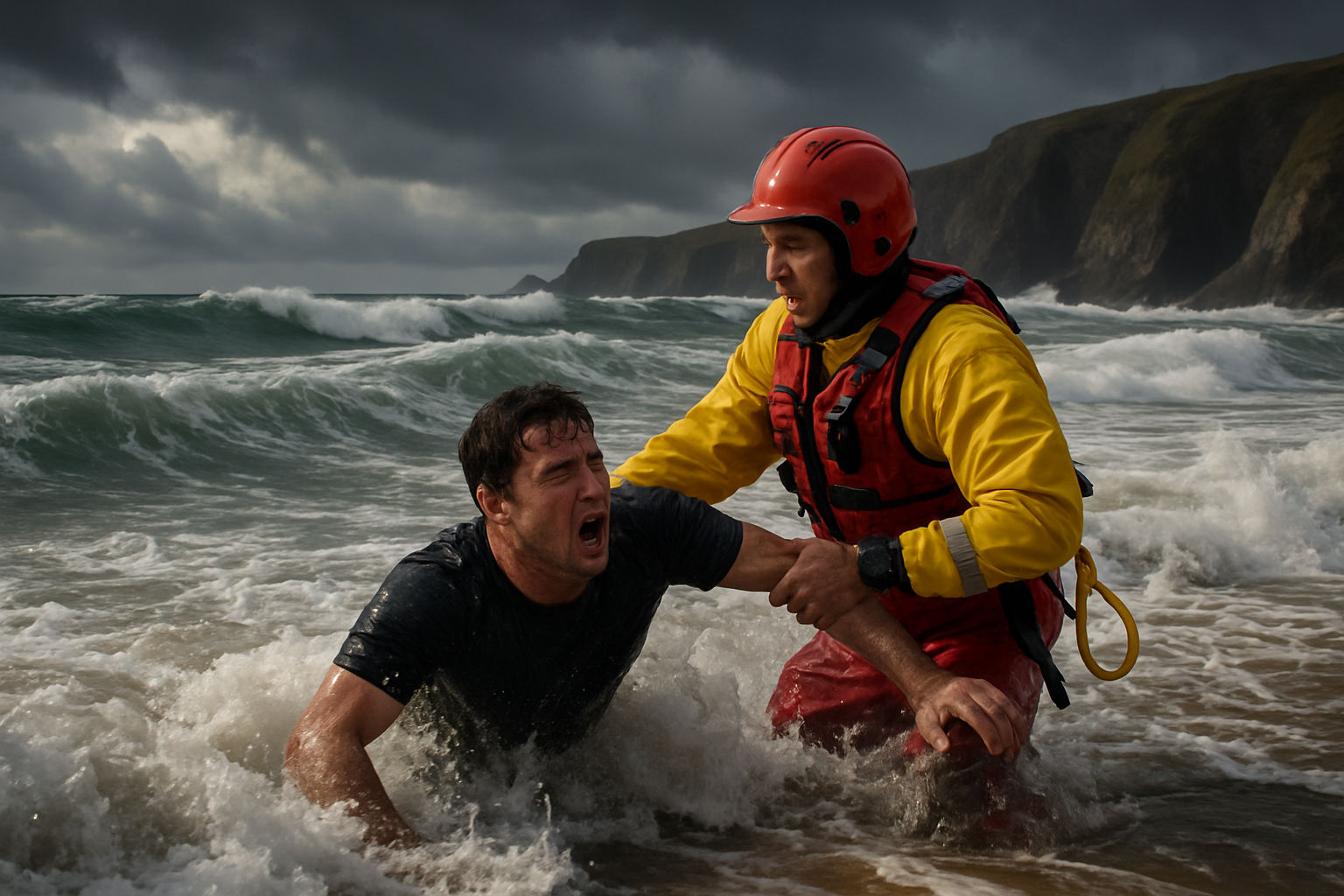
An Irish man has been posthumously recognized as a hero after dying while successfully rescuing six people—four young children and their two parents—from a deadly rip current at a Cork beach in August 2024, with a coroner officially recording his death as accidental following an inquest in March 2026.
Stephen O'Callaghan died of acute respiratory failure due to drowning on August 23rd, 2024, shortly before 3pm, after going to the aid of a family who had become caught in a powerful rip current off the Cork coastline. The tragic incident has only now reached its legal conclusion with the coroner's verdict, nearly two years after the heroic rescue attempt that saved six lives while costing O'Callaghan his own.
The Rescue That Saved Six Lives
According to evidence presented at the inquest, O'Callaghan witnessed the family of six—comprising four young children and their two parents—being swept out to sea by dangerous rip current conditions. Without hesitation, he entered the treacherous waters to attempt their rescue, ultimately succeeding in helping all six individuals reach safety.
The incident occurred during what maritime safety experts describe as particularly hazardous ocean conditions, with rip currents posing one of the most significant threats to beachgoers. These powerful channels of water flowing away from shore can reach speeds of up to 8 feet per second, making them dangerous even for strong swimmers.
O'Callaghan's selfless actions ensured that what could have been a tragedy involving seven lives ultimately claimed only one—his own. The four children and their parents all survived the ordeal, owing their lives to his courageous intervention.
Coroner's Findings and Legal Resolution
The inquest, conducted in March 2026, formally recorded a verdict of accidental death, bringing legal closure to the tragic incident that occurred nearly two years prior. The coroner's investigation examined the circumstances surrounding O'Callaghan's death, ultimately determining that he died as a direct result of his heroic rescue efforts.
The extended timeline between the incident and the inquest reflects the thorough investigation required in such cases, particularly when examining maritime incidents involving multiple casualties and rescue attempts. The formal verdict provides official recognition of the circumstances that led to O'Callaghan's death while attempting to save others.
"He died a hero while trying to help six people caught in rip current."
— Coroner's finding, March 2026
Understanding Rip Current Dangers
Rip currents represent one of the most dangerous conditions faced by beachgoers around Ireland's extensive coastline. These powerful water channels form when waves break over submerged sandbars or other underwater features, creating a narrow stream of water flowing rapidly away from shore.
The incident at the Cork beach highlights the particular vulnerability of families with young children, who may lack the strength or swimming experience to escape rip current conditions. Many drowning incidents occur when family members attempt to rescue loved ones caught in these dangerous currents without proper knowledge of escape techniques.
Maritime safety experts consistently emphasize that the correct response to being caught in a rip current is to swim parallel to the shore until escaping the current's pull, rather than attempting to swim directly back to land against the powerful flow. However, panic and the instinctive desire to return to shore as quickly as possible often lead people to exhaust themselves fighting the current.
A Pattern of Heroism
O'Callaghan's sacrifice joins a tragic but inspiring pattern of individuals who have lost their lives while saving others from dangerous water conditions. The incident bears similarities to other heroic water rescues that have occurred globally, including the recent case of 13-year-old Austin Appelbee in Australia, who swam four kilometers through rough seas to save his family in February 2026.
These incidents underscore both the deadly nature of ocean conditions and the remarkable courage displayed by individuals who risk their own safety to help others in peril. While O'Callaghan's story ended tragically, his actions ensured that six other people—including four children—survived to return to their families.
Maritime Safety Implications
The Cork beach incident occurs against a backdrop of increasing awareness about ocean safety and the risks posed by changing weather patterns. Climate research has indicated that warming ocean temperatures and altered atmospheric patterns may be affecting coastal conditions, potentially creating more unpredictable and dangerous maritime environments.
The case also highlights the importance of public education about rip current recognition and escape techniques. Many beach fatalities could be prevented through better understanding of how to identify dangerous conditions and respond appropriately when caught in hazardous currents.
Irish coastal authorities continue to emphasize the importance of swimming at lifeguarded beaches when possible, staying close to shore, and understanding basic water safety principles. The tragic loss of O'Callaghan while saving others serves as both an inspiration and a warning about the deadly serious nature of ocean conditions.
Community Recognition and Legacy
While the formal inquest has concluded with an accidental death verdict, O'Callaghan's actions have been widely recognized as heroic by his community and by those who understand the circumstances of the rescue. His willingness to risk his own life to save six strangers—particularly four young children—exemplifies the highest ideals of human courage and selflessness.
The incident serves as a powerful reminder of the everyday heroes who walk among us, ready to act when others face mortal danger. O'Callaghan's legacy lies not only in the six lives he saved but in the example he set of putting others' safety before his own, even at the ultimate cost.
The coroner's verdict of accidental death provides official recognition of the tragic circumstances while honoring the heroic nature of O'Callaghan's final act. His sacrifice ensures that four children grew up with their parents, and that a family remained intact because one man was willing to risk everything to help strangers in desperate need.
Ongoing Ocean Safety Awareness
The Cork beach incident joins other maritime emergencies that have highlighted the persistent dangers facing those who work and play near the ocean. Recent months have seen multiple water-related emergencies globally, from the Nigerian tugboat LEO capsizing off South Africa's coast, killing one crew member with five missing, to rescue operations in Latvia where services extracted two teenagers stranded on river ice formations.
These incidents collectively underscore the need for continued vigilance regarding water safety, proper emergency response protocols, and public education about recognizing and responding to dangerous conditions. While technology and training continue to improve rescue capabilities, the fundamental risks associated with powerful water currents remain a serious threat to public safety.
O'Callaghan's heroism stands as a testament to the human capacity for selflessness in the face of mortal danger, while his tragic death serves as a sobering reminder of the lethal power of rip currents and the importance of ocean safety awareness for all who venture near Ireland's beautiful but potentially dangerous coastline.