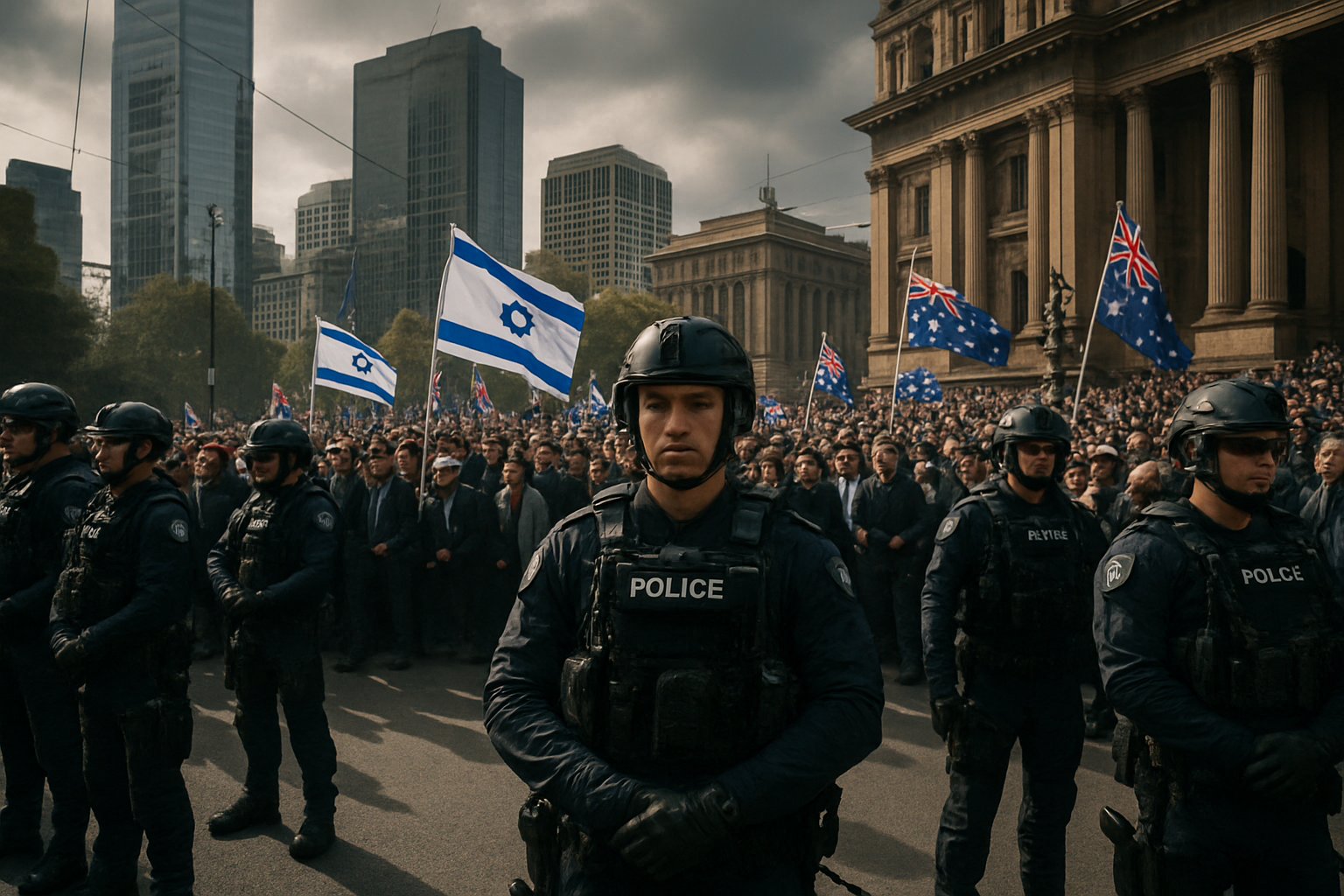
Israeli President Isaac Herzog faced thousands of protesters and unprecedented security measures as he concluded his controversial four-day Australian visit in Melbourne, condemning what he described as "frightening" levels of antisemitism while maintaining that most Australians want peaceful dialogue with Israel.
Herzog arrived at Melbourne's Tullamarine Airport on Thursday morning aboard a Royal Australian Air Force jet under heavy police escort, marking the final leg of a diplomatic visit that has sparked violent confrontations and drawn international attention to rising tensions over Middle East politics in Australia.
The Israeli leader's Melbourne engagements, including meetings with Victorian Governor Margaret Gardner and Premier Jacinta Allan at Government House, proceeded under extraordinary security protocols as police braced for major protests across the city's central business district.
Antisemitism Concerns Dominate Final Day
Speaking candidly about the hostile reception during his visit, Herzog expressed alarm about the scale of antisemitism in Australia. "Antisemitism in Australia is frightening and worrying," the Israeli president said Thursday, acknowledging the challenging environment his visit had created.
However, Herzog sought to balance his concerns with optimism about broader Australian sentiment. "But there's also a silent majority of Australians who seek peace, who respect the Jewish community and of course, want a dialogue with Israel," he stated, defending the purpose of his diplomatic mission.
The comments came as police prepared for another day of large-scale demonstrations, with authorities expecting thousands to gather in Melbourne's CBD to protest against Herzog's presence in the country.
Context of Controversial Visit
Herzog's Australian tour was conceived as a solidarity mission following the December 14 Bondi Beach Hanukkah festival antisemitic attack that killed 15 people, representing one of the most serious attacks against the Jewish community in Australian history. The visit was designed to support victims' families and demonstrate international solidarity with Australia's Jewish population.
However, the diplomatic mission became highly controversial amid ongoing international tensions over Israel's conduct in Gaza and broader Middle East conflicts. Pro-Palestinian groups have organized sustained protests throughout Herzog's visit, with some activists calling for his arrest on war crimes charges.
The New South Wales government took the unusual step of declaring Herzog's visit a "major event" under the Major Events Act, granting police extraordinary powers typically reserved for large sporting events rather than diplomatic visits. These measures included enhanced search capabilities, exclusion zones, and immediate directive authority, with fines up to $5,500 for non-compliance.
Sydney Violence Overshadows Diplomatic Mission
The Melbourne conclusion followed violent scenes in Sydney earlier in the week, where 27 people were arrested and nine formally charged after pro-Palestinian protesters clashed with NSW Police in the city's central business district. Police used capsicum spray and batons to control crowds of thousands who had gathered to oppose Herzog's presence.
Prime Minister Anthony Albanese expressed devastation over the Sydney violence while defending police actions. NSW Police Commissioner Mal Lanyon praised his officers' "remarkable restraint" in managing the confrontational situations, though protest organizers accused authorities of employing "state violence" against peaceful demonstrators.
The arrests included charges for assaulting officers, highlighting the intensity of opposition to Herzog's visit among certain segments of the Australian population. Ten protesters specifically faced charges related to assaults on police personnel during the Sydney demonstrations.
Security Measures and Democratic Challenges
The extraordinary security arrangements for Herzog's visit have raised questions about balancing democratic rights to free expression with community safety concerns. The deployment of major event powers for a diplomatic visit represents a precedent-setting decision that has attracted international scrutiny.
Rally organizers mounted an unsuccessful court challenge to the police powers, arguing they represented excessive restrictions on legitimate protest activities. However, authorities maintained that the security measures were necessary given intelligence about planned demonstrations and potential risks to public safety.
The security protocols extended beyond immediate protest management, with elevated security maintained at synagogues and Jewish schools throughout Herzog's visit, reflecting broader community concerns about antisemitic incidents.
International Diplomatic Implications
Herzog's visit occurs as part of Israel's broader international diplomatic effort to maintain relationships with democratic allies amid ongoing Middle East conflicts. The Australian tour represents a test case for how democratic nations can manage competing demands between supporting traditional allies and addressing domestic opposition to controversial international policies.
The Melbourne meetings with state government officials demonstrate continued institutional support for Israel-Australia relations at the political level, even as street-level opposition reflects significant public division over Middle East issues.
Progressive Jewish organizations have joined protest coalitions, highlighting the complex nature of community responses that transcend simple pro-Israel versus pro-Palestinian divisions. This internal debate within Jewish communities adds additional layers of complexity to the diplomatic and security challenges surrounding the visit.
Broader Pattern of Global Tensions
The Australian protests reflect a global pattern of heightened tensions around Israeli diplomatic visits since October 7, 2023. Similar scenes have occurred in European cities and North American locations where Israeli officials have conducted diplomatic missions.
The scale and intensity of the Australian demonstrations, however, appear to represent one of the most sustained and organized opposition campaigns to an Israeli diplomatic visit in a Western democratic nation in recent years.
Educational institutions across Australia have been briefed on security situations, while business districts in both Sydney and Melbourne have prepared for potential disruptions related to protest activities.
Community Impact and Future Relations
Jewish community leaders have welcomed Herzog's solidarity visit while maintaining elevated security protocols reflecting ongoing concerns about antisemitic incidents. The visit has provided an opportunity for direct engagement between Israeli leadership and Australian Jewish communities affected by recent attacks.
However, the controversial nature of the visit and the violent confrontations it has generated raise questions about the effectiveness of high-profile diplomatic missions in highly polarized environments.
The aftermath of Herzog's visit is likely to influence future approaches to managing diplomatic visits involving controversial international figures, with authorities needing to balance legitimate security concerns against democratic rights to peaceful protest.
As Herzog prepared to depart Australia, the lasting impact of his visit remained uncertain. While achieving its primary objective of demonstrating solidarity with attack victims and the Jewish community, the mission also highlighted the depth of divisions within Australian society over Middle East issues and the challenges facing democratic governments in managing these tensions.