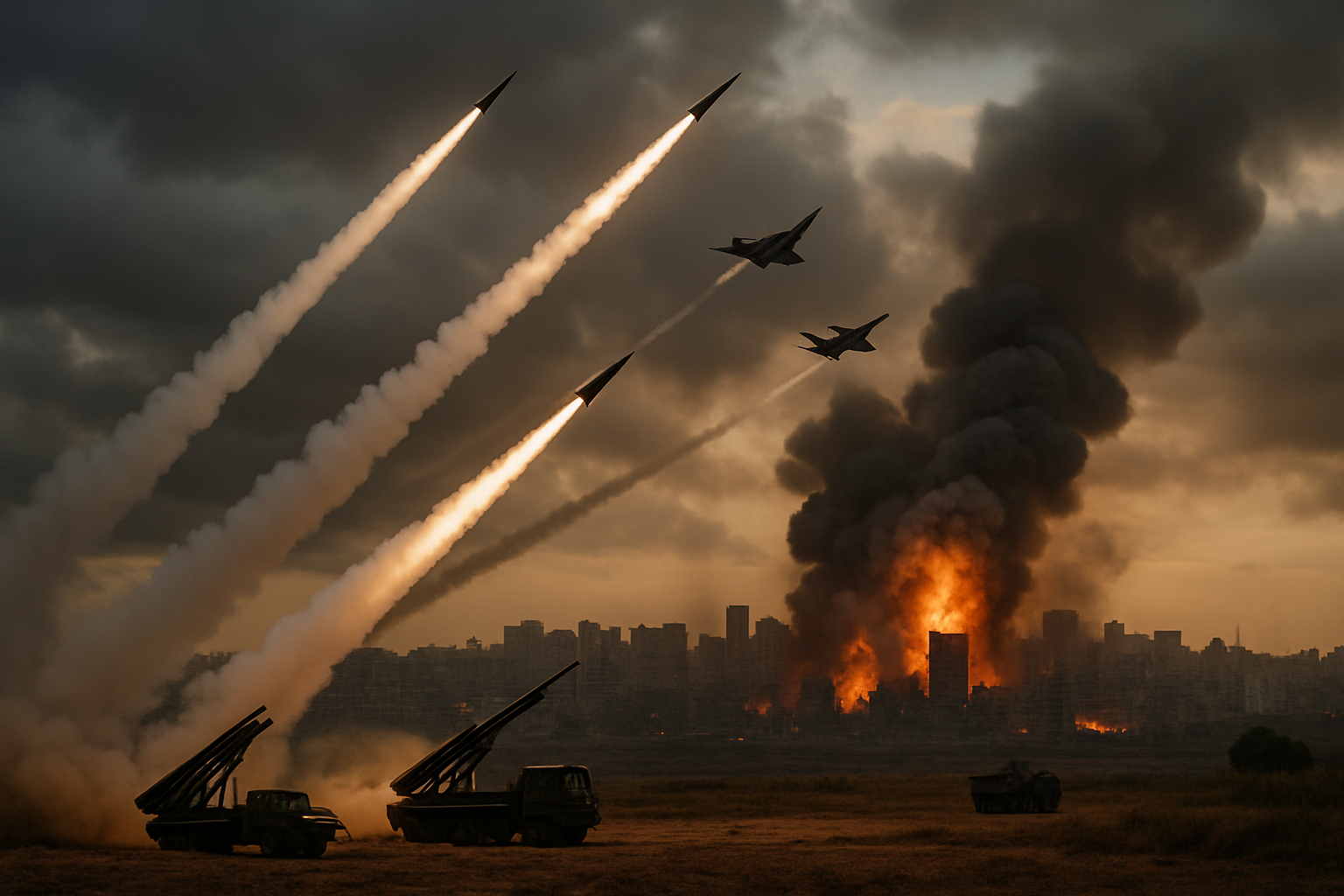
Lebanese Hezbollah has launched its most significant assault on Israel since November 2024, firing long-range missiles and drones into northern Israel in retaliation for the death of Iran's Supreme Leader Ali Khamenei during US-Israeli Operation Epic Fury. Israeli forces responded with massive airstrikes across Lebanon, killing at least 31 civilians and marking a dangerous expansion of the Middle East conflict.
The Iran-backed militant group broke its ceasefire with Israel on Monday morning, March 2, 2026, launching coordinated attacks that Israeli Defense Forces described as the most serious breach of the November 2024 truce agreement. Within hours, Israel retaliated with over 80 airstrikes targeting Hezbollah positions in southern Lebanon and Beirut's southern suburbs, according to Egyptian media reports.
Historic Escalation Following Khamenei's Death
The escalation comes directly after the confirmed death of Iran's Supreme Leader Ayatollah Ali Khamenei in coordinated US-Israeli strikes Saturday, ending his 37-year rule and creating a succession crisis in Tehran. Lebanese sources report that Hezbollah's leadership, under pressure from Iranian Revolutionary Guards commanders, felt compelled to demonstrate solidarity with their primary sponsor despite the group's significantly weakened state.
"Lebanon has been pulled into the war with Iran after Hezbollah – weakened by months of confrontation and under pressure to disarm – fired long-range missiles and drones into northern Israel on Monday," reported RFI International.
French media sources confirmed that "Israel carried out heavy airstrikes on the Hezbollah-controlled southern suburbs of Beirut on Monday, after the Iran-backed group launched missiles and drones towards Israel in retaliation for the killing of Iran's Supreme Leader Ali Khamenei."
Devastating Casualty Toll
The Lebanese Ministry of Health reported that 31 people were killed and 149 others wounded in Israeli airstrikes across southern Lebanon and Beirut's southern suburbs. Palestinian sources confirmed the casualty figures, with the strikes representing the deadliest violence since the November 2024 ceasefire that had largely held for over a year.
"The strikes continue, their intensity will increase"
— Rafi Milo, Head of Israeli Military's Northern Command
Israeli military spokesman Rafi Milo warned that operations would intensify, stating that "Hezbollah chose the Iranian regime over the State of Lebanon and initiated an attack on our civilians... they will pay a heavy price." The Israeli Defense Forces confirmed they had struck senior Hezbollah militants near Beirut, though specific details remained classified.
Ceasefire Breakdown and Regional Implications
The November 2024 US-French brokered ceasefire had required both Israeli forces and Hezbollah fighters to withdraw from southern Lebanon, with Lebanese army and UN peacekeepers establishing a buffer zone. German sources noted this was "the first time since the ceasefire began" that Hezbollah had fired on Israel, representing a qualitative escalation beyond routine violations.
Slovak media reported that "Hezbollah fired on Israel for the first time since the ceasefire" and that "Israel responded with strikes on Lebanon," while emphasizing that Lebanese authorities were calling for civilian evacuations from combat zones.
The breakdown threatens multiple diplomatic initiatives, including recent Trump administration Middle East peace efforts and broader regional stability arrangements that had seen unprecedented cooperation between Arab states and international mediators.
International Crisis Response
The escalation triggered immediate international concern, with multiple nations issuing travel warnings and embassy evacuations. European Union officials expressed alarm at the rapid deterioration of regional stability just as the Iran nuclear crisis had reached its most dangerous phase.
Russian media sources confirmed that Israeli operations had successfully targeted what they described as "an important Hezbollah leader," though they noted that confirmation was still pending. Italian sources reported that the Israeli Defense Forces announced their "new offensive will be broad and complete" and that they "must prepare for several days of intense fighting," though they emphasized ground operations were "not imminent."
United States sources indicated that Iran and Iranian-backed militias had fired missiles at Israel and Arab states, with some apparently hitting the US Embassy compound in Kuwait, while Israeli and American forces continued operations against Iranian targets.
Strategic Context and Historical Significance
The Hezbollah assault represents the most serious test of regional stability since the devastating 12-day Iran-Israel war of June 2025. The group, estimated to maintain approximately 20,000 fighters despite ceasefire requirements, had been under intense pressure from both Lebanese authorities seeking to implement the ceasefire and Iranian commanders demanding retaliation for Khamenei's death.
Lebanese political sources suggest Hezbollah's leadership faced an impossible choice: maintain the ceasefire and face Iranian accusations of abandonment, or launch attacks knowing it would trigger massive Israeli retaliation against Lebanese territory and civilians.
The timing proves particularly devastating as it coincides with the broader Middle East crisis following Operation Epic Fury, which has already triggered global aviation disruptions, energy market volatility, and the most dangerous international tensions since the Cold War's end.
Implications for Lebanon's Sovereignty
The renewed violence places Lebanon in an exceptionally precarious position, caught between Israeli military responses and Iranian proxy obligations. Lebanese authorities, already struggling with severe economic crisis and political instability, now face the prospect of their territory becoming a primary battlefield in the broader Iran-Israel confrontation.
Yemen-based sources reported that at least 31 civilians were killed in Israeli airstrikes on southern Lebanon, emphasizing the humanitarian cost of Hezbollah's decision to expand the conflict. The strikes targeted both military positions and civilian infrastructure, raising international humanitarian law concerns.
Portuguese media noted that "the Shiite group executed aerial attacks from Lebanon and Israel's retaliation killed at least 31 people and wounded 149," while also reporting concerning developments including what appeared to be "a column of smoke" near the US Embassy in Kuwait, suggesting the conflict's regional expansion.
Military and Strategic Assessment
Israeli military officials indicated their operations would be comprehensive, targeting Hezbollah's rebuilt infrastructure across Lebanon. The group had used the ceasefire period to reconstitute its capabilities, though at levels significantly below its pre-2024 strength. Intelligence sources suggest Hezbollah's rocket arsenal, while substantial, remains less sophisticated than before previous conflicts.
The Italian Defense Ministry reported that Israeli forces announced they must "prepare for several days of intense fighting," suggesting expectations of prolonged operations rather than limited tactical strikes. However, officials emphasized that ground invasion forces were "not imminent," indicating preference for air-based campaigns initially.
German defense analysts noted the strikes focused heavily on weapons depots and rocket launchers in southern Lebanon, suggesting Israeli intelligence had tracked Hezbollah's rearmament efforts throughout the ceasefire period.
Regional and Global Consequences
The Lebanon escalation occurs amid the most complex Middle East crisis in decades, with Iran's leadership transition, ongoing nuclear program concerns, and the broader geopolitical tensions following Khamenei's death. Regional powers that had been coordinating diplomatic responses to the Iran crisis now face the additional challenge of preventing Lebanese-Israeli violence from spiraling into broader warfare.
Energy markets have reacted with concern, as Middle East instability threatens global oil supplies and transportation routes. The expansion of conflict to Lebanon increases risks to regional economic infrastructure and complicates international efforts to contain the broader Iran crisis.
Aviation industry sources report continued disruptions to Middle Eastern air routes, with Lebanese airspace now joining the growing list of restricted flight zones affecting global transportation networks.
Looking Forward: Escalation or Containment
The coming hours will prove critical in determining whether the Lebanon-Israel fighting can be contained through renewed ceasefire arrangements or whether it represents the beginning of a broader regional war involving multiple Iranian proxy groups and their adversaries.
International mediators, already stretched managing the Iran nuclear crisis and succession issues, now face the additional challenge of preventing Lebanese-Israeli escalation from undermining broader regional stability efforts. The success or failure of containment efforts could determine whether the Middle East faces a broader multi-front conflict or can step back from the brink of regional warfare.
As Israeli officials promise intensified operations and Hezbollah faces pressure to demonstrate continued resistance despite heavy losses, the prospects for rapid de-escalation appear limited. The international community confronts its most serious Middle East crisis management challenge since the Cold War's end, with implications extending far beyond regional boundaries to global energy security, nuclear governance, and international stability mechanisms.