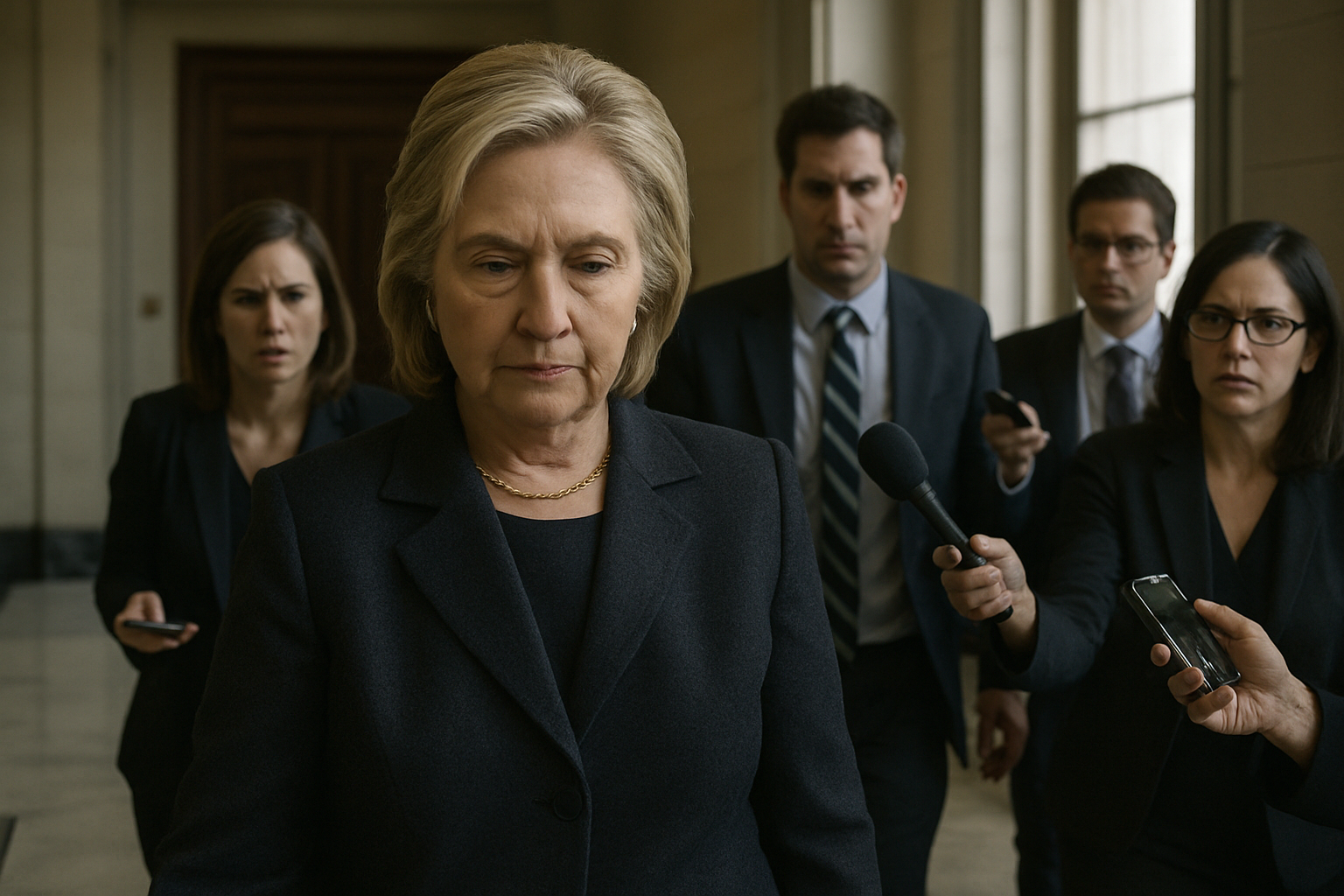
Former Secretary of State Hillary Clinton categorically denied ever meeting Jeffrey Epstein or having knowledge of his criminal activities during a marathon seven-hour closed-door deposition before the House Oversight Committee on Thursday, while launching a fierce counterattack against Republican lawmakers whom she accused of conducting "partisan political theater."
Speaking to reporters after the grueling session at her Chappaqua, New York home, Clinton maintained her innocence and turned the spotlight on the committee's motivations. "I do not recall ever encountering Mr. Epstein. I never flew on his plane or visited his island, homes or offices," she stated emphatically in her opening remarks to the panel.
The testimony represents the culmination of months of legal wrangling that began when Clinton initially resisted congressional subpoenas before ultimately agreeing to testify under oath with public transcripts to avoid a contempt of Congress vote. The agreement was reached after her spokesperson Angel Ureña announced the Clinton family's willingness to cooperate fully with the investigation.
Accusations of Political Motivation
Clinton did not limit her remarks to denials, instead going on the offensive against the Republican-led committee. She accused lawmakers of conducting the investigation to "protect one public official" – an apparent reference to President Trump – rather than seeking truth about Epstein's crimes.
"If this is really about Jeffrey Epstein and his crimes, then why isn't the person with documented ties being called to testify under oath?" Clinton demanded, calling for Trump to face the same congressional scrutiny given his documented connections to the deceased financier.
The former presidential candidate characterized the proceedings as having "got quite unusual" late in the day when she began receiving questions about unrelated conspiracy theories. "I started being asked about UFOs and a series of questions about Pizzagate, one of the most vile bogus conspiracy theories," Clinton revealed, suggesting the hearing had devolved from legitimate oversight into conspiracy-mongering.
International Context of Epstein Investigation
Clinton's testimony occurs against the backdrop of what European law enforcement has termed "the largest international elite criminal network exposure in recent memory." The global Epstein investigation has triggered political crises across six countries, with enhanced international cooperation setting new precedents for transnational criminal prosecutions.
In Norway, Crown Princess Mette-Marit faces potential criminal proceedings after being mentioned over 1,000 times in documents showing what prosecutors describe as an "unexpectedly close relationship" with Epstein. The scandal has led to the unprecedented termination of royal partnerships by Norwegian organizations.
Meanwhile, corporate resignations continue to mount, with Goldman Sachs top lawyer Kathy Ruemmler stepping down after emails revealed she referred to Epstein as "big brother" and minimized his crimes. DP World CEO Sultan Ahmed bin Sulayem was forced out after being named 9,400+ times in documents as Epstein's "most trusted friend."
DOJ Document Suppression Allegations
Clinton's appearance coincides with explosive allegations that the Department of Justice has withheld Trump-related Epstein documents from public release. An NPR investigation revealed that DOJ allegedly suppressed 53 pages of FBI interviews with a female victim who alleged sexual assault by both Trump and Epstein when she was a minor.
Representative Robert Garcia of the House Oversight Committee has demanded explanations for these missing documents, calling the situation "the largest government cover-up in modern history." French media reports confirm that these documents were specifically removed from public release, adding weight to Clinton's accusations of a cover-up protecting Trump.
Despite the massive evidence scope encompassing over 3 million pages, Deputy Attorney General Todd Blanche has confirmed that no new federal prosecutions are planned, citing "technical and human errors."
Ongoing Congressional Investigation
The House Oversight Committee's investigation represents the most significant congressional probe into the Epstein network since his death in 2019. Committee members have accessed unredacted files revealing six previously redacted names, including billionaire Leslie Wexner and Emirati businessman Sultan bin Sulayem, with bipartisan calls for full public disclosure.
Clinton's testimony was briefly disrupted when conservative podcaster Benny Johnson posted a photo online, prompting attorneys to halt proceedings temporarily. The incident highlighted the politically charged atmosphere surrounding the investigation.
The committee has also subpoenaed multiple former Justice Department officials and FBI directors as part of its comprehensive review of how federal agencies handled Epstein-related information over the years.
Victim Protection Catastrophe
The investigation has been marred by what critics call a "victim protection catastrophe," with DOJ accidentally exposing approximately 100 survivor identities, including 31 minors, through redaction failures. The breach included exposure of nude photos, bank accounts, and Social Security numbers, prompting federal judges to hear emergency petitions over the massive confidentiality breach.
This procedural failure has threatened victim cooperation and raised serious questions about the Justice Department's handling of the sensitive case. Survivors' advocates have condemned the extensive redactions that protect powerful associates while exposing victim details.
Bill Clinton's Upcoming Testimony
Hillary Clinton's appearance sets the stage for her husband Bill Clinton's scheduled testimony on Friday, making him the first former president compelled to testify in the Epstein investigation. His testimony is expected to focus on documented flights aboard Epstein's private aircraft and the couple's knowledge of the financier's criminal activities.
The Clinton testimonies represent a major political victory for Republican committee chair James Comer, who had aggressively pursued their appearances for months despite initial resistance. The agreement to testify under oath with full public transcripts marks the most significant success for the Republican-led House investigation into the Epstein network.
Global Democratic Accountability Test
The Epstein investigation has become what experts describe as a fundamental test of democratic institutions' ability to hold powerful figures accountable across international borders. Enhanced cooperation between law enforcement agencies in six countries is setting new precedents for addressing transnational elite criminal networks.
Cultural institutions worldwide are conducting comprehensive relationship reviews, with some severing ties with individuals named in the documents. The Norwegian experience, where organizations terminated relationships with the Crown Princess, may establish new accountability standards regardless of social or political status.
However, significant challenges remain, including diplomatic immunity protections, institutional resistance, and complex jurisdictional boundaries that limit prosecutorial options. The ultimate test will be whether these investigations produce meaningful accountability and systemic reforms, or whether powerful networks continue to operate with impunity despite unprecedented public exposure.
As Clinton concluded her remarks to reporters, she emphasized that the focus should remain on uncovering the truth about Epstein's crimes rather than pursuing partisan political agendas. "The American people deserve to know the full truth about this criminal network," she stated, "not to see it used as a political weapon to protect the powerful."
The testimony's impact will likely reverberate through both the ongoing congressional investigation and the broader international effort to hold accountable what law enforcement describes as one of the most sophisticated criminal networks in recent history.