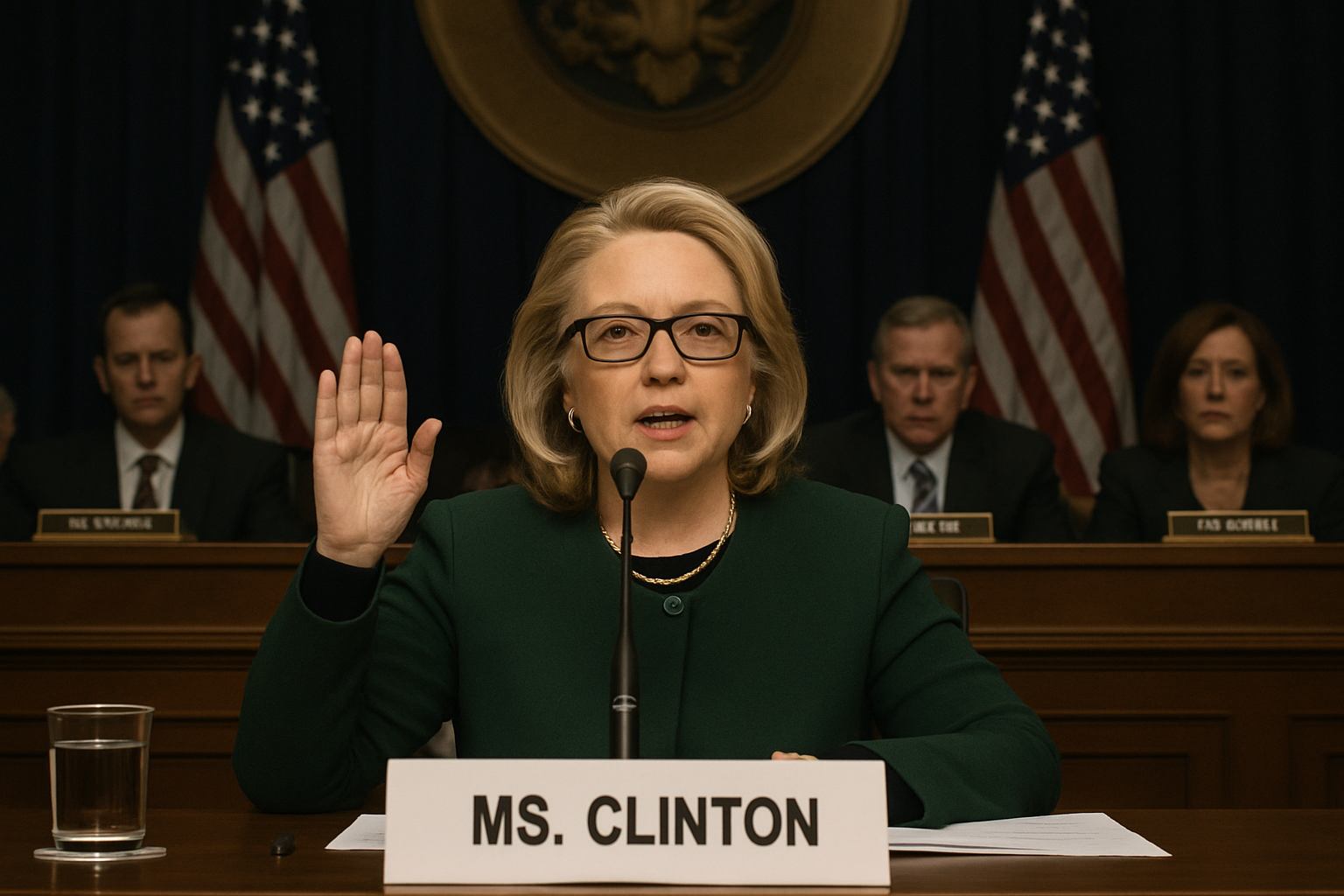
Former U.S. Secretary of State Hillary Clinton testified under oath before Congress on Thursday, February 26, 2026, regarding her and her husband's connections to convicted sex offender Jeffrey Epstein, categorically denying any knowledge of his criminal activities while going on the offensive and demanding that President Trump be called to testify about his own extensive ties to Epstein.
The historic closed-door deposition, conducted by the Republican-led House Oversight Committee at Clinton's Chappaqua home, represents the culmination of months of legal wrangling that nearly led to contempt of Congress charges. The testimony comes amid a global scandal surrounding the release of over 3 million pages of Epstein documents that have implicated high-profile figures across multiple countries.
Clinton's Categorical Denials
According to sources familiar with the testimony, Clinton told committee members she had no recollection of ever meeting Jeffrey Epstein personally and possessed no information about his criminal activities or those of his associate Ghislaine Maxwell. The former First Lady and presidential candidate maintained that any connection was purely peripheral through her husband's limited interactions with the financier.
"I never recalls encountering him," Clinton reportedly told the GOP-led panel investigating her and Bill Clinton's ties to the late sex offender.
— Source familiar with testimony
Clinton's statements align with Finnish media reports confirming her assertion that she is "confident her husband knew nothing about Epstein's crimes." The testimony addressed long-standing questions about the Clintons' relationship with Epstein, particularly regarding Bill Clinton's documented flights on Epstein's private aircraft.
Aggressive Counter-Attack on Trump
Rather than adopting a purely defensive posture, Clinton used her testimony to launch a fierce counter-attack against the committee, accusing Republicans of conducting a politically motivated investigation designed to shield President Trump from scrutiny. Multiple international sources confirmed that Clinton demanded Trump be called to testify under oath about his own documented connections to Epstein.
According to reports from Japanese media, Clinton accused the congressional committee of trying to "protect one public official" — clearly referring to Trump. This strategic pivot reflects Clinton's long-standing criticism of what she characterizes as Republican attempts to distract from Trump's Epstein connections while pursuing her family.
The former Secretary of State's offensive stance was reinforced by recent revelations that the Department of Justice may have withheld Trump-related Epstein documents. NPR's investigation revealed that the DOJ allegedly suppressed over 53 pages of FBI interviews with a female victim who alleged sexual assault by both Trump and Epstein when she was a minor.
Context of Global Epstein Investigation
Clinton's testimony occurs against the backdrop of what European law enforcement has characterized as "the largest international elite criminal network exposure in recent memory." The investigation has triggered criminal proceedings across six countries, with high-profile resignations and arrests affecting figures from Norwegian royalty to Wall Street executives.
The scope of the international fallout is staggering. Norway's Crown Princess Mette-Marit faces potential criminal proceedings after being mentioned over 1,000 times in the documents, while the UK government is in crisis over Ambassador Peter Mandelson's Epstein connections. Corporate leaders including Goldman Sachs' top lawyer Kathy Ruemmler and DP World CEO Sultan Ahmed bin Sulayem have been forced to resign.
Unusual Testimony Circumstances
According to New Zealand media reports, Clinton described the hearing as having "got unusual" with questions extending beyond Epstein to conspiracy theories including UFOs and Pizzagate. This characterization suggests the Republican-led committee may have pursued lines of inquiry that Clinton's legal team viewed as politically motivated rather than substantively relevant to the investigation.
The testimony was briefly disrupted when a photo of Clinton in the session was posted online by conservative podcaster Benny Johnson, prompting her attorneys to demand a halt to proceedings until security could be restored. This incident highlighted the intense public and media interest surrounding the historic testimony.
DOJ Document Controversies
Clinton's testimony comes amid growing criticism of the Justice Department's handling of Epstein-related documents. The Australian media reported that the DOJ is conducting an internal review of whether files related to Trump allegations were "wrongly withheld" from public release. Representative Robert Garcia has characterized the document suppression as potentially "the largest government cover-up in modern history."
Despite the massive scope of evidence — over 3 million pages, 2,000 videos, and 180,000 images — Deputy Attorney General Todd Blanche has confirmed that no new federal prosecutions are planned. This decision has frustrated victims' advocates and congressional investigators who argue that the evidence warrants aggressive prosecution.
International Implications
The Clinton testimony represents just one element of a sprawling international investigation that has exposed what investigators describe as a sophisticated criminal network spanning multiple continents. Baltic states are coordinating investigations into modeling agencies that allegedly recruited young women for Epstein's operation, while French prosecutors have established specialized units to analyze the documents for potential criminal violations.
The investigation has revealed the network's reach into the highest levels of government, business, and cultural institutions worldwide. From Goldman Sachs executives to European diplomats, the Epstein documents have forced a global reckoning with elite accountability and institutional oversight.
Looking Forward
With Hillary Clinton's testimony complete, attention now turns to Bill Clinton's scheduled appearance before the committee on Friday, February 27 — making him the first former president compelled to testify in the Epstein investigation. The former president's testimony is expected to focus specifically on his documented flights on Epstein's aircraft and his knowledge of the financier's criminal activities.
Clinton's combative approach and demand for Trump's testimony has set up what appears to be an escalating political battle over the Epstein investigation. With document releases continuing and international investigations expanding, the scandal shows no signs of abating and may become a defining issue in American politics.
The testimony represents a critical test of democratic accountability in an era of transnational elite criminal networks. As investigations continue across multiple countries, the ultimate question remains whether this unprecedented exposure will lead to meaningful accountability or allow powerful figures to continue operating with impunity despite overwhelming evidence of systemic misconduct.