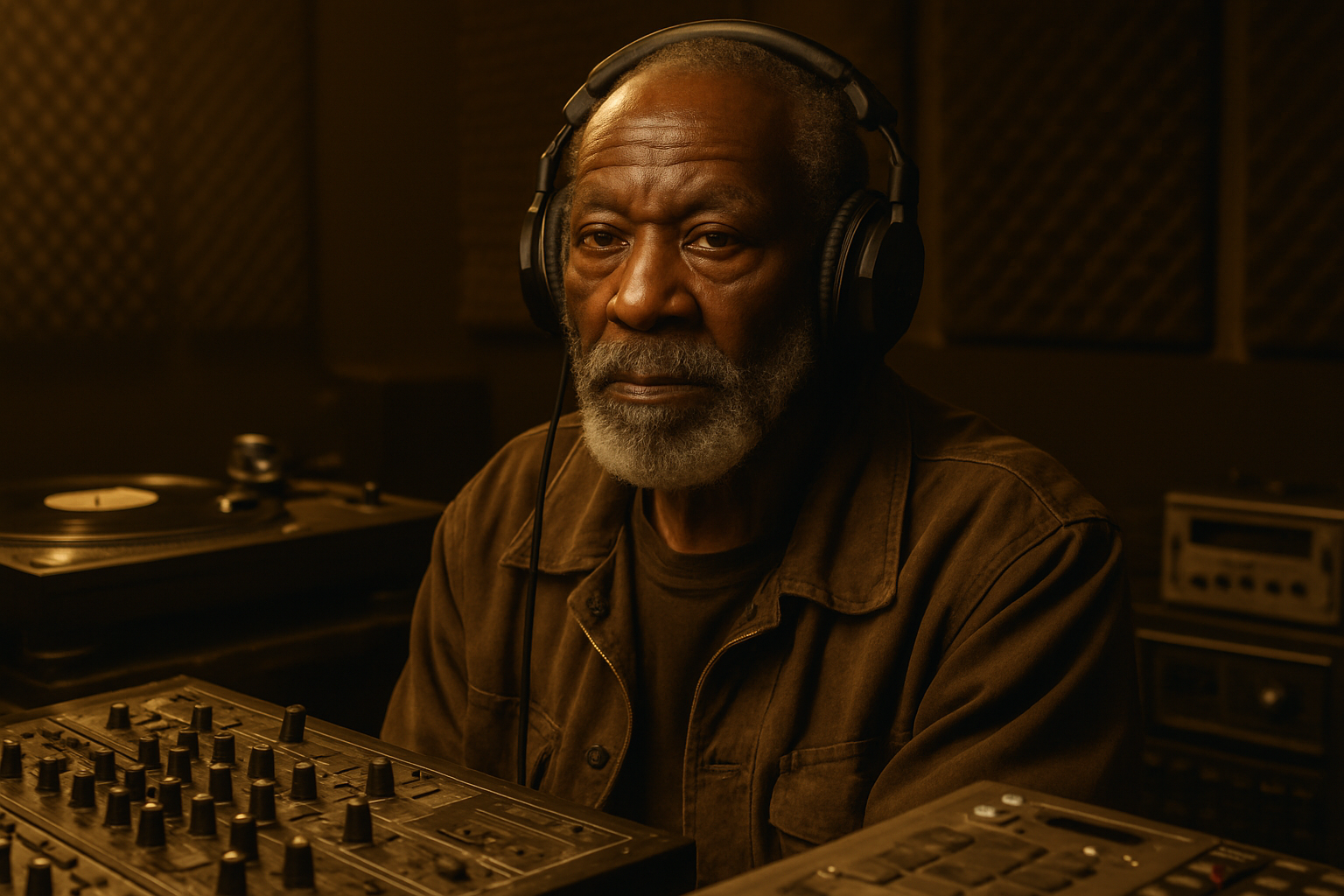
Afrika Bambaataa, one of hip-hop's founding fathers and the visionary behind the Universal Zulu Nation, died Thursday at age 67 in Pennsylvania from prostate cancer complications, marking the end of an era for a genre that transformed from South Bronx street culture into a global phenomenon.
Born Lance Taylor in 1957, Bambaataa emerged as a pivotal figure in hip-hop's genesis during the 1970s, establishing himself as one of the "Holy Trinity" of hip-hop alongside DJ Kool Herc and Grandmaster Flash. His death removes one of the last direct links to hip-hop's revolutionary origins, when block parties in the South Bronx gave birth to what would become the world's most influential musical and cultural movement.
The Architect of Hip-Hop Culture
Afrika Bambaataa's influence extended far beyond music production. He is credited with codifying the four fundamental elements of hip-hop culture: DJing (turntablism), MCing (rapping), breaking (breakdancing), and graffiti art. This framework, which he articulated in the early 1970s, provided structure to what had been an organic street movement and helped establish hip-hop as a legitimate cultural force.
The Universal Zulu Nation, which Bambaataa founded in 1973, represented a revolutionary approach to youth development in the South Bronx. Originally emerging from the ashes of the Black Spades gang, the Zulu Nation offered young people an alternative to gang violence through cultural expression and community building. The organization promoted knowledge, wisdom, understanding, freedom, justice, equality, peace, unity, love, respect, work, fun, and economics as core principles.
Musical Innovation and Global Impact
Bambaataa's 1982 single "Planet Rock," created in collaboration with producer Arthur Baker and featuring the electronic group Soul Sonic Force, became a watershed moment in music history. The track's innovative fusion of Kraftwerk's electronic sounds with hip-hop rhythms essentially created the electro-funk genre and demonstrated hip-hop's capacity for musical evolution and cross-cultural collaboration.
"Planet Rock" wasn't just a song—it was a declaration that hip-hop could absorb and transform any musical influence while maintaining its essential character.
— Music historian and hip-hop scholar
The track's success opened doors for hip-hop's global expansion, showing that the genre could incorporate diverse musical traditions while retaining its authenticity. Bambaataa's eclectic record collection, which spanned everything from James Brown to German electronic music, reflected his belief that hip-hop should be a universal language capable of bridging cultural divides.
Cultural Philosophy and Social Impact
Beyond his musical contributions, Bambaataa championed a philosophy of hip-hop as a tool for social change and cross-cultural understanding. He frequently spoke about hip-hop's potential to bring together people from different backgrounds and to address social inequalities through artistic expression. His approach emphasized education, cultural awareness, and positive social engagement over the materialism that would later characterize certain aspects of hip-hop culture.
The Zulu Nation's influence extended internationally, with chapters established in countries across Africa, Europe, and Asia. This global network helped spread not just hip-hop music but the cultural values and social consciousness that Bambaataa believed were essential to the movement's integrity.
Complex Legacy and Later Controversies
Bambaataa's legacy became complicated in 2016 when multiple men accused him of sexual abuse dating back to the 1980s. While he denied all allegations, the controversy significantly impacted his standing within the hip-hop community and led to his stepping back from public life. Several figures within the Zulu Nation distanced themselves from him, and his appearances at hip-hop events became increasingly rare.
Despite these later controversies, music historians and hip-hop scholars emphasize that his foundational contributions to the culture cannot be erased from the historical record. The structures, philosophies, and musical innovations he introduced in the 1970s and early 1980s remain fundamental to hip-hop culture today.
Industry Tributes and Recognition
Tommy Boy Records, which released many of Bambaataa's classic tracks, issued a statement acknowledging his "foundational contributions to hip-hop culture and his role in transforming local street culture into a global phenomenon." The label emphasized his influence on "music, fashion, politics, and youth empowerment worldwide."
International media coverage of his death, spanning from German ARD to French Le Quotidien to Russian Meduza, demonstrates the global reach of his influence. New Zealand's Stuff and multiple Dominican Republic outlets also covered his passing, underscoring hip-hop's transformation from a local Bronx movement to a worldwide cultural force.
The End of an Era
Afrika Bambaataa's death represents more than the loss of an individual artist—it marks the passing of someone who witnessed and helped shape hip-hop's transformation from neighborhood block parties to a multi-billion-dollar global industry. His vision of hip-hop as a positive force for cultural exchange and social change provided a template that continues to influence artists and activists worldwide.
As hip-hop approaches its sixth decade, Bambaataa's passing serves as a reminder of the genre's humble origins and its original purpose as a vehicle for community building and creative expression. While the controversies of his later years complicate his legacy, his role in establishing hip-hop's fundamental elements and global reach remains an indelible part of music history.
The Universal Zulu Nation, now led by a new generation of leaders, continues to operate internationally, working to preserve and promote the original principles that Bambaataa established. His influence on contemporary artists—from conscious rap to electronic music fusion—demonstrates the enduring relevance of his vision for hip-hop as a transformative cultural force.