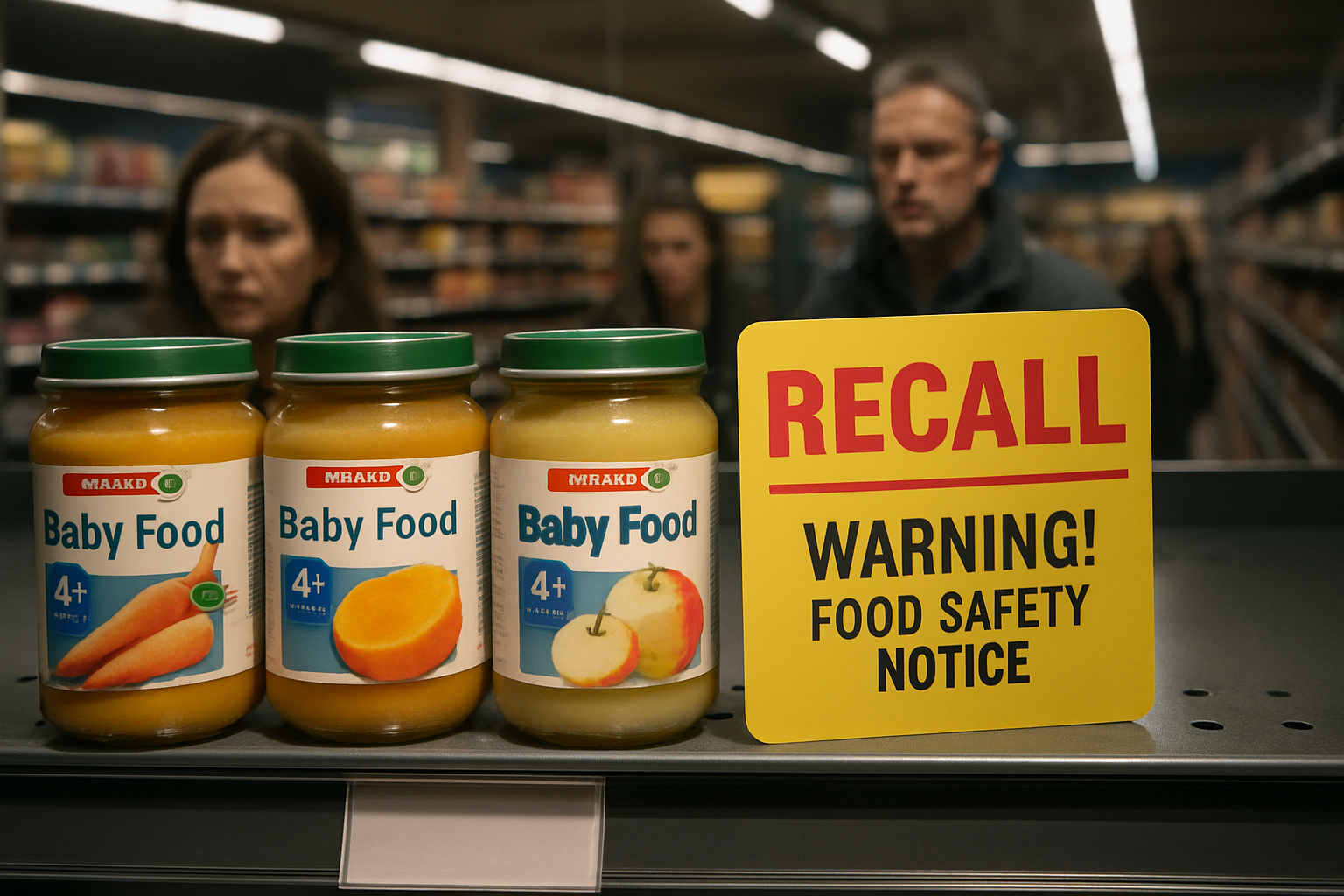
Austrian supermarket giant Spar has issued an immediate recall of all HiPP baby food glass jars across its retail network following police investigations into suspected product manipulation, marking the latest crisis in Europe's unprecedented 2026 food safety emergency.
The recall was announced on April 17, 2026, after authorities could not rule out that "dangerous substances" had been introduced into the baby food products. The Landespolizeidirektion Burgenland (Burgenland State Police Directorate) has appealed to the public for information regarding the suspected manipulation incidents.
According to a statement from HiPP, the German baby food manufacturer is "precautionally recalling its entire baby food jar assortment from SPAR Austria" as investigations continue into the contamination concerns. The company emphasized this action was taken purely as a precautionary measure to ensure infant safety.
Investigation Reveals Manipulation Concerns
Austrian police investigators have been examining reports of potential product tampering that could have introduced harmful substances into HiPP baby food containers distributed through Spar's extensive retail network. The nature of the suspected dangerous substances has not been disclosed by authorities, but the swift action suggests serious public health concerns.
The investigation comes amid heightened awareness of food safety vulnerabilities following Europe's devastating infant formula crisis earlier this year, which affected more than 36 infants across the United Kingdom, France, Luxembourg, and Greece with cereulide toxin contamination from major manufacturers including Nestlé and Danone.
Unprecedented European Food Safety Crisis
This recall represents another significant development in what industry experts are calling the most severe food safety crisis in modern European history. The 2026 crisis has now affected over 40 countries during a period when global temperatures have exceeded 1.5°C above pre-industrial levels for 21 consecutive months, creating optimal conditions for pathogen growth and disrupting traditional food preservation methods.
"The convergence of climate stress, supply chain vulnerabilities, and systematic safety failures is creating unprecedented challenges for food security across Europe."
— European Food Safety Authority spokesperson
The European Food Safety Authority (EFSA) has been developing standardized international protocols and enhanced molecular testing procedures to detect heat-stable toxins that can survive conventional pasteurization processes. These developments follow revelations that previously acceptable contamination levels were actually dangerous to infant health.
Impact on Consumer Confidence
The HiPP recall is expected to further erode consumer confidence in multinational food corporations, accelerating a measurable shift toward local sourcing and simplified supply chains that offer greater transparency and traceability. Market analysts report rising insurance costs for manufacturers and retailers, alongside mandatory investments in molecular testing infrastructure.
Social media has emerged as a powerful enforcement tool, with viral exposure of food safety violations accelerating regulatory responses across Europe. Consumer advocacy groups are demanding enhanced corporate accountability, with some jurisdictions implementing criminal executive liability frameworks for serious food safety violations.
Supply Chain Vulnerabilities Exposed
The suspected manipulation of HiPP products highlights critical vulnerabilities in complex international food distribution networks, where products can be contaminated at multiple points before detection. The incident demonstrates how centralized processing and distribution systems, while efficient, can create single points of failure affecting thousands of consumers across multiple countries.
Austria's response reflects a broader European trend toward prevention-focused approaches rather than reactive crisis management. Countries implementing comprehensive prevention programs report superior cost-effectiveness through decreased emergency interventions while achieving better population health outcomes.
Climate Change Amplification
Food safety experts note that the ongoing crisis occurs during unprecedented climate stress, with January 2026 marking the hottest recorded month in human history. Dr. Ali Younis from Cairo University's Faculty of Sciences describes climate change as a "threat multiplier" that enables pathogens typically active in different seasons to co-circulate simultaneously, overwhelming health systems designed for sequential rather than simultaneous challenges.
Traditional food preservation methods are proving increasingly inadequate for rapidly changing environmental conditions, requiring adaptive safety protocols and climate-resistant processing technologies.
International Coordination Efforts
Despite funding constraints affecting the World Health Organization, international cooperation continues through bilateral partnerships and regional collaboration networks. The African Continental Free Trade Agreement has been establishing coordinated agricultural standards, while EFSA develops standardized early warning systems for cross-border contamination prevention.
Industry experts identify 2026 as a critical transformation turning point requiring enhanced international coordination, climate-adaptive processing technologies, and prevention-focused approaches that integrate traditional wisdom with modern safety science.
Economic and Social Implications
The recall affects not only immediate product sales but also long-term market confidence in the infant nutrition sector. Premium pricing for authentic, traceable products is becoming economically viable as vulnerability awareness increases among consumers. Local producers are gaining competitive advantages through transparency while multinational corporations struggle to maintain consumer trust during repeated contamination incidents.
The crisis particularly impacts vulnerable populations, including families with limited financial resources for purchasing alternative products and those in rural areas with fewer retail options. Public health authorities emphasize the importance of maintaining adequate infant nutrition despite product recalls.
Path Forward
Food safety authorities stress that success in addressing the ongoing crisis requires sustained political commitment, comprehensive professional training in climate-adaptive approaches, authentic community engagement, and continued international cooperation for knowledge sharing and resource optimization.
The window for building resilient and equitable food systems is narrowing rapidly as environmental pressures intensify during what scientists call the decisive climate action decade. The tools and knowledge exist for comprehensive responses, but implementation requires unprecedented speed and coordination to match the scale of environmental and supply chain challenges.
As investigations into the HiPP product manipulation continue, Austrian authorities emphasize that food safety has evolved into a global public good requiring collective protection rather than individual national responses. The crisis serves as a stark reminder that in an interconnected world, food security challenges demand coordinated international action and sustained commitment to protecting the most vulnerable members of society.