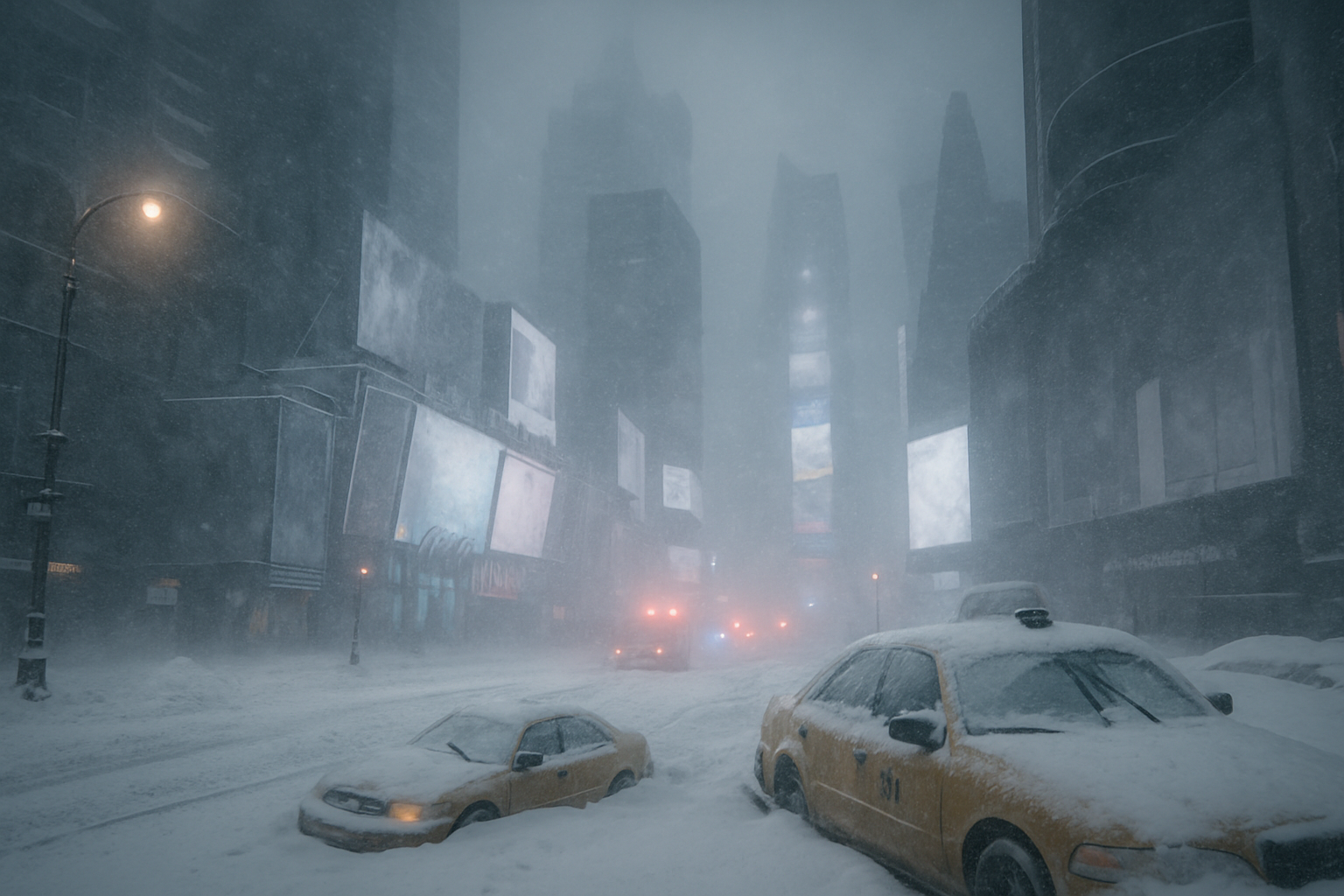
A historic blizzard named "Hernando" has paralyzed the northeastern United States, bringing record snowfall, travel bans, and states of emergency to New York and surrounding regions in what meteorologists are calling one of the most powerful winter storms in nearly a decade.
New York City Mayor Zohran Mamdani declared a state of emergency and imposed a citywide travel ban from Sunday night through Monday noon, warning residents that traveling is "extremely peligroso" (extremely dangerous). The storm threatens to dump between 45-60 centimeters of snow on the nation's largest city, with some forecasters predicting accumulations could reach two feet in the hardest-hit areas.
Unprecedented Storm System Brings "Bomb Cyclone" Conditions
Meteorologists have classified the storm as a powerful "bomb cyclone," with the rapid intensification creating blizzard conditions across the region. The National Weather Service has issued blizzard warnings for over 35 million people from Maryland through New England, marking the first such warning for New York City since 2017.
According to reports from international weather services, the storm has already deposited up to 60 centimeters of snow in the most affected areas, with some locations experiencing wind gusts exceeding 100 km/h. The combination of heavy snowfall and dangerous winds has created near-zero visibility conditions across much of the Northeast corridor.
"This storm has the potential to be one of the worst in more than a decade for our region," said Finland's meteorologist Einar Sveinbjörnsson, who noted that more than 50 centimeters of snow is expected at JFK Airport in New York. The severity has forced Icelandair to cancel multiple flights from New York to Iceland, with similar disruptions reported across the international aviation network.
Mass Transit Shutdowns and Infrastructure Impact
The storm has brought unprecedented disruption to the region's transportation infrastructure. New York City, home to the nation's largest school district, has ordered all public school buildings closed for a traditional "snow day," suspending remote instruction and canceling all after-school activities.
Aviation has been particularly hard hit, with thousands of flights canceled across major airports including JFK, LaGuardia, and Newark Liberty International. The ripple effects have reached as far as the Caribbean, with Jamaica's Sangster International Airport canceling multiple flights due to U.S. winter conditions, affecting the peak tourism season.
"The storm is already disrupting traffic along the eastern seaboard from Washington to New England, with airlines canceling thousands of flights and officials calling on citizens to stay off the roads."
— Bosnian Emergency Services Report
The U.S. Postal Service has warned that winter weather conditions in the Northeast could slow the processing, transportation, and delivery of mail and packages, demonstrating the storm's broad economic impact.
Emergency Response and Public Safety Measures
Authorities across the Northeast have activated comprehensive emergency response protocols. New York City has deployed over 1,200 warming center beds in hotels and public schools, with Mayor Mamdani urging "every New Yorker to please stay home."
The storm's dangerous conditions with nearly zero visibility threaten over 40 million people from Sunday through Monday, according to Bulgarian weather services monitoring the system. Emergency officials have warned that the combination of snowfall and strong winds could cause power outages affecting millions of residents in an area where nearly 54 million people live.
Several states have declared states of emergency, with authorities implementing travel bans and mobilizing National Guard units to assist with emergency operations. The systematic approach reflects lessons learned from previous major storms that have impacted the region.
Historical Context and Climate Implications
This blizzard occurs within a broader pattern of extreme weather affecting multiple continents simultaneously. The storm represents part of what scientists describe as increasing climate volatility, where global warming paradoxically enables both record heat and extreme regional cold events through polar vortex disruption.
January 2026 was confirmed as the 18th consecutive month with global temperatures exceeding 1.5°C above pre-industrial levels, demonstrating the complex relationship between global warming and regional extreme weather events. This climate context makes the current blizzard particularly significant for understanding future weather patterns.
The storm's timing coincides with similar extreme weather events affecting Europe, where recent Atlantic storm systems have claimed over 30 lives and required unprecedented emergency response operations, including Portugal's deployment of 26,500 rescue personnel in their largest peacetime operation.
Economic and Social Impact
The economic implications of the storm are already becoming apparent, with widespread business closures, supply chain disruptions, and increased heating demands during the extreme cold. The tourism industry faces particular challenges, with international travelers from Africa and the Caribbean experiencing extended accommodation costs and complex rebooking scenarios due to limited direct flight options.
Vulnerable populations are receiving special attention, with emergency warming centers activated across the region and social services agencies coordinating extended support programs. Mental health services are also preparing for increased demand, recognizing the psychological impact of extended extreme weather events on communities.
Infrastructure Resilience and Future Preparedness
The storm serves as a critical test of the region's infrastructure resilience and climate adaptation capabilities. Power grids are experiencing strain from increased heating demands, while transportation networks designed for historical rather than current climate conditions are being pushed beyond their intended parameters.
Aviation experts emphasize that 20th-century infrastructure is struggling with 21st-century climate realities, requiring fundamental resilience improvements as current weather patterns exceed historical design parameters. The industry is contemplating longer-term adaptations including enhanced weather monitoring, flexible aircraft deployment, and improved passenger communication platforms.
Emergency management officials stress that current response strategies, based on historical weather patterns and traditional mutual aid assumptions, must be fundamentally restructured for an era of permanent climate volatility. The storm highlights the urgent need for "transformative adaptation," moving beyond reactive emergency response to proactive infrastructure design that anticipates rather than merely responds to extreme weather conditions.
Recovery and Long-term Outlook
Recovery timelines are expected to extend from hours to potentially days or weeks, representing a fundamental shift in how communities must prepare for and respond to weather emergencies. The "build back better" approach is being emphasized, focusing on climate-resilient infrastructure rather than simply replacing damaged systems with identical replacements.
Additional Atlantic storm systems are reportedly developing, suggesting that the current crisis may persist for weeks, establishing what experts are calling a "new normal" of extreme weather frequency. This pattern requires comprehensive adaptation strategies that protect lives and maintain essential services in an era of increasing weather volatility.
As the immediate crisis continues to unfold, the storm represents both a significant emergency management challenge and a crucial learning opportunity for future climate adaptation planning. The choice between reactive crisis management and transformative adaptation approaches becomes increasingly urgent as extreme weather events exceed the adaptive capacity of traditional response systems.
Authorities maintain high alert levels across the region and continue to advise residents to avoid unnecessary travel while monitoring evolving conditions. The full scope of the storm's impact will likely not be clear until recovery operations can begin in earnest following the passage of the weather system.