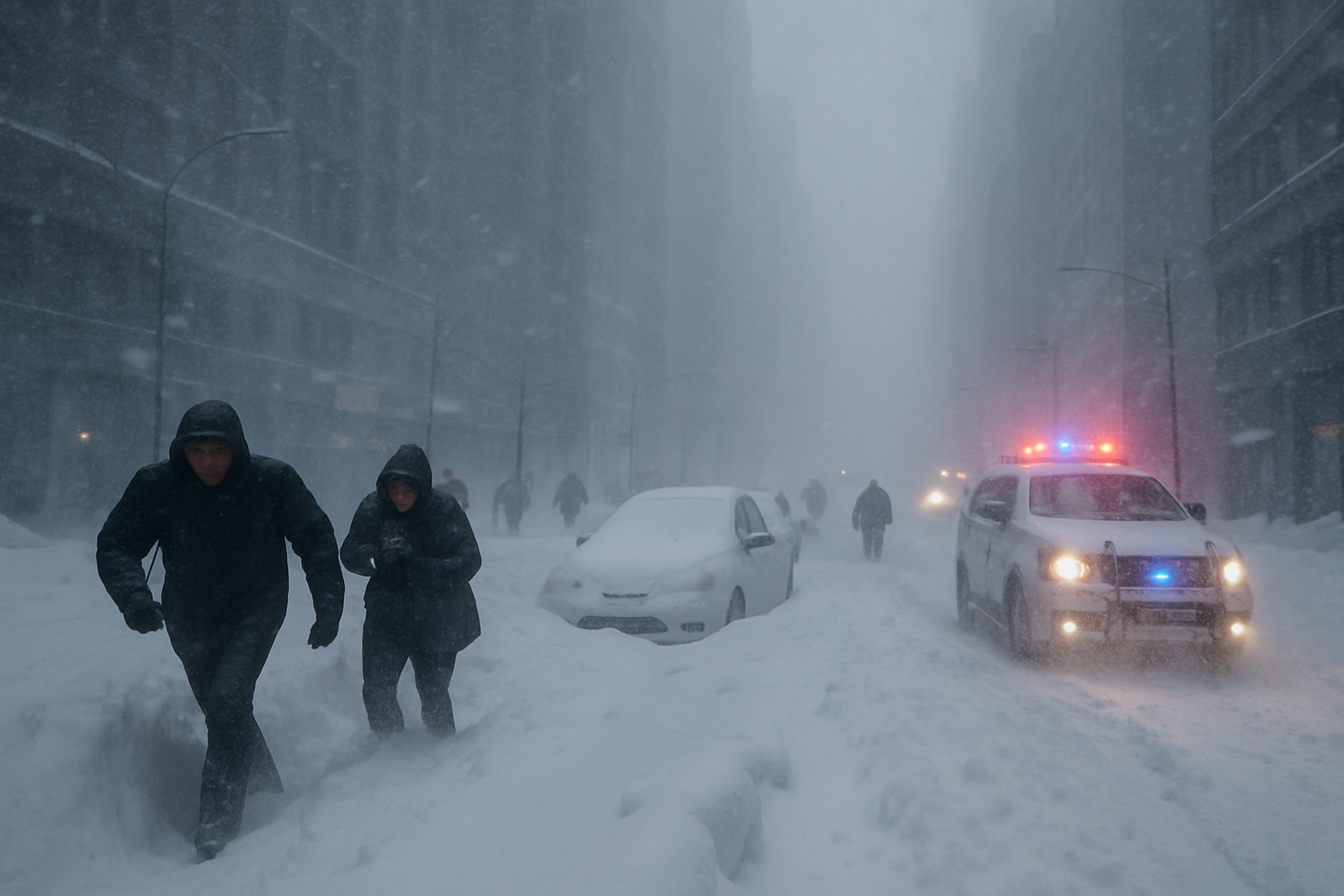
A massive winter storm has paralyzed the northeastern United States, affecting over 40 million people from Maryland to Maine with record snowfall, hurricane-force winds, and widespread transportation disruptions that officials are calling the most severe blizzard to hit the region in a decade.
The powerful storm system, dubbed a "bomb cyclone" by meteorologists, has brought snowfall accumulations of 45-60 centimeters (up to 2 feet) across major metropolitan areas including New York City, Boston, Philadelphia, and Washington D.C. Wind gusts exceeding 100 kilometers per hour have created near-zero visibility conditions and life-threatening wind chills as low as -20°C.
State of Emergency Declarations
Seven state governors have declared states of emergency as the storm continues to intensify. Connecticut, Delaware, Massachusetts, New Jersey, New York, Pennsylvania, and Rhode Island have all activated emergency protocols, with thousands of National Guard personnel deployed to assist with rescue operations and essential services.
New York City Mayor Zohran Mamdani announced an unprecedented citywide travel ban, declaring that "the city of New York has not experienced a storm of this magnitude in the last decade." The prohibition applies to all non-essential vehicles including cars, trucks, motorcycles, and even electric bicycles, running from 9:00 PM Sunday through noon Monday.
"We are facing conditions that our city hasn't seen for years. I urge all residents to avoid all non-essential travel and stay indoors for their safety."
— Zohran Mamdani, New York City Mayor
Massive Transportation Disruption
The aviation industry has been particularly hard hit, with over 5,700 flights canceled across the region's major airports. John F. Kennedy International Airport, LaGuardia Airport, and Newark Liberty International Airport have implemented severe flight restrictions, stranding thousands of passengers and creating ripple effects across international travel networks.
The disruption extends far beyond U.S. borders, with approximately 25 flights between the Dominican Republic and the United States canceled on February 22 due to the severe weather conditions. Airlines including American, Delta, JetBlue, and United have waived change fees and are working to accommodate affected passengers on later flights.
Ground transportation has also ground to a halt. Broadway shows have been canceled, subway service to New Jersey has been suspended, and major highways including Interstate 95 remain closed in multiple states. The storm has effectively shut down the economic heartland of the United States during a critical workweek.
Power Outages and Infrastructure Strain
Hundreds of thousands of residents across the Northeast are without power as heavy snow and ice damage transmission lines. New Jersey has been particularly affected, with thousands of residents losing electricity due to fallen power lines and overloaded systems. Emergency crews are pre-positioned throughout the region, but dangerous conditions are hampering restoration efforts.
The storm has also placed enormous strain on heating systems during some of the coldest temperatures of the winter season. Natural gas demand has surged, leading to price spikes and concerns about supply adequacy during peak usage periods.
Emergency Response and Public Safety
Emergency services have converted 13 New York City schools into warming centers, while deploying over 700 salt machines and pre-positioning thousands of power restoration crews. Similar emergency measures are in place across all affected states, with authorities urging residents to check on elderly neighbors and vulnerable community members.
The National Weather Service has issued blizzard warnings from Maryland through southeastern New England, with Boston projected to receive 30-60 centimeters of additional accumulation. Meteorologists warn that the storm system is moving slowly, prolonging dangerous conditions across the region.
Climate Context and Historical Significance
The current blizzard occurs during a period of unprecedented climate volatility. Despite January 2026 being confirmed as the hottest month in recorded history - the 18th consecutive month exceeding 1.5°C above pre-industrial levels - the Northeast is experiencing some of its most severe winter conditions in years.
Climate scientists explain this apparent paradox as evidence of polar vortex disruption, where Arctic warming allows frigid air masses to penetrate far south of their normal boundaries. This phenomenon demonstrates how global climate change can enable both extreme heat records and devastating regional cold simultaneously.
Economic and Social Impact
The economic toll of the storm is already mounting into the hundreds of millions of dollars. Business closures, supply chain disruptions, and transportation delays are affecting commerce throughout the region during what should be a productive work period. The tourism industry, still recovering from various global disruptions, faces additional challenges as international visitors cancel trips and domestic travel becomes impossible.
Educational institutions have been severely impacted, with hundreds of schools across the region closed and thousands of students unable to attend classes. Universities have shifted to virtual learning where possible, though power outages are complicating even remote educational delivery.
International Implications
The storm's effects extend beyond American borders, disrupting international aviation networks and affecting global supply chains. Caribbean nations that depend on American tourism and trade connections are experiencing secondary economic impacts as flights are canceled and shipping is delayed.
European weather monitoring agencies are closely watching the storm system for potential transatlantic effects, as similar weather patterns have contributed to severe winter conditions across the continent in recent weeks.
Recovery Outlook
Weather forecasters predict that dangerous conditions will persist through Monday, with additional snow accumulation possible in some areas. The slow-moving nature of the storm system means that recovery efforts may be delayed for several days even after precipitation ends.
Infrastructure damage assessment will not be possible until conditions improve, but early estimates suggest that complete restoration of normal operations may take weeks in some areas. Transportation authorities are prioritizing safety over service restoration speed, advising residents to continue monitoring official warnings and avoid unnecessary travel until conditions stabilize.
This historic blizzard serves as a stark reminder of nature's power and the increasing frequency of extreme weather events. As climate patterns become more volatile, the Northeast's experience provides crucial lessons for emergency preparedness and infrastructure resilience in an era of unprecedented weather volatility.