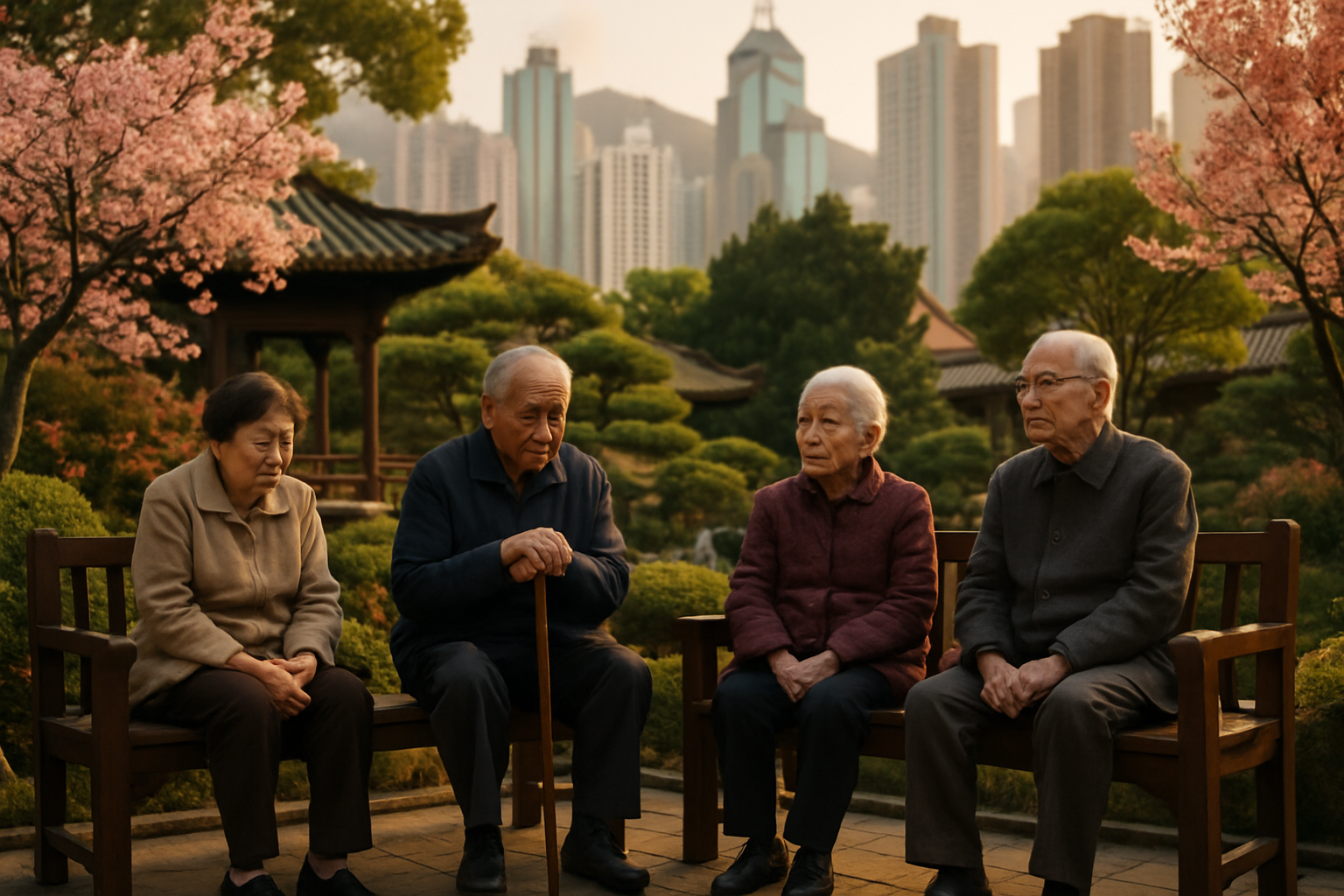
Hong Kong residents are increasingly willing to discuss death and funeral planning as the territory grapples with a rapidly aging population, driven by the COVID-19 pandemic, mass emigration waves, and tragic events like the deadly Tai Po fire that shocked the community.
According to death education advocate Pasu Ng Kwai-lun, founder of Minimal Funeral and practitioner of "life-and-death education," societal attitudes toward mortality have undergone a profound transformation over the past five to ten years. "People may not go as far as fully planning their funerals, but they're much more open to discussing these topics than before," Ng observed, highlighting a significant cultural shift in a society traditionally reluctant to address end-of-life matters.
Demographic Pressures Drive Cultural Change
Hong Kong's demographic landscape is undergoing dramatic transformation, mirroring broader challenges across the Asia-Pacific region. The territory joins nations like Japan, Singapore, and mainland China in confronting what experts term the "4-2-1 problem" – where single children must support four aging parents and grandparents due to declining birth rates and increased longevity.
This demographic shift comes as Hong Kong allocates 60% of its 2026-27 budget to health, social welfare, and education, with a HK$2.9 billion surplus specifically designated for mental health infrastructure investment. The government's financial commitment reflects the urgent need to address the psychological and social challenges accompanying rapid population aging.
"The pandemic, emigration, and tragic events like the Tai Po fire have forced us to confront mortality in ways we hadn't before. It's changing how we think about life and death."
— Pasu Ng Kwai-lun, Death Education Advocate
Global Context of Aging Societies
Hong Kong's experience reflects broader international trends in aging societies worldwide. Japan, with 30% of its population over 65, serves as both a model and warning for other developed regions. The country recorded just 705,809 births in 2025 – its lowest since 1899 and the tenth consecutive year of decline – while natural population decline reaches 900,000 annually.
Singapore has emerged as a regional leader in addressing aging challenges through innovative approaches like Kampung Admiralty, a "vertical village" that integrates senior housing, healthcare, and community services while maximizing land use. This model offers potential templates for Hong Kong's own urban planning challenges.
China's comprehensive approach includes strategic AI and robotics development to offset labor shortages while implementing family-centered eldercare models that maintain intergenerational bonds despite geographic dispersion. Bank of America Global Research analysis reveals this technological pivot as a strategic response to maintaining productivity despite the world's most rapidly aging population.
Cultural Evolution in Death Awareness
The growing openness to death discourse in Hong Kong represents a significant departure from traditional Chinese cultural taboos surrounding mortality discussions. This shift has been accelerated by multiple factors including the COVID-19 pandemic's mortality reminders, the trauma of recent emigration waves that have separated families, and shocking incidents like the Tai Po fire that claimed multiple lives.
Mental health professionals identify this cultural evolution as part of a broader "Therapeutic Revolution of 2026" emphasizing prevention-first healthcare approaches over crisis management. The movement toward authentic emotional expression and normalizing life's difficult realities represents a mature recognition that constant optimism can create psychological exhaustion rather than genuine healing.
Therapeutic Revolution and Community Infrastructure
Hong Kong's approach aligns with global trends treating mental wellness as fundamental community infrastructure comparable to transportation or education. Finland maintains its position as the world's happiest country for the ninth consecutive year through educational reforms that balance achievement with psychological wellbeing, while Montana achieved an 80% reduction in police mental health calls through proactive community intervention programs.
The territory's substantial budget allocation for mental health infrastructure reflects understanding that prevention-focused strategies demonstrate superior cost-effectiveness through decreased crisis interventions, improved community resilience, and enhanced workplace productivity. Economic multiplier effects extend beyond healthcare savings to include improved educational outcomes and strengthened social stability.
Integration of Traditional Wisdom and Modern Approaches
Hong Kong's death discourse evolution demonstrates successful integration of evidence-based practices with local cultural wisdom – an approach consistently superior to standardized Western frameworks. The territory's unique position as a bridge between Chinese cultural traditions and international perspectives enables culturally sensitive approaches that honor community values while embracing necessary social innovations.
This cultural adaptation success reflects broader international cooperation evolution, where bilateral partnerships and peer-to-peer knowledge sharing drive innovation despite traditional multilateral organization funding challenges. Distributed cooperation models allow flexible, culturally responsive approaches while maintaining evidence-based standards.
Economic and Social Implications
The economic implications of Hong Kong's aging population extend far beyond healthcare costs to encompass workforce productivity, housing demand, and social service provision. The territory's experience with the "double burden" of fewer births and longer lifespans strains social security systems while creating opportunities for innovative eldercare solutions.
Countries implementing comprehensive prevention programs report substantial benefits including improved community resilience, reduced emergency service demands, and enhanced international competitiveness. Hong Kong's investment in death education and aging-related social services positions the territory as a potential regional leader in managing demographic transitions.
International Cooperation and Best Practices
Despite World Health Organization funding challenges from major contributor withdrawals, innovative international cooperation continues through bilateral partnerships and regional collaboration networks. Hong Kong benefits from observing successful models including Finland's mindfulness practices adapted across Austria, Ireland's ADHD approaches informing European policy, and Germany's Digital Therapeutics Program that prescribes mental health applications through public insurance while maintaining human therapeutic relationships.
The territory's approach emphasizes technology enhancement rather than replacement of clinical judgment and personal medical relationships, ensuring that advances benefit diverse populations regardless of economic circumstances.
Future Implications and Challenges
March 2026 represents a critical juncture for global aging policy, with Hong Kong's experience providing valuable insights for societies worldwide facing similar demographic transitions. The convergence of evidence-based prevention strategies, cultural adaptation insights, and technological innovation offers unprecedented opportunities for comprehensive wellness promotion.
Success depends on sustained political commitment beyond electoral cycles, comprehensive professional training in prevention approaches, robust community engagement respecting cultural contexts, and continued international cooperation despite funding constraints. Mental wellness must be treated as fundamental community infrastructure requiring scientific precision balanced with cultural sensitivity.
Conclusion: A Model for Aging Societies
Hong Kong's evolving death discourse represents more than a cultural curiosity – it exemplifies how societies can successfully navigate the psychological and social challenges of rapid demographic aging. The territory's integration of traditional wisdom with modern therapeutic approaches, substantial financial commitment to mental health infrastructure, and willingness to address previously taboo subjects offer valuable templates for aging societies worldwide.
As Pasu Ng Kwai-lun observed, while people may not yet be fully planning their own funerals, the increasing willingness to discuss death and dying marks a crucial step toward building resilient communities capable of supporting members throughout the entire lifespan. This cultural evolution toward organizing society around human flourishing rather than merely treating illness after development represents a fundamental shift that could influence approaches to aging and mortality across the region and beyond.
The stakes extend beyond individual psychological wellbeing to encompass fundamental community conditions that enable all members to thrive across generations, making Hong Kong's experience a critical case study for 21st-century demographic challenges.