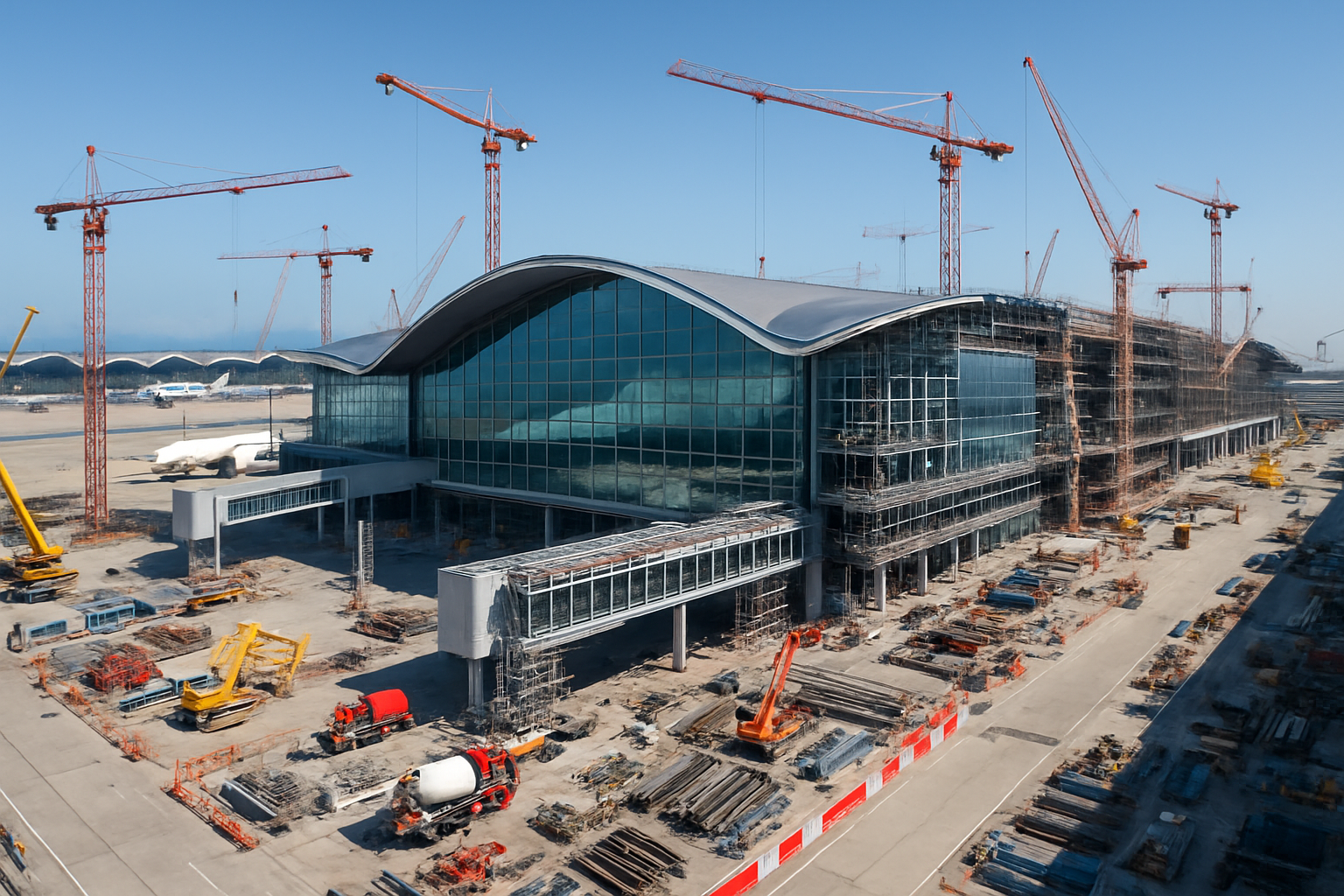
Hong Kong International Airport is preparing for a major milestone with the full opening of its second terminal on May 27, 2026, marking the completion of a massive HK$141.5 billion (US$18.1 billion) expansion project that began in 2016.
The redeveloped facility, announced by Airport Authority Chairman Fred Lam Tin-fuk, will serve as the operational base for 15 airlines and primarily handle regional flights as part of the airport's strategy to enhance its position as a leading Asian aviation hub. The terminal's coach hall already opened in September, setting the stage for full operational capacity by late May.
Strategic Infrastructure Investment
The second terminal opening represents the culmination of Hong Kong's most ambitious aviation infrastructure project, which also includes the construction of a third runway. This comprehensive expansion places Hong Kong at the forefront of a global infrastructure surge that has seen over $570 billion invested in transportation projects worldwide in 2026 alone.
The timing of this expansion aligns with a broader pattern of aviation infrastructure development across Asia-Pacific, where countries are positioning themselves to capture the anticipated recovery in regional travel. Similar projects include Vietnam's Long Thanh International Airport preparations, Malaysia's rural aviation modernization through AirBorneo's fleet expansion, and Thailand's ambitious Samui Expressway project featuring a 22-kilometer sea bridge.
Regional Aviation Recovery Context
The terminal opening comes at a critical time for regional aviation recovery. Recent data shows Hong Kong projecting 11.38 million travelers during the Lunar New Year period, marking a 16% increase from 2025 levels and demonstrating the sustained growth in Asia-Pacific travel markets that continue to lead global tourism recovery.
"This expansion represents our commitment to maintaining Hong Kong's position as a premier international aviation hub while enhancing regional connectivity."
— Fred Lam Tin-fuk, Airport Authority Chairman
The focus on regional flights reflects a strategic shift in the aviation industry toward connecting secondary cities and enhancing intra-regional mobility. This approach mirrors successful models implemented elsewhere in Asia, including Singapore's emphasis on regional connectivity and Malaysia's investment in rural air services connecting previously underserved destinations.
Integration with Global Infrastructure Trends
Hong Kong's terminal expansion is part of an unprecedented global infrastructure development wave. Recent months have seen major airport projects across multiple continents, including Nicaragua's Punta Huete International Airport reconstruction with Chinese engineering, Croatia's preparation of 62 tourist medical clinics for enhanced visitor services, and Angola's transition to the new Dr. António Agostinho Neto Airport.
The project incorporates modern design principles emphasizing passenger experience, operational efficiency, and environmental sustainability. These elements reflect evolved understanding of airport infrastructure requirements in the post-pandemic era, where facilities must balance capacity growth with health protocols and passenger comfort expectations.
Economic Impact and Regional Competition
The HK$141.5 billion investment positions Hong Kong to compete more effectively with regional hubs including Singapore's Changi Airport and Bangkok's Suvarnabhumi Airport. The economic multiplier effects extend beyond aviation, supporting tourism, logistics, and business travel sectors that depend on enhanced connectivity.
Analysis of similar infrastructure projects worldwide shows that major airport expansions typically generate employment during construction phases and create permanent operational positions. The Hong Kong expansion is expected to support thousands of jobs directly and indirectly, contributing to the territory's post-pandemic economic recovery.
Technology Integration and Future Operations
The second terminal incorporates advanced technology systems for passenger processing, baggage handling, and flight operations. These digital solutions align with global trends toward smart airport infrastructure that uses artificial intelligence for crowd management, predictive maintenance, and operational optimization.
The facility is designed to handle the increasing complexity of modern aviation operations, including enhanced security protocols, health screening capabilities, and flexible gate configurations that can accommodate different aircraft types serving various regional destinations.
Regional Integration and Connectivity
The terminal opening supports broader regional integration initiatives across Asia-Pacific. Enhanced connectivity facilitates business relationships, cultural exchange, and tourism development that benefits multiple countries in the region. This connectivity strategy mirrors successful approaches implemented by other major hubs that have positioned themselves as bridges between different geographic markets.
The 15 airlines that will operate from the new terminal represent a diverse mix of regional carriers, providing passengers with expanded route options and potentially more competitive pricing for intra-Asian travel. This diversity strengthens Hong Kong's position as a connecting point for travelers moving between different Asian markets.
Looking Forward
The May 27 opening date represents more than just facility completion – it marks Hong Kong's strategic commitment to maintaining aviation leadership in an increasingly competitive regional market. The success of this expansion will likely influence future infrastructure decisions across Asia-Pacific as countries continue investing in transportation connectivity.
As global travel patterns evolve and regional tourism markets strengthen, Hong Kong's enhanced capacity through the second terminal positions the territory to capture growth opportunities while maintaining its traditional strengths in international connectivity. The project serves as a model for other destinations considering major infrastructure investments to support long-term economic development and regional integration.