Hong Kong democracy activist and media tycoon Jimmy Lai was sentenced to 20 years in prison on Monday in one of the most significant prosecutions under Beijing's national security law, effectively silencing one of the city's most prominent critics of Chinese rule.
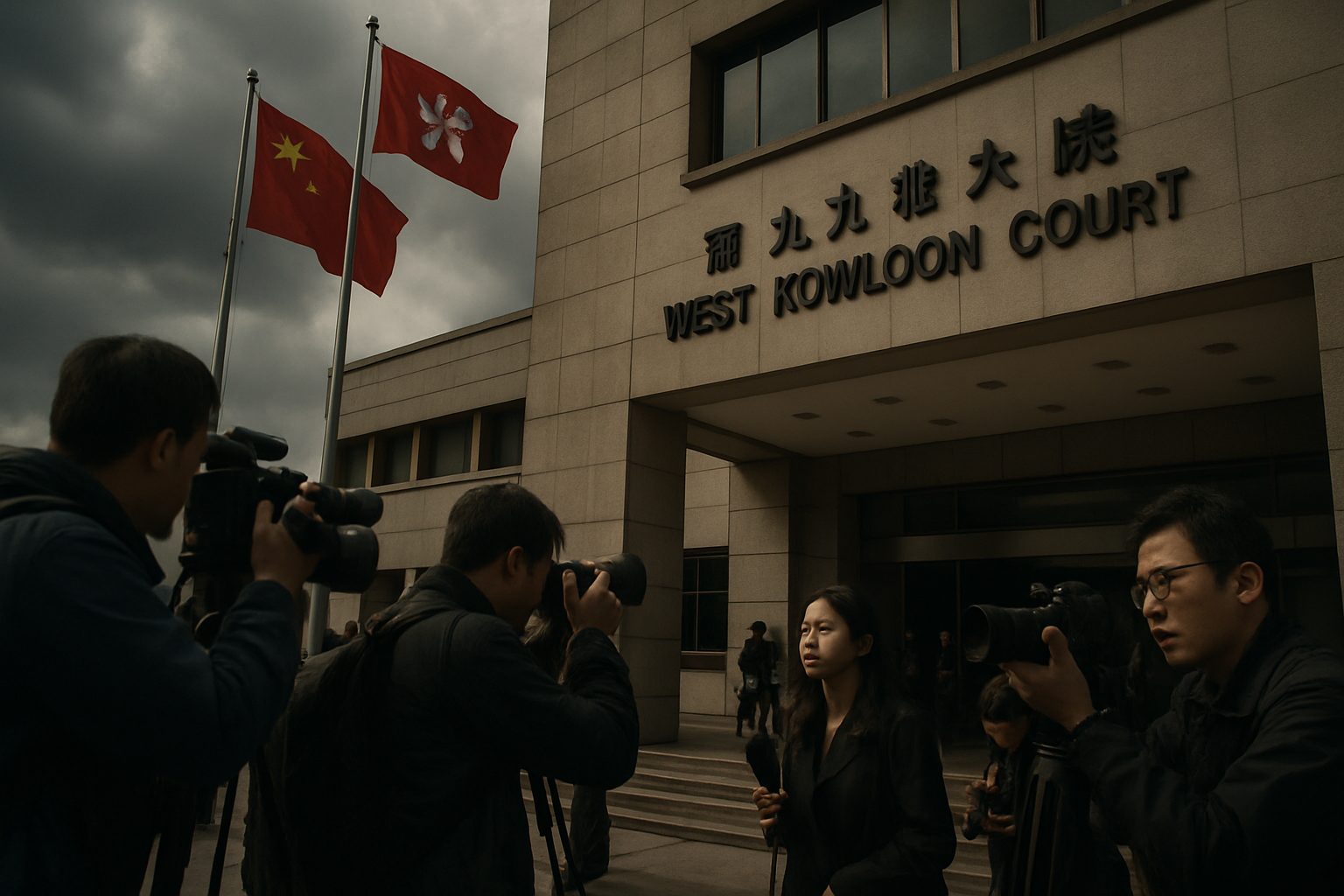
Three High Court judges delivered the sentence to the 78-year-old founder of the now-defunct Apple Daily newspaper during a brief 10-minute hearing at West Kowloon Court. Lai was convicted on December 15, 2025, of two counts of conspiracy to collude with foreign forces and one count of publishing seditious materials.
The court described Lai's sentence as falling within the most severe penalty "band" of 10 years to life imprisonment for offenses of a "grave nature." Judge stated that "after considering the serious criminal conduct of Lai, the court decided that the overall sentence imposed on Lai in this case should be 20 years imprisonment."
International Condemnation and Support
The sentencing has drawn widespread international criticism and highlighted the deteriorating state of press freedom in Hong Kong. Lai's plight has been condemned by global leaders, including U.S. President Trump and British Prime Minister Keir Starmer, who have called for his immediate release.
Human rights organizations have described the sentence as effectively "like a death sentence" for the elderly media mogul, given his age and declining health. Taiwan's government protested the verdict, while advocacy groups warned it represents another blow to Hong Kong's once-vibrant civil society.
The case has become a geopolitical flashpoint between China and Western nations, testing the willingness of governments to challenge Beijing despite seeking to stabilize broader diplomatic relations. As a British citizen, Lai's case has particular resonance in the United Kingdom, where officials face pressure to secure his release while managing economic ties with China.
From Media Empire to Political Target
Jimmy Lai built his fortune as a textile entrepreneur before founding Apple Daily in 1995, creating a tabloid-style newspaper that became synonymous with Hong Kong's pro-democracy movement. The publication was known for its fierce criticism of Beijing and unwavering support for democratic values in Hong Kong.
Lai was first arrested in August 2020 as authorities began implementing the national security law imposed by Beijing following the massive 2019 pro-democracy protests. The law criminalized activities deemed as secession, subversion, terrorism, or collusion with foreign forces - broadly defined terms that critics argue have been used to silence political opposition.
Apple Daily was forced to shut down in June 2021 after authorities froze its assets and arrested several senior staff members. The closure marked the end of Hong Kong's last major pro-democracy newspaper, representing a symbolic defeat for press freedom in the former British colony.
The Trial and Its Implications
Lai's trial, which lasted nearly four years, was Hong Kong's most high-profile national security case. Prosecutors argued that he had used his media platform and international connections to undermine Chinese sovereignty and encourage foreign interference in Hong Kong affairs.
The court found that Lai had acted as a "mastermind" behind efforts to lobby foreign governments for sanctions against Chinese and Hong Kong officials. His meetings with international leaders and his newspaper's editorial stance were cited as evidence of collusion with foreign forces.
"The sentence ends a legal saga spanning almost five years, and Hong Kong's most high-profile national security hearing."
— South China Morning Post
Six senior executives from Apple Daily and two activists were also sentenced on Monday, receiving terms ranging from several years to over a decade. Three companies associated with the newspaper were also penalized, completing the systematic dismantling of Lai's media empire.
Broader Crackdown on Civil Society
Lai's sentencing represents the culmination of a broader crackdown on Hong Kong's civil society that began with the implementation of the national security law in 2020. Since then, hundreds of pro-democracy activists, politicians, and ordinary citizens have been arrested or forced into exile.
The transformation has been dramatic for a city that once prided itself on being Asia's media hub and a bastion of free expression within China. International media organizations have relocated their regional headquarters, while local news outlets have either closed or dramatically altered their editorial stance to avoid prosecution.
Legal experts warn that the broad interpretation of the national security law has created an atmosphere of self-censorship that extends far beyond media organizations. Universities, businesses, and civil society groups have all adjusted their activities to avoid potential legal challenges.
Beijing's Perspective and Hong Kong's Future
Chinese and Hong Kong officials have consistently defended the national security law as necessary to restore stability after the 2019 protests, which saw months of sometimes violent confrontations between demonstrators and police. They argue that the law targets only a small minority of troublemakers while protecting the rights of law-abiding citizens.
From Beijing's perspective, Lai's activities represented a genuine threat to national security, particularly his efforts to encourage foreign governments to impose sanctions on Chinese officials. Chinese media have portrayed his sentencing as justice for someone who betrayed his homeland for foreign support.
The sentencing comes at a time when Hong Kong is attempting to rebuild its reputation as an international financial center while operating under the constraints of the national security law. The city's leaders have argued that political stability will ultimately benefit economic development, though critics question whether international confidence can be restored without addressing concerns about human rights and legal independence.
International Response and Diplomatic Consequences
The case has significant implications for international relations, particularly between China and Western nations that have called for Lai's release. The sentence will likely prompt new sanctions and diplomatic protests, further straining Beijing's relationships with key trading partners.
European Union officials have indicated that the case will influence future policy decisions regarding Hong Kong and China more broadly. The United States has already imposed sanctions on Hong Kong and Chinese officials involved in implementing the national security law, and Lai's sentencing may trigger additional measures.
For Hong Kong's remaining international business community, the case serves as a reminder of the changed political landscape in which they operate. While most commercial activities continue normally, the broader implications of the national security law continue to influence decisions about long-term commitments to the city.
Looking Ahead
At 78 years old and facing two decades in prison, Lai's effective life sentence marks the end of an era for Hong Kong's pro-democracy movement. His case has become emblematic of the broader transformation of Hong Kong from a semi-autonomous territory with significant freedoms to a city more closely integrated with mainland China's political system.
The sentencing will likely have a chilling effect on any remaining opposition voices in Hong Kong, while sending a clear message about the consequences of challenging Beijing's authority. For international observers, it represents a test case for how the global community responds to what many see as the systematic erosion of Hong Kong's autonomy and freedoms.
As Hong Kong continues to navigate its role within China's political framework, the Jimmy Lai case will be remembered as a defining moment in the city's modern history - one that highlighted the tensions between local aspirations for democracy and Beijing's vision of national unity and security.