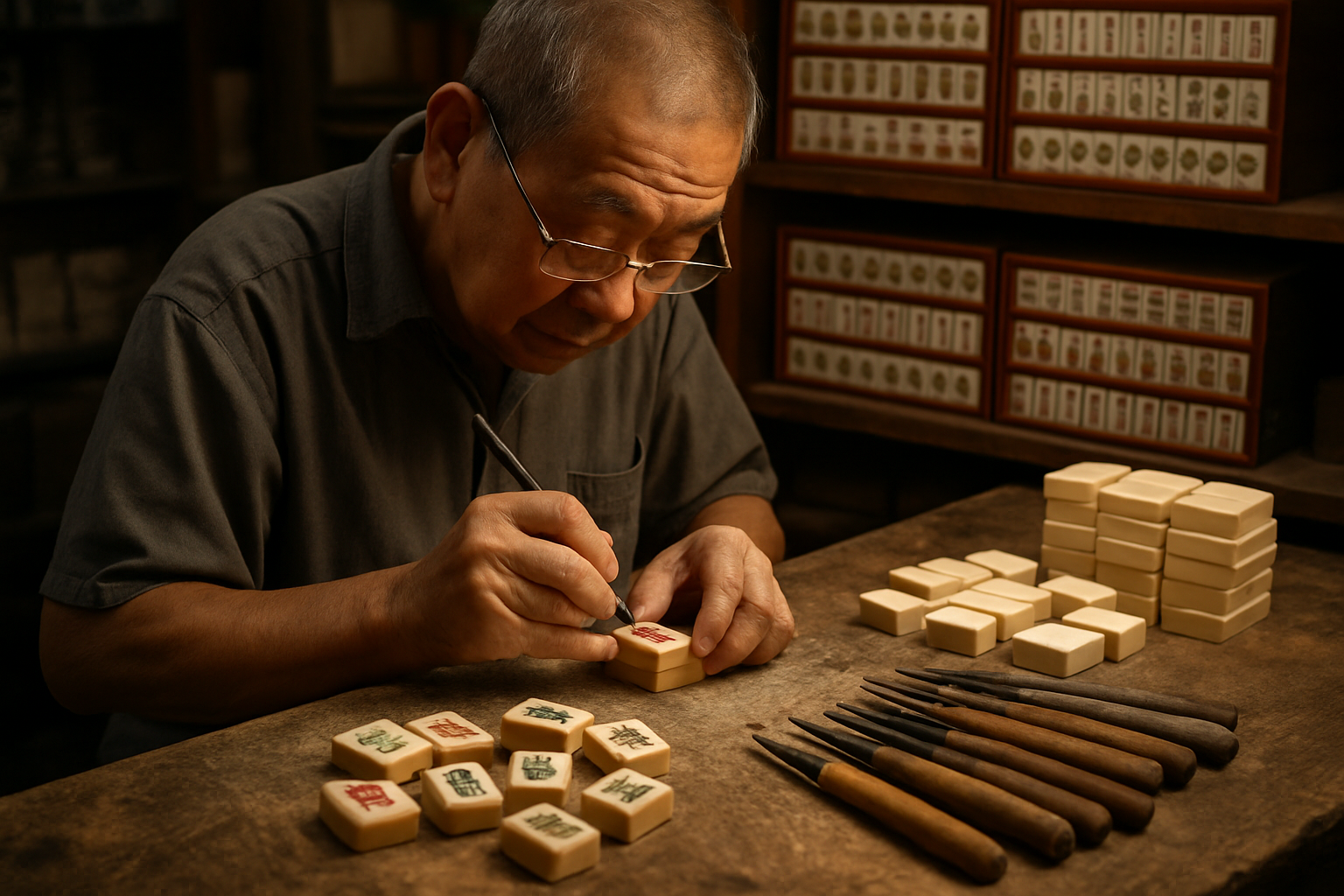
The rhythmic tapping of carving tools on bamboo and bone tiles will fall silent forever this week as Hong Kong bids farewell to one of its last bastions of traditional craftsmanship—a shop that has hand-carved mahjong tiles for nearly half a century.
Kung Yau Cheung Mahjong, founded 47 years ago in the bustling heart of Mong Kok, announced it would close permanently on March 28, 2026. The closure marks the end of an era for Hong Kong's traditional handicrafts, as artisan skills passed down through generations finally succumb to the relentless pressures of urban development and changing consumer preferences.
A Lifetime Dedicated to Ancient Art
At the center of this story stands Ko Yun-kan, the shop's owner and master artisan carver who entered the trade at just 18 years old. For Ko, mahjong carving has been more than a profession—it has been a calling that connected him to centuries of Chinese cultural tradition.
"The closure of the Mong Kok shop was not due to poor business," Ko explained, highlighting a cruel irony in Hong Kong's current economic landscape. Despite maintaining a steady customer base and profitable operations, the landlord's decision to reclaim the strategic street-corner premises forced the shop's hand.
This decision reflects a broader trend across Hong Kong, where traditional businesses face displacement not due to lack of demand, but because of the city's intense real estate pressures and landlords' pursuit of higher-yielding commercial tenants.
The Art of Hand-Carved Mahjong
Hand-carved mahjong tiles represent one of China's most intricate traditional crafts, requiring years of training to master the precise techniques needed to create sets that meet the exacting standards of serious players. Unlike mass-produced plastic tiles that flood modern markets, hand-carved pieces are fashioned from natural materials including bamboo backs and bone or ivory faces.
The process involves multiple stages of meticulous work: selecting appropriate materials, cutting tiles to exact specifications, hand-carving the intricate Chinese characters and symbols, and applying traditional paints and lacquers. Master craftsmen like Ko could produce complete sets that would last generations with proper care, their weight and texture providing the tactile satisfaction that serious mahjong enthusiasts demand.
"Each tile tells a story of tradition and craftsmanship that machines simply cannot replicate. When you hold a hand-carved piece, you're touching living heritage."
— Ko Yun-kan, Master Artisan
Cultural Significance Beyond Gaming
Mahjong transcends mere entertainment in Chinese culture, serving as a social institution that brings families and communities together. The game's complex symbolism—incorporating seasons, winds, flowers, and traditional Chinese numerals—creates a cultural vocabulary that connects players to their heritage.
The tiles themselves have historically been considered objects of beauty worthy of artistic appreciation. Wealthy families would commission custom sets as heirlooms, with master carvers creating pieces that showcased their technical virtuosity through intricate engravings and premium materials.
In Hong Kong's compact urban environment, mahjong has served as a crucial social connector, providing opportunities for intergenerational bonding as grandparents teach traditional rules to grandchildren, preserving both gaming skills and cultural values through hands-on engagement.
The Decline of Traditional Crafts
Kung Yau Cheung Mahjong's closure illuminates the broader challenges facing traditional craftspeople across Hong Kong and the wider region. Economic pressures, changing consumer preferences, and the lack of new apprentices willing to dedicate years to mastering ancient techniques have created a perfect storm threatening these cultural treasures.
The global trend toward mass production and digital entertainment has reduced demand for hand-crafted goods, while younger generations increasingly gravitate toward careers in finance, technology, and other modern industries that offer more predictable income streams and social prestige.
This pattern reflects similar challenges documented worldwide, where traditional artisans struggle to maintain viability amid rapid modernization. From European luthiers to Japanese sword smiths, master craftspeople find themselves guardians of increasingly rare knowledge that risks disappearing forever.
Economic and Social Pressures
Hong Kong's transformation from a manufacturing hub to a global financial center has fundamentally altered the economic landscape for traditional trades. Rising commercial rents, particularly in prime locations like Mong Kok, have made it increasingly difficult for small-scale artisan businesses to maintain operations.
The COVID-19 pandemic further accelerated these trends, disrupting traditional business models and accelerating the shift toward online commerce and digital entertainment options. Many elderly craftspeople, lacking digital marketing skills, found their customer bases shrinking as foot traffic to traditional shopping areas declined.
Additionally, the absence of apprenticeship programs and formal institutions dedicated to preserving these skills has created a knowledge transfer crisis. Without systematic efforts to train new generations of craftspeople, these traditions face extinction within decades.
Regional Context and Global Implications
Hong Kong's experience mirrors broader cultural preservation challenges across Asia, where rapid economic development often comes at the cost of traditional practices. Similar stories emerge from mainland China, Taiwan, Singapore, and other rapidly modernizing societies where ancient crafts struggle against modern economic realities.
However, some encouraging counter-trends suggest possible revival paths. Taiwan has successfully preserved traditional craftspeople through government cultural programs, while Japan maintains thriving artisan communities through tourism integration and cultural education initiatives.
European examples also provide hope: Luxembourg's young luthier revival and similar artisan renaissance movements demonstrate that traditional crafts can find new relevance when supported by appropriate economic frameworks and community engagement.
The Broader Heritage Crisis
The closure of Kung Yau Cheung Mahjong represents more than the loss of a single business—it symbolizes Hong Kong's struggle to maintain cultural continuity amid relentless modernization pressures. As one of the city's last traditional handicraft stores, its closure removes an irreplaceable link to Hong Kong's artisan heritage.
This loss occurs at a particularly sensitive moment, as Hong Kong grapples with questions of cultural identity and historical preservation. The territory's unique position as a bridge between East and West has historically made it a guardian of traditional Chinese culture, but economic pressures increasingly challenge this role.
Cultural preservationists worry that Hong Kong risks becoming a purely commercial center, losing the cultural authenticity that has long been part of its distinctive character and international appeal.
Lessons for Cultural Preservation
The story of Ko Yun-kan and his mahjong workshop offers crucial insights into the requirements for successful cultural preservation. Traditional crafts require more than tourist curiosity or nostalgic appreciation—they need sustainable economic models, institutional support, and active community engagement to survive.
Successful preservation efforts typically combine multiple approaches: government cultural policies that provide financial support and workspace protection, educational programs that train new practitioners, tourism initiatives that create market demand, and community organizations that maintain cultural relevance.
The challenge lies in creating frameworks that honor traditional authenticity while adapting to contemporary economic realities, ensuring that cultural preservation serves living communities rather than becoming static museum displays.
A Call for Action
As Hong Kong loses another piece of its cultural heritage, the closure of Kung Yau Cheung Mahjong serves as both an ending and a warning. Without deliberate efforts to preserve traditional crafts, these irreplaceable skills and the cultural knowledge they embody will vanish forever.
The time for action is now, before the last generation of master craftspeople takes their knowledge to the grave. Hong Kong has the resources and international connections needed to create innovative preservation programs, but success requires recognition that cultural heritage constitutes essential infrastructure for human flourishing and community identity.
Ko Yun-kan's lifetime of dedication to his craft represents the end of one chapter in Hong Kong's cultural story. Whether future chapters will include thriving traditional arts communities or merely nostalgic memories of what once was depends on the choices being made today by policymakers, community leaders, and citizens who value the irreplaceable treasure of living cultural heritage.