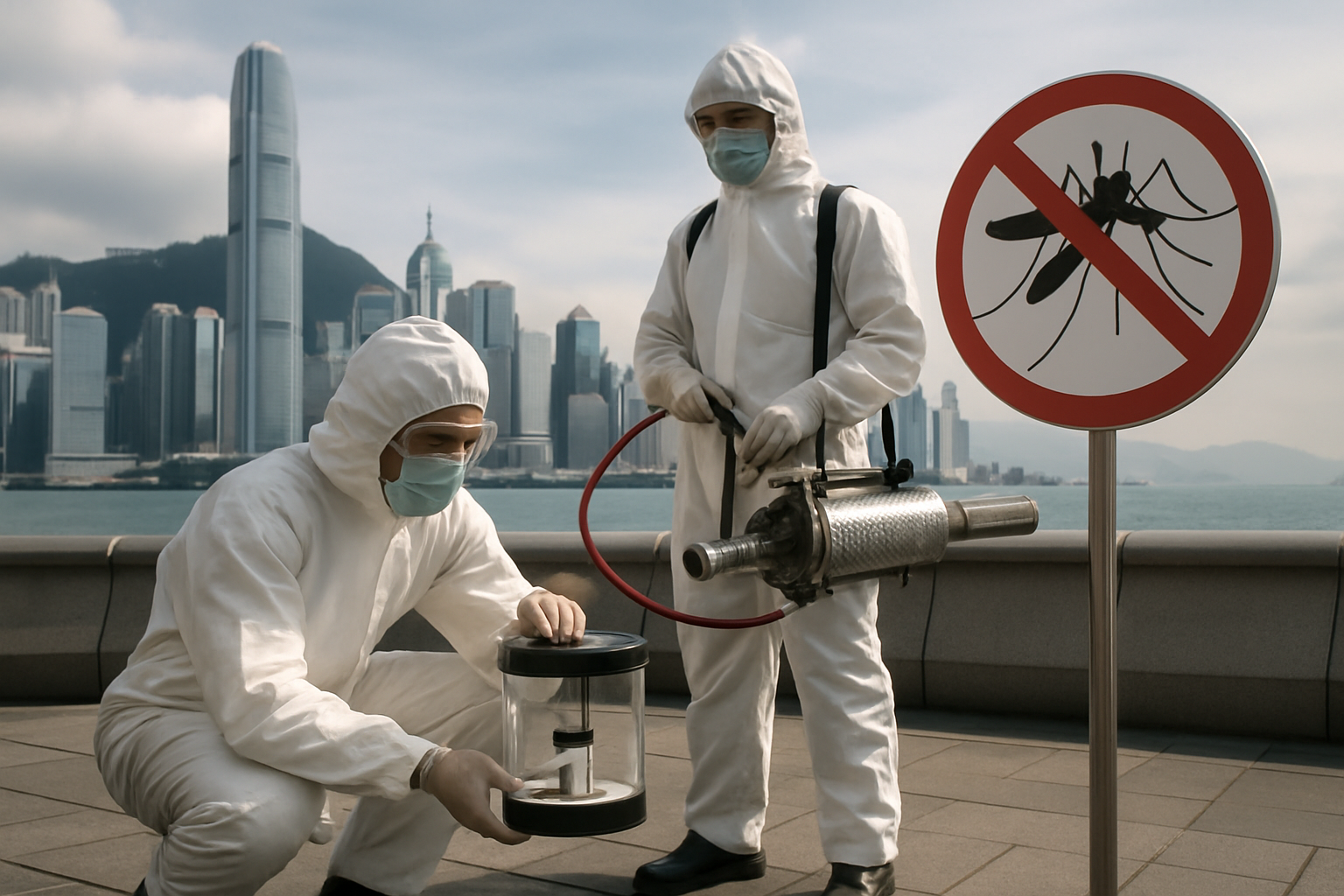
Hong Kong is implementing a revolutionary "mosquito-to-control-mosquito" strategy while intensifying enforcement of its e-cigarette ban, marking a significant escalation in the territory's prevention-first public health approach as the Labour Day "golden week" holiday approaches.
Director of Food and Environmental Hygiene Donald Ng Man-kit announced the groundbreaking mosquito control trial on Sunday, revealing plans to infect male mosquitoes with bacteria to prevent their offspring from reaching maturity. The innovative biological control method comes in response to Hong Kong's first local dengue fever case in over a year and rising mosquito populations across the territory.
Biological Mosquito Control Revolution
The "mosquito-to-control-mosquito" strategy represents a paradigm shift from traditional chemical-based vector control to sophisticated biological intervention. Under the new approach, male mosquitoes will be deliberately infected with bacteria that sterilize their offspring, preventing the next generation from developing to reproductive maturity.
Ng Man-kit indicated that the government is considering stepping up mosquito control measures with a lower intervention threshold, acknowledging that Hong Kong's mosquito population has risen more rapidly this year than in previous seasons. The timing of this announcement follows the detection of the territory's first locally-transmitted dengue fever case since 2024, highlighting the urgent need for enhanced vector control strategies.
This biological approach aligns with the global "Therapeutic Revolution of 2026," a worldwide shift toward prevention-first healthcare strategies that emphasize proactive intervention over reactive treatment. Countries implementing comprehensive prevention programs have demonstrated superior cost-effectiveness through decreased crisis interventions while achieving better population health outcomes.
E-Cigarette Ban Enforcement Intensifies
Simultaneously, Hong Kong authorities have dramatically escalated publicity campaigns and enforcement of the territory's ban on possessing alternative smoking products in public places. Director of Health Ronald Lam Man-kin reported that the Tobacco and Alcohol Control Office has conducted more than 11,000 inspections this year, issuing approximately 2,200 fixed penalty notices of HK$3,000 (US$383) each.
Of particular significance, 23 of these enforcement actions specifically targeted violations related to alternative smoking products, including e-cigarettes. The enhanced enforcement campaign has specifically targeted mainland Chinese media outlets ahead of the Labour Day "golden week" holiday period, when millions of mainland visitors are expected to visit Hong Kong.
The intensified e-cigarette enforcement occurs within a broader international context of mounting scientific evidence about vaping health risks. Recent research from the University of New South Wales published in the Carcinogenesis journal has provided definitive evidence that nicotine-based vapes and e-cigarettes cause lung and oral cancers through complex mechanisms including heated aerosol cellular damage and chronic inflammatory responses.
Global Context of Prevention-First Health Policies
Hong Kong's dual public health initiatives reflect broader international trends toward evidence-based prevention strategies. The territory's 2026-27 budget allocated 60% of recurrent spending to health, social welfare, and education sectors, with HK$2.9 billion specifically designated for mental health infrastructure—demonstrating the government's commitment to treating wellness as fundamental community infrastructure.
The mosquito control innovation comes at a critical time as climate change continues to alter disease transmission patterns. January 2026 marked the 18th consecutive month that global temperatures exceeded 1.5°C above pre-industrial levels, creating optimal conditions for vector-borne diseases and enabling geographical range expansion of disease-carrying mosquitoes.
International cooperation in vector control has intensified through bilateral partnerships and peer-to-peer knowledge sharing, even as traditional multilateral health organizations face funding constraints. Countries across Southeast Asia and the Caribbean have reported increased dengue transmission, making Hong Kong's biological control trial particularly significant as a potential model for regional adoption.
Scientific Foundation and Implementation Challenges
The biological mosquito control strategy builds on extensive scientific research demonstrating the effectiveness of sterile insect techniques in reducing disease vector populations. Unlike chemical interventions that can affect non-target species and create environmental contamination, the bacteria-based approach specifically targets the reproductive capacity of disease-carrying mosquito species while leaving beneficial insects unaffected.
However, the implementation of both public health initiatives faces practical challenges. The mosquito control program requires sophisticated laboratory facilities for bacteria cultivation and mosquito breeding, along with careful monitoring systems to track population dynamics and disease transmission patterns. The territory's dense urban environment presents unique challenges for biological release programs, requiring coordination across multiple districts and stakeholder groups.
Similarly, e-cigarette ban enforcement faces technological and legal complexities. Age verification for online purchases requires robust systems that balance public health protection with privacy concerns, while cross-border enforcement necessitates unprecedented cooperation between Hong Kong and mainland Chinese authorities.
Economic and Social Implications
The economic implications of Hong Kong's prevention-first approach extend far beyond immediate healthcare costs. Prevention-focused strategies have demonstrated substantial multiplier effects through decreased crisis intervention costs, improved community resilience, and enhanced workplace productivity. The territory's significant budget allocation to health infrastructure reflects recognition that wellness investments generate superior economic returns compared to reactive treatment models.
The mosquito control program could significantly reduce healthcare system burden by preventing dengue fever outbreaks that typically require intensive medical intervention and create substantial economic disruption through workforce absence and tourism impacts. Meanwhile, strict e-cigarette enforcement protects the territory's youth from developing nicotine addiction patterns that create lifelong health and economic consequences.
Regional Leadership and Future Implications
Hong Kong's comprehensive approach to public health challenges positions the territory as a regional leader in evidence-based health policy implementation. The biological mosquito control trial, if successful, could provide a template for other urban centers facing similar vector-borne disease challenges, particularly as climate change expands the geographical range of disease-carrying mosquito species.
The coordinated enforcement of anti-smoking policies ahead of major holiday periods demonstrates sophisticated public health planning that considers tourism patterns, cross-border mobility, and seasonal health risks. This approach reflects the territory's unique position as an international gateway requiring policies that protect both residents and visitors while maintaining its role as a major tourism destination.
As Hong Kong continues to navigate the intersection of public health, economic development, and international cooperation, these initiatives represent critical tests of the territory's capacity to implement innovative health policies while preserving its competitive advantages as a global financial center and tourist destination.
The success or failure of these prevention-first approaches in Hong Kong will likely influence public health policy development across the Asia-Pacific region, potentially establishing new standards for urban vector control and tobacco policy enforcement in densely populated international cities facing climate-related health challenges.