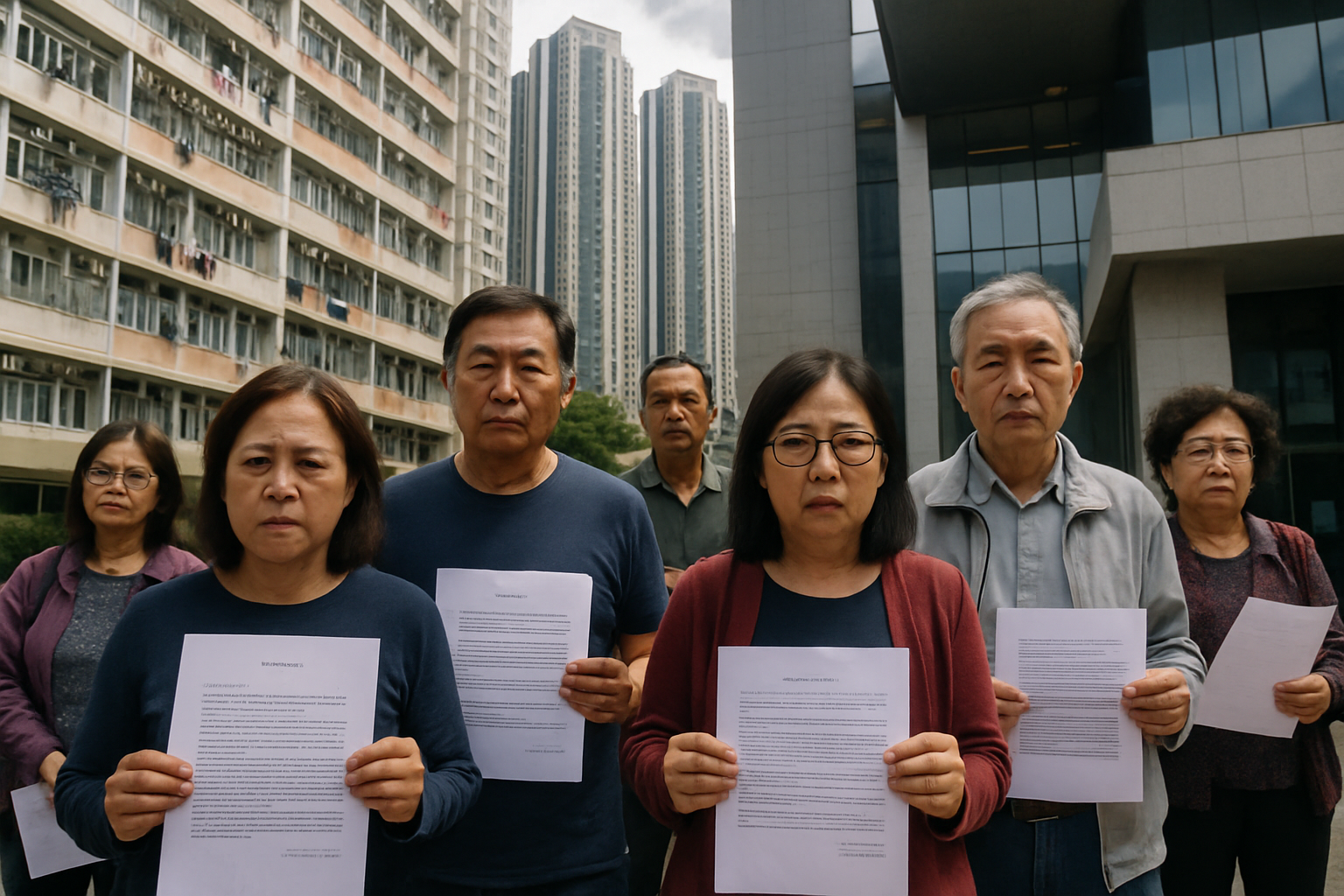
More than 300 homeowners from the fire-ravaged Wang Fuk Court in Tai Po have signed a petition demanding a face-to-face meeting with Chief Executive John Lee Ka-chiu, highlighting persistent housing concerns that reflect Hong Kong's broader residential crisis.
The petition, obtained by the South China Morning Post on Sunday and bearing 336 signatures, raises concerns across seven critical areas affecting the government-appointed Hop On Management Company's oversight of the residential complex. The letter represents the latest chapter in a prolonged saga that began with a devastating fire and has evolved into a symbol of Hong Kong's systemic housing challenges.
Unresolved Management Issues
The homeowners' concerns center on fundamental questions about the use of remaining renovation funds, the handling of outstanding management fees, and broader transparency issues with the government-appointed management company. These grievances underscore the complex relationship between residents and the authorities responsible for maintaining aging public housing infrastructure.
Wang Fuk Court's troubles began with a significant fire that damaged portions of the complex, forcing the government to intervene with emergency management arrangements. However, the transition to government oversight has created new complications that residents say have been inadequately addressed despite repeated attempts to engage with officials.
"We've been patient for years, but our concerns continue to go unheard. This petition represents our last resort to get the attention our community deserves."
— Wang Fuk Court Residents' Representative
Broader Housing Crisis Context
The Wang Fuk Court petition emerges against the backdrop of Hong Kong's ongoing housing affordability crisis, which has reached unprecedented levels in recent years. According to recent analyses, the territory faces severe challenges across multiple dimensions of its housing market, from subdivided flat regulations inadvertently triggering evictions to commercial property oversupply creating market disruption.
The crisis has particularly affected vulnerable populations, with cases like 72-year-old Chan Sai-chiu in Sham Shui Po exemplifying the displacement risks faced by elderly residents living in 60-square-foot subdivided flats. Despite well-intentioned safety improvements, new regulations have sometimes forced landlords to exit the market rather than invest in costly compliance upgrades.
Infrastructure and Development Challenges
Hong Kong's urban development challenges extend beyond individual housing complexes to broader infrastructure concerns. The territory faces a quarter-century timeline for taxi fleet electrification, significantly lagging behind neighboring cities' aggressive transition schedules. This transportation infrastructure gap parallels the housing sector's struggles to keep pace with modern requirements and resident expectations.
Commercial property markets are simultaneously experiencing severe oversupply, with 3.5 million square feet of new premium office space completing in 2026-2027. This "flight to quality" trend has forced older properties to convert to co-working spaces and student accommodation as survival strategies, further complicating the urban development landscape.
Government Response and Policy Implications
The petition to Chief Executive John Lee comes as his administration faces mounting pressure to address Hong Kong's interconnected urban challenges. The government's role in directly managing residential complexes like Wang Fuk Court reflects the extraordinary circumstances that have required unprecedented intervention in private housing management.
Hong Kong's 2026-27 budget allocated 60% of recurrent spending to health, social welfare, and education, with a HK$2.9 billion surplus partially directed toward addressing infrastructure and social concerns. However, residents argue that direct engagement with affected communities remains insufficient despite significant financial commitments.
Regional and Global Context
Hong Kong's housing challenges occur within a broader global context of housing market disruption. From Cyprus' Horizon Towers development to New Zealand's $720 million Homestead Bay project, jurisdictions worldwide are grappling with balancing housing supply, affordability, and quality standards.
The territory's situation is particularly acute due to extreme population density, limited land availability, and its unique political status as a China-international bridge. These factors create governance complexities that differentiate Hong Kong's challenges from other dense metropolitan areas that have achieved more rapid progress in urban development coordination.
Community Organizing and Civic Engagement
The Wang Fuk Court petition represents a broader pattern of community organizing in Hong Kong, where residents increasingly turn to formal petition processes when standard channels for addressing local concerns prove inadequate. The 336 signatures demonstrate significant community cohesion around shared grievances and collective action strategies.
This grassroots mobilization occurs within Hong Kong's evolving civic space, where traditional forms of political expression have been constrained but community-level advocacy around housing and local issues continues. The petition format allows residents to engage in legitimate civic participation while focusing on concrete local concerns rather than broader political questions.
Looking Forward: Policy and Implementation
The success or failure of the Wang Fuk Court petition will likely influence how other housing-related community concerns are addressed across Hong Kong. The case highlights the tension between centralized government management and community needs, particularly in situations where emergency interventions have created long-term governance arrangements.
Housing experts suggest that Hong Kong requires integrated urban planning solutions that address housing transition assistance, alternative affordable housing development, and commercial property adaptive reuse serving community needs. The Wang Fuk Court case could serve as a template for how such comprehensive approaches might be developed through genuine community engagement.
Broader Implications
The petition also reflects Hong Kong's ongoing challenge of maintaining its status as a global financial center while addressing fundamental quality of life concerns for residents. International businesses and residents increasingly consider housing quality, urban livability, and community responsiveness when making long-term commitments to Hong Kong.
The resolution of cases like Wang Fuk Court may influence broader perceptions of Hong Kong's governance effectiveness and its ability to balance competing demands from different stakeholders in an increasingly complex urban environment.
Next Steps and Timeline
Chief Executive John Lee's office has not yet responded publicly to the Wang Fuk Court petition, though precedent suggests that formal community petitions typically receive acknowledgment within several weeks. The residents' specific request for a face-to-face meeting represents an escalation from previous written communications and suggests growing frustration with standard bureaucratic processes.
The seven areas of concern raised in the petition will require coordination across multiple government departments, including housing, financial services, and local administration agencies. The complexity of these cross-departmental issues may influence both the timeline for responses and the substantive solutions that can be offered to the community.
As Hong Kong continues to navigate its urban development challenges, the Wang Fuk Court case serves as a microcosm of broader tensions between government efficiency, community participation, and housing quality that will likely define the territory's urban policy approach in the years ahead.