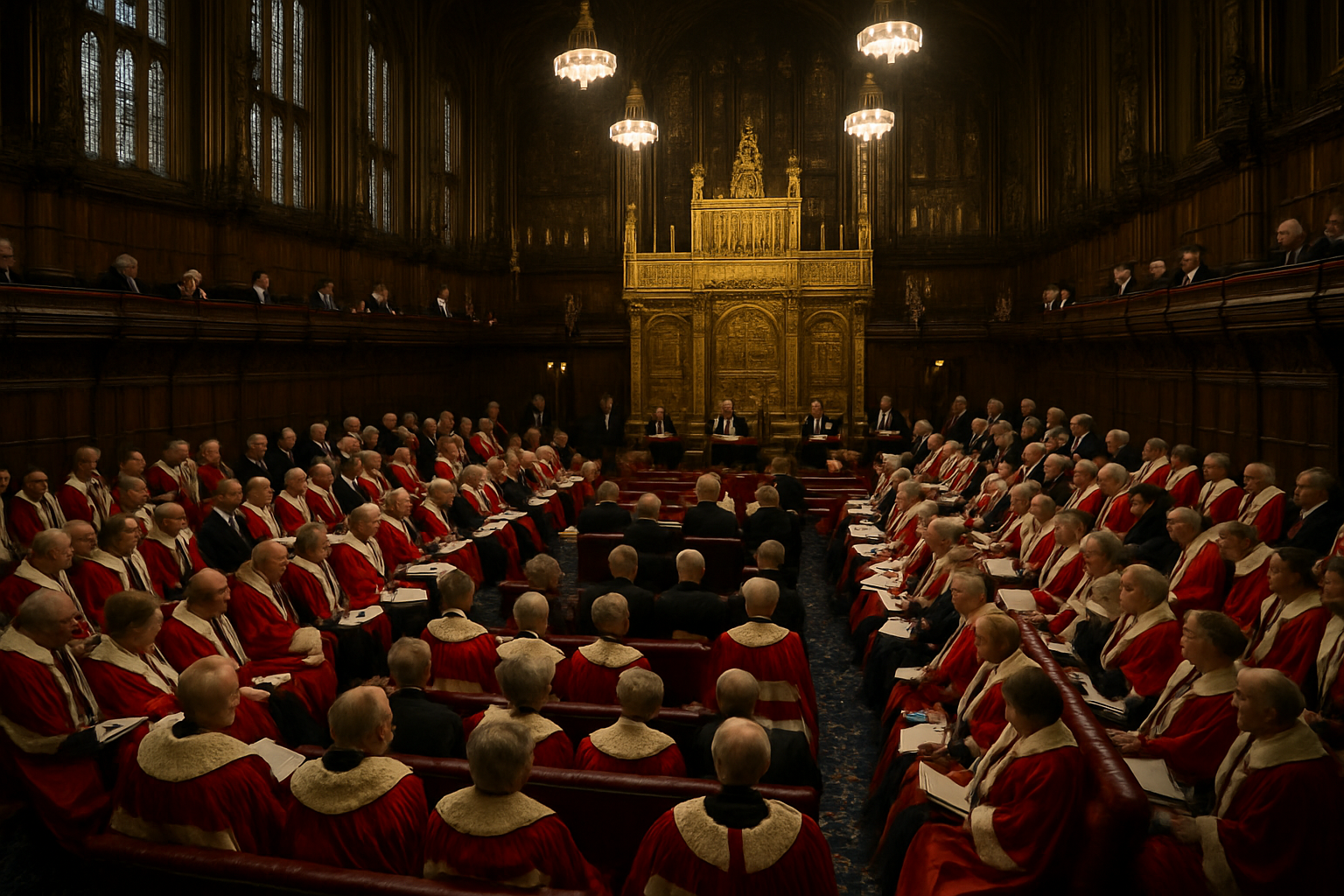
The UK House of Lords has delivered a decisive blow to Prime Minister Keir Starmer's measured approach on social media regulation, voting 266 to 141 to back an Australian-style ban on social media access for children under 16, rejecting the government's preferred consultation process.
The dramatic vote on Thursday represents a significant escalation in the UK's approach to protecting children from social media harms, with peers explicitly rejecting the Labour government's three-month public consultation strategy in favour of immediate legislative action modelled on Australia's successful under-16 ban.
Government's Consultation Strategy Overruled
The overwhelming margin of victory for the Lords' amendment – 125 votes – sends a clear message that parliament's upper chamber believes the evidence for action is already compelling. PM Starmer, who has repeatedly stated "as a dad of two teenagers, I know the challenges parents face keeping kids safe online," had favoured a consultation approach before implementing any restrictions.
Technology Minister Liz Kendall had prepared legislative changes for potential rapid deployment following the consultation period, but peers have now moved to bypass this process entirely. The government's preference for a measured approach, similar to the extensive consultations being conducted by France, Denmark, and Austria, has been decisively overturned.
"The evidence is overwhelming and the time for consultation has passed. Our children cannot wait while tech giants continue to profit from their vulnerability."
— Senior Conservative Peer during debate
Global Regulatory Revolution Intensifies
The Lords' vote places the UK squarely within an unprecedented global movement against social media platforms. Australia's pioneering under-16 ban, implemented in December 2025, eliminated 4.7 million teen accounts and proved that comprehensive age restrictions are technically feasible despite industry claims to the contrary.
Spain has led Europe with the world's most aggressive regulatory framework, including criminal executive liability that creates personal imprisonment risks for tech executives who fail to protect children. This revolutionary approach is spreading rapidly across Europe, with Greece approaching under-15 restrictions via its Kids Wallet system, and Germany's CDU party backing under-14 restrictions.
The coordinated timing of these European initiatives represents a sophisticated strategy to prevent "jurisdictional shopping" – the practice where platforms relocate operations to avoid regulatory oversight. Slovenia, Slovakia, and Poland have all announced similar age-based restrictions, creating an emerging continental consensus.
Scientific Evidence Drives Policy
The Lords' decision comes amid mounting scientific evidence documenting severe mental health impacts of social media on children. Dr. Ran Barzilay's groundbreaking research at the University of Pennsylvania reveals that 96% of children aged 10-15 use social media, with 70% experiencing harmful content exposure and over 50% encountering cyberbullying.
Perhaps most alarming, children exposed to smartphones before age 5 show persistent sleep disorders, cognitive decline, and weight problems that extend into adulthood. University of Macau research has definitively proven that short-form video consumption damages cognitive development, causing social anxiety and academic disengagement.
Large-scale US studies demonstrate that children spending four or more hours daily on screens face a 61% increased risk of depression, primarily through sleep pattern disruption and decreased physical activity. Austrian neuroscience research reveals a "perfect storm" of addiction vulnerability – children's reward systems are highly responsive to smartphone stimulation while their impulse control remains underdeveloped until age 25.
Platform Accountability Under Fire
The vote comes as tech platforms face unprecedented legal and regulatory pressure. Mark Zuckerberg's historic testimony in a Los Angeles courtroom in February revealed internal Meta documents from 2014-2015 showing explicit company goals to increase user engagement time, contradicting public statements about prioritising user wellbeing.
The European Commission has found TikTok in violation of the Digital Services Act for deploying "addictive design" features including unlimited scrolling, autoplay, and personalised recommendations that maximise dependency over wellbeing. The platform faces potential penalties of 6% of global revenue – potentially billions in fines.
Spanish prosecutors have launched criminal investigations into X, Meta, and TikTok for allegedly spreading AI-generated child sexual abuse material, with Prime Minister Pedro Sánchez declaring "the impunity of these giants must end."
Industry Resistance and Market Impact
Tech executives have escalated their opposition to regulation, with Elon Musk characterising European measures as "fascist totalitarian" overreach and Telegram's Pavel Durov warning of "surveillance state" implications. However, government officials across Europe are using this coordinated industry resistance as evidence supporting the regulatory necessity.
The "SaaSpocalypse" of February 2026 eliminated hundreds of billions in tech market capitalisation amid regulatory uncertainty. Global semiconductor shortages, with memory chip prices increasing sixfold, are constraining the technical infrastructure needed for comprehensive age verification systems until 2027.
Implementation Challenges
Despite the Lords' decisive vote, significant technical and legal challenges remain. Real age verification requires sophisticated authentication systems, potentially including biometric data, raising serious privacy concerns about government surveillance capabilities.
The Netherlands' recent Odido data breach, affecting 6.2 million customers, demonstrates the vulnerabilities of centralised data repositories that age verification systems would require. Cross-border enforcement will necessitate unprecedented international cooperation, particularly given the global nature of social media platforms.
Alternative Approaches
Not all countries are pursuing regulatory enforcement. Malaysia emphasises parental responsibility through comprehensive digital safety campaigns, with Communications Minister Datuk Fahmi Fadzil stressing that parents must control device access rather than using platforms as "digital babysitters."
Oman has implemented a "Smart tech, safe choices" education initiative focusing on conscious digital awareness and teaching young people to recognise "digital ambushes" where attackers exploit security vulnerabilities through curiosity.
The Therapeutic Revolution of 2026
The Lords' vote occurs within a broader global paradigm shift that mental health experts are calling the "Therapeutic Revolution of 2026" – a fundamental move from crisis-response to prevention-first mental healthcare approaches.
Montana's mobile crisis teams have achieved an 80% reduction in police mental health calls through proactive community intervention. Countries implementing prevention-focused strategies report substantial cost reductions, improved community resilience, and enhanced educational outcomes that justify comprehensive support system investments.
Healthcare providers report patient relief when therapy acknowledges the complexity of digital relationships rather than offering simplistic solutions. The recognition of a "wellness paradox" – where constant self-improvement pursuit creates psychological exhaustion versus genuine healing – is informing more nuanced treatment approaches.
Constitutional and Democratic Implications
The Lords' action represents a critical test of democratic institutions' ability to regulate multinational technology platforms while preserving beneficial digital connectivity. The vote highlights fundamental questions about government intervention versus individual agency in digital governance.
The overwhelming margin suggests broad cross-party recognition that existing approaches have failed to protect children from documented technological harms. However, the rejection of the government's consultation process raises questions about democratic accountability and the role of public input in policy formation.
International Precedent and Future Impact
Success of the UK's approach could trigger worldwide adoption of similar frameworks, potentially establishing criminal liability for tech executives as a global standard. Conversely, failure might strengthen anti-regulation arguments and condemn a generation to neurological damage for corporate profit maximisation.
The coordinated European approach prevents platforms from simply relocating operations to avoid oversight – a strategy that has historically allowed tech companies to evade meaningful regulation. Parliamentary approval across multiple European nations throughout 2026 could establish the most sophisticated international technology governance framework in internet history.
Next Steps
The Lords' amendment now returns to the House of Commons, where the government faces a difficult choice: accept the peers' will and abandon the consultation approach, or use parliamentary procedures to override the upper chamber while risking further political confrontation.
Technology Minister Kendall's prepared legislative changes could be deployed rapidly if the government accepts the Lords' position. The technical infrastructure for implementation, while challenging, follows the proven Australian model that successfully eliminated millions of teen accounts.
The March 2026 inflection point in global digital governance is determining whether democratic societies can protect vulnerable populations from demonstrable technological harms while preserving the genuine benefits of digital connectivity. The stakes extend beyond regulatory debates to fundamental questions about childhood development, human agency, and democratic accountability in the digital age.
As one senior peer noted during the debate: "We are deciding not just policy, but the kind of society we want to be – one that protects its most vulnerable citizens from corporate exploitation, or one that allows profit to override protection."