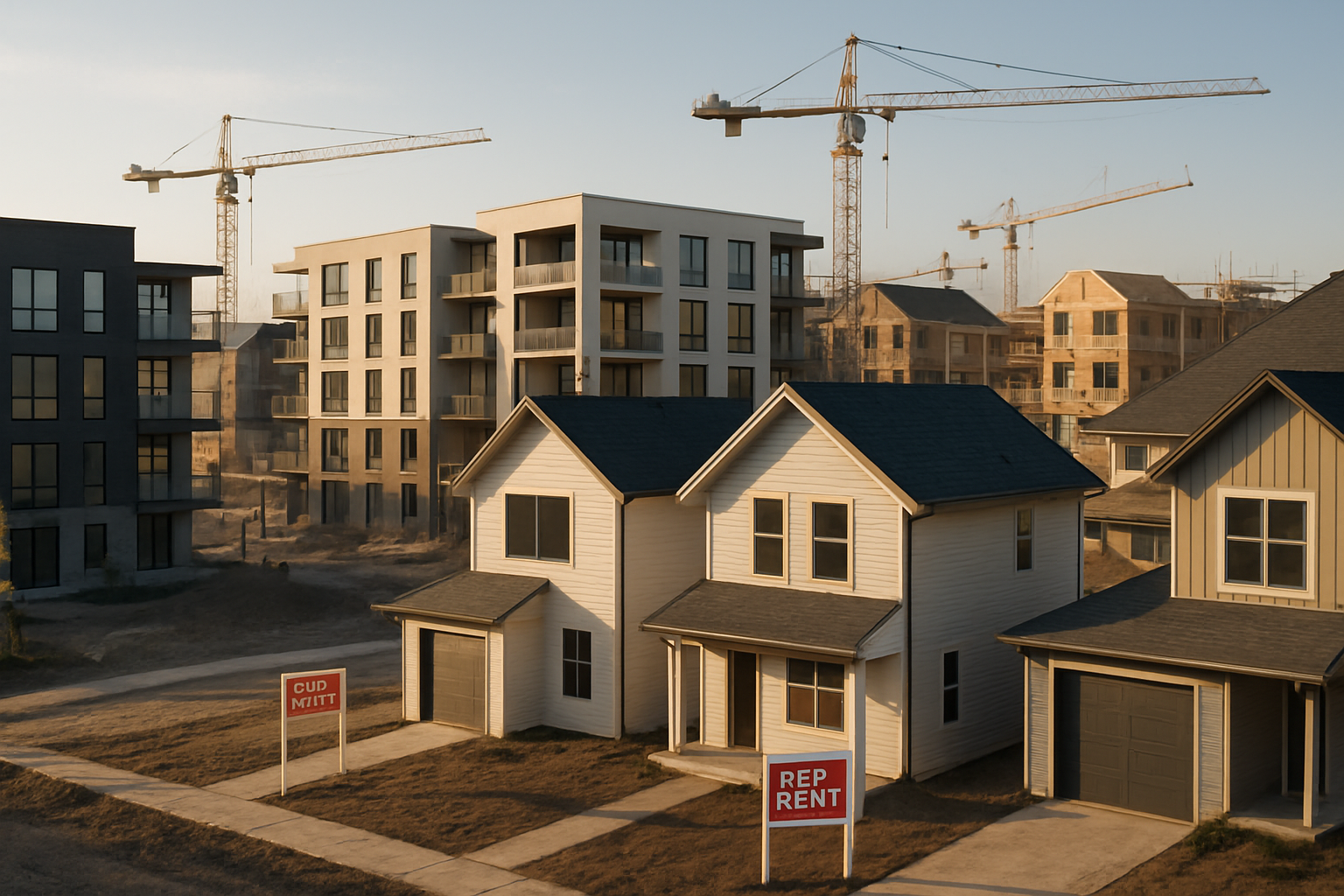
Housing markets across the globe are experiencing unprecedented strain as construction costs surge, government housing programs fail to deliver promised units, and vulnerable populations face systematic displacement from urban centers.
From Australia's stalled 1.2 million home construction plan to Germany's skyrocketing student accommodation costs, the latest data from March 2026 reveals a deepening crisis that transcends national borders and economic systems. The situation has reached critical proportions where traditional policy responses appear insufficient to address the scale and complexity of current challenges.
Australia's Housing Construction Crisis
Australia's ambitious goal to construct 1.2 million new homes by mid-2029 is already facing significant delays, with all states and territories behind schedule just one year into the program. New South Wales is particularly struggling, creating a supply shortage that continues to pressure an already strained market.
The construction delays occur despite strong market fundamentals, with property sellers maintaining high profit margins in most neighborhoods. However, analysis reveals stark geographic disparities where certain suburbs are experiencing property owners selling at losses—a concerning indicator of market volatility.
Reserve Bank of Australia's decision to maintain the cash rate at 3.85% continues creating "unprecedented challenges for first-time buyers and existing homeowners," according to market analysts. This monetary policy stance, designed to combat inflation, has created complex buy-versus-rent calculations that vary significantly across different metropolitan areas.
European Rental Market Pressures
Germany presents a particularly stark example of housing market dysfunction, with student accommodation costs reaching crisis levels. Average rents for shared flat rooms have surged well above €500 per month across many regions, creating substantial barriers for young people pursuing higher education.
The situation reflects broader European challenges where rising living costs combine with stagnant wage growth to create affordability pressures across demographic groups. Austria faces similar challenges with inflation and rising rents prompting government initiatives to provide emergency housing assistance for those who can no longer afford basic accommodation.
In Estonia, urban development continues with Tallinn City Government advancing plans for four high-rise buildings in the Maakri Quarter, including a new kindergarten and park. However, these developments primarily serve upper-income residents while doing little to address broader affordability challenges affecting working families.
Construction Industry Crisis
Underlying these housing challenges is a global construction industry crisis that has been developing throughout 2025 and intensified in early 2026. Rising material costs have created negative developer profit margins across multiple regions, fundamentally constraining new housing supply despite persistent demand.
Memory chip shortages have driven semiconductor prices up sixfold due to AI development demand, affecting smart building technologies that have become standard in modern developments. This has added 20-30% to construction costs, with relief not expected until 2027 when new fabrication facilities come online.
"The construction industry is facing a fundamental viability crisis where costs consistently outpace revenues, discouraging development despite strong housing demand."
— Industry Analysis Report
Policy Responses and International Coordination
European Union recognition of housing as a transnational challenge has sparked unprecedented regional coordination efforts. Mediterranean countries are leading innovative policy responses, including Croatia's ambitious program targeting 600,000 empty homes for affordable rental conversion and Cyprus's advancing foreign investment restrictions on residential property.
However, implementation challenges persist across jurisdictions. The Netherlands exemplifies this struggle, with municipalities failing to complete over 25% of planned housing construction in recent years despite government commitments to address housing shortages.
Investment patterns are shifting toward localized strategies that emphasize clear regulatory frameworks and transparent governance over geographic diversification. This reflects growing recognition that policy predictability has become crucial when traditional economic indicators prove insufficient for market analysis.
Technology Integration Challenges
Despite supply chain constraints, technology integration in housing continues advancing. Smart city systems, sustainable materials, and community-centered design are transitioning from premium options to standard requirements in modern developments.
Digital infrastructure has become critical for attracting remote workers to secondary cities and rural areas, creating new residential demand patterns that are reshaping urban-suburban dynamics. However, the 20-30% cost increases from semiconductor shortages create implementation challenges for margin-pressured developers.
Demographic and Social Impacts
The housing crisis is creating concerning demographic impacts, particularly affecting young women in Australia and New Zealand who are falling behind in homeownership despite expressing stronger ownership desires than their male counterparts. This represents a systematic exclusion from traditional wealth-building pathways with long-term financial consequences.
Under-30s across multiple countries are turning away from property investment as deposit requirements extend beyond reasonable saving timelines, creating generational wealth divides. Survey data indicates over half of populations believe children born today will be financially worse off than their parents—a reversal of post-war economic optimism.
The Vienna Model: A Success Template
Amid widespread challenges, Vienna continues demonstrating that affordable housing remains achievable in prosperous cities through comprehensive policy frameworks. Social housing covers 60% of Vienna's rental market through sustained public investment, treating housing as essential infrastructure rather than a commodity.
This model provides a template for other European cities facing similar challenges, though it requires sustained political commitment and integration of housing policy with broader economic development strategies. Success depends on recognizing that housing accessibility determines whether cities can attract and retain diverse talent necessary for 21st-century innovation economies.
Market Speculation and Investment Trends
Croatia's used car market provides an interesting parallel to housing market dynamics, with prices rising 13% as demand remains strong for 7-10 year old vehicles. This pattern of price appreciation in essential goods reflects broader economic pressures affecting household budgets and purchasing decisions.
Investment patterns increasingly favor markets with regulatory clarity and transparent governance structures. Countries providing predictable policy environments are attracting larger long-term investment commitments while those with unclear or unstable policies risk capital flight.
Strategic Implications
Current housing policy choices are shaping regional competitiveness and social stability for decades ahead. Housing accessibility is determining whether cities remain accessible to diverse populations or transform into exclusive enclaves for the wealthy, affecting social mobility, regional development, and economic competitiveness in the global innovation economy.
The window for effective action is narrowing due to demographic pressures, urbanization trends, and climate adaptation complexity. Success requires sophisticated frameworks that balance housing supply adequacy with affordability for middle and lower-income populations while maintaining construction industry viability.
International Cooperation Essential
As housing challenges prove increasingly interconnected through migration patterns, investment flows, and economic spillovers, international cooperation has become essential for knowledge sharing and coordinated policy responses.
March 2026 represents a critical juncture in global housing policy where current choices will influence urban development patterns, social stability, and democratic governance effectiveness for generations. The stakes extend far beyond individual homeownership to broader questions of social and economic stability affecting hundreds of millions seeking secure, affordable housing.
Success will require locally-adapted strategies that incorporate community input, environmental considerations, and sustainable development principles rather than universal policy templates. The complexity of current challenges demands continued innovation in financing mechanisms and governance frameworks that can serve diverse regional conditions while maintaining market stability and accessibility across all income levels.