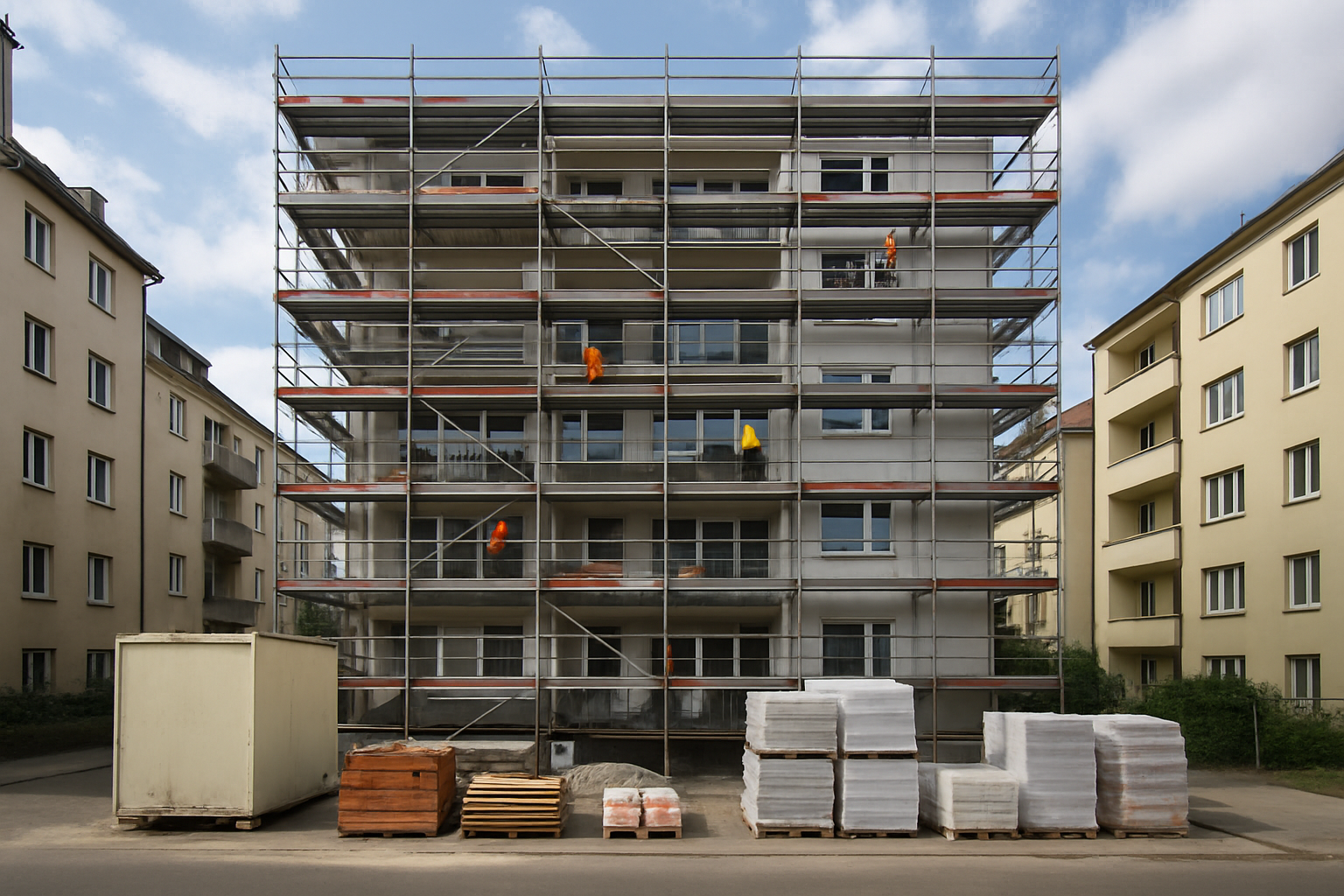
A dramatic shift in global housing markets is emerging as buyers increasingly turn to properties requiring renovation, seeking affordable entry points amid soaring prices and construction industry constraints that have fundamentally altered the real estate landscape worldwide.
The Renovation Revolution Takes Hold
In Bulgaria, brokers report unprecedented demand for apartments needing significant repairs, driven by buyers who can no longer afford move-in-ready properties. "People prefer to replace the tiles or paint the walls themselves," property experts note, as the cost of hiring professional contractors has increased substantially in recent years.
This trend reflects a global recalibration of buyer expectations. What was once considered a last resort—purchasing properties requiring extensive work—has become a strategic necessity for millions seeking homeownership. The appeal spans both domestic and foreign buyers, suggesting the phenomenon transcends national boundaries.
Construction Crisis Drives Market Transformation
The underlying driver of this renovation boom is a deepening global construction crisis. Rising material costs have created negative developer profit margins worldwide, constraining new housing supply despite persistent demand. Memory chip shortages have driven semiconductor prices sixfold, affecting smart building technologies and adding 20-30% to construction costs until 2027 fabrication facilities come online.
These supply-side constraints create market dynamics where existing properties gain value due to limited new competition while simultaneously restricting options for new buyers. The result is a two-tier market: premium pricing for completed homes and growing interest in renovation projects.
Regional Variations in Housing Stress
New Zealand presents a particularly acute example of housing market dysfunction. Wellington residents face water bill increases of hundreds of dollars, adding to already strained household budgets. Tiaki Wai board chairman Will Peet acknowledged the price rises would be "unpopular under cost-of-living pressures," but emphasized that infrastructure challenges needed immediate attention.
Spain's rental market demonstrates different pressures entirely. Property owners navigating complex legal frameworks face situations where decade-old rental agreements continue without formal contract renewals. One landlord questioned whether maintaining such arrangements represents sound practice, highlighting the regulatory complexity affecting property markets.
"Housing accessibility is determining whether cities remain accessible to diverse populations versus becoming exclusive wealthy enclaves, affecting social mobility and regional development for decades ahead."
— European housing policy analysis, March 2026
European Policy Coordination Emerges
The European Union has recognized housing as a transnational challenge requiring coordinated responses rather than isolated national policies. Mediterranean countries are leading innovative approaches, including Croatia's program targeting 600,000 empty homes for affordable rental conversion and Cyprus's advancement of foreign investment restrictions.
This regional coordination reflects growing understanding that housing markets are increasingly interconnected through migration patterns, investment flows, and economic spillovers affecting neighboring markets. Individual country solutions prove insufficient for addressing cross-border challenges affecting multiple jurisdictions simultaneously.
Technology Integration Despite Constraints
Smart city systems, sustainable materials, and community-centered design are becoming standard requirements rather than premium options, despite supply chain constraints. Digital infrastructure has become critical for attracting remote workers to secondary cities and rural areas, creating new residential demand patterns that reshape urban-suburban dynamics.
However, the 20-30% cost increases from semiconductor shortages create implementation challenges for margin-pressured developers, forcing difficult decisions about which technologies to prioritize in new projects.
Investment Patterns Shift Toward Localization
Investment strategies are increasingly favoring localized approaches that emphasize clear regulatory frameworks and transparent governance over geographic diversification. Policy predictability has become crucial when traditional economic indicators prove insufficient for making sound investment decisions.
This shift toward localization suggests that markets providing secure, transparent environments attract larger long-term investment commitments, while jurisdictions with unclear or unstable policies risk capital flight to more predictable alternatives.
Demographic and Gender Disparities
Young women in Australia and New Zealand are falling behind in homeownership despite expressing stronger desires for property ownership than their male counterparts. This represents systematic exclusion from traditional wealth-building pathways, creating long-term financial disadvantages that extend well beyond immediate housing concerns.
Under-30 investors are increasingly turning away from property investment as deposit requirements extend beyond reasonable saving timelines, creating generational divides in wealth accumulation. Over half of surveyed populations believe children born today will be financially worse off than their parents, reversing post-war economic optimism.
The Vienna Model as Global Template
Vienna continues to demonstrate that affordable housing remains achievable in prosperous cities through comprehensive frameworks that treat housing as essential infrastructure rather than a commodity. Social housing covers 60% of Vienna's rental market through sustained public investment, providing a template for other European cities facing similar challenges.
This success requires sustained political commitment, integration of housing with economic development planning, and recognition that housing accessibility determines a city's ability to attract and retain the diverse talent necessary for 21st-century innovation economies.
Critical Policy Implications
Traditional housing policy approaches may prove insufficient for addressing the current crisis's scale and complexity. Success requires sophisticated frameworks that balance housing supply adequacy, affordability for middle and lower-income populations, and construction industry viability amid rising costs.
The window for effective action is narrowing due to demographic pressures, urbanization trends, and climate adaptation complexity. Housing policy choices made in 2026 will shape regional competitiveness and social stability for decades ahead, requiring continued innovation in financing mechanisms and governance frameworks.
International Cooperation Essential
Knowledge sharing and coordinated responses have become essential as housing challenges prove increasingly interconnected across national borders through migration patterns, investment flows, and economic spillovers. The stakes extend far beyond individual homeownership to broader questions of social and economic stability.
March 2026 developments are establishing precedents at the intersection of affordability, sustainability, and community preservation that will influence global housing policy for generations. Success depends on locally-adapted strategies that incorporate community input, environmental considerations, and sustainable urban development principles rather than universal policy templates.
As the renovation boom continues to reshape housing markets worldwide, the fundamental question remains whether societies can develop innovative approaches that maintain market functionality while ensuring accessibility across income levels, or whether housing will increasingly become a privilege available only to the wealthy.