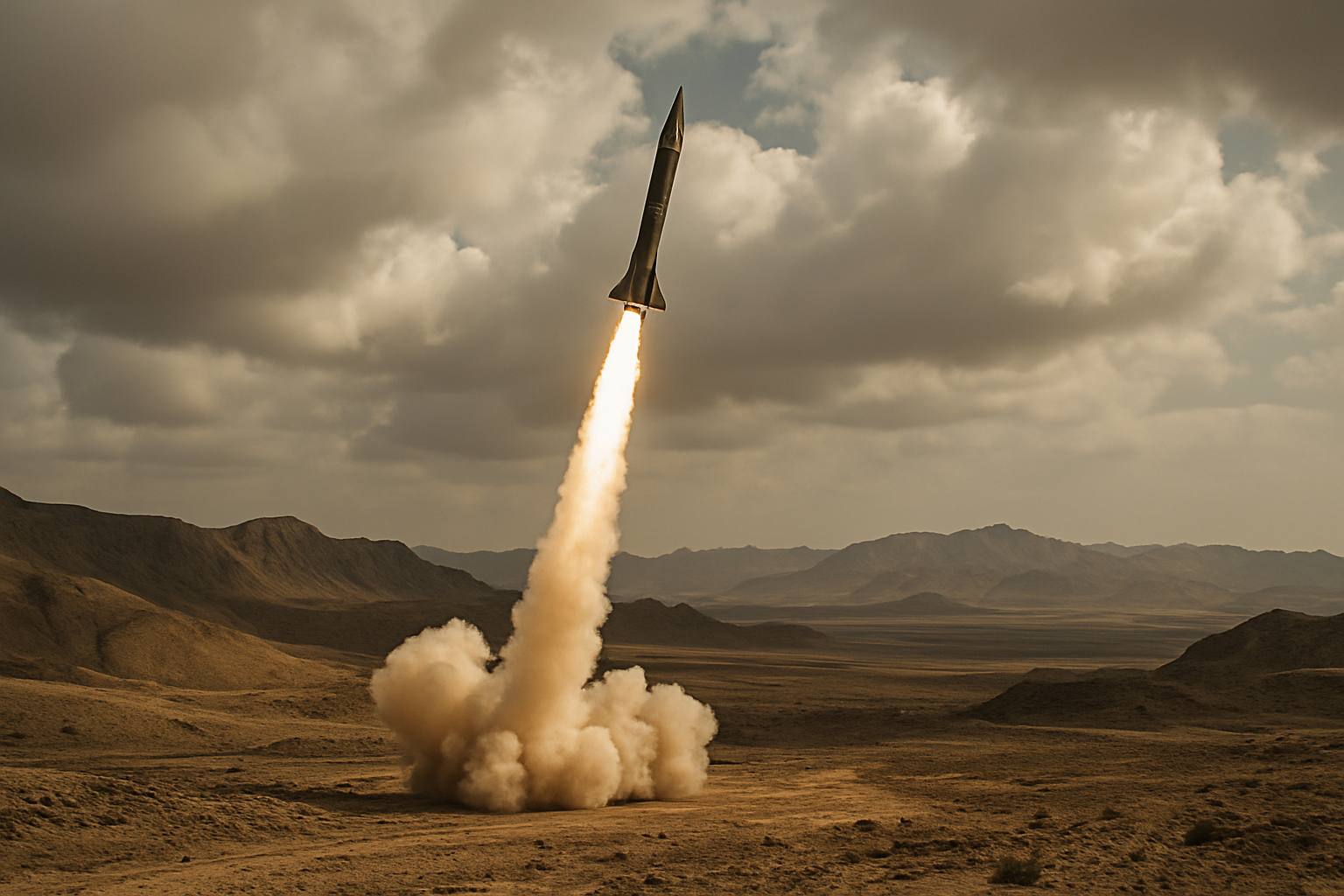
Yemen's Iran-aligned Houthis launched their first missile attack on Israel since the start of the month-long Iran-Israel war, dramatically expanding the Middle East conflict and raising fears of a broader regional escalation that could threaten critical global shipping routes.
The Houthis confirmed Saturday they had fired ballistic missiles targeting "sensitive Israeli military sites" in southern Israel, according to spokesperson Yahya Saree. This marks the first direct Houthi assault on Israeli territory since Operation Epic Fury began on February 28, when the United States and Israel launched coordinated strikes against Iran following the collapse of nuclear negotiations.
Israel's military said it detected and intercepted a missile launched from Yemen early Saturday morning, with air raid sirens sounding across several districts. The attack came as the Iran-Israel war enters its most dangerous phase yet, with over 18,000 flights cancelled globally and oil prices surging past $100 per barrel.
Strategic Implications of Houthi Entry
The Houthi decision to join the conflict represents a potential game-changer for the month-long crisis. Yemen's Iran-backed militants control significant territory including the capital Sanaa and possess proven capabilities to disrupt international shipping through the Red Sea corridor, which handles approximately 12% of global trade.
Secretary of State Marco Rubio warned that Houthi involvement could "fundamentally alter" the conflict's scope, while Israeli Defense Minister Katz declared that the group had "crossed all red lines" by targeting Israeli territory. The attack comes amid growing pressure from Iran on its regional proxy network to retaliate for the death of Supreme Leader Ali Khamenei on March 1.
According to intelligence assessments, the Houthis command an estimated 20,000 fighters and possess an arsenal of ballistic missiles, drones, and naval mines capable of threatening commercial vessels transiting the Bab al-Mandab strait - a critical chokepoint for global energy shipments.
Regional Coalition Under Severe Strain
The Houthi escalation severely threatens the unprecedented regional coalition of Saudi Arabia, UAE, Qatar, and Egypt that has been backing diplomatic efforts to contain the Iran crisis. Egyptian President Abdel Fattah el-Sisi condemned what he called attacks on "sisterly Arab countries," warning of "comprehensive chaos" spreading across the region.
Saudi Arabia, which has been leading a coalition against the Houthis since 2015, now faces the prospect of renewed Yemeni missile attacks on its territory. The Kingdom successfully intercepted 21 drones and 7 missiles targeting the Shaiba oil field earlier this week, but military analysts warn that sustained Houthi operations could overwhelm regional air defenses.
The UAE, already reeling from Iranian drone attacks that killed one civilian in Abu Dhabi, expressed "grave concerns" about the expansion of hostilities. Dubai International Airport, the world's busiest, remains shut down from earlier Iranian missile damage, causing massive disruption to global aviation networks.
Global Economic Implications
Houthi entry into the conflict threatens to compound an already severe global energy crisis. Oil prices have surged over 10% in the past week, with Brent crude reaching $119.50 and West Texas Intermediate hitting $108.15 - levels not seen since the early days of the Ukraine war.
Iran has effectively closed the Strait of Hormuz through naval mining, blocking 40% of global seaborne oil transit and stranding over 150 tankers worth billions of dollars in the Persian Gulf. The International Energy Agency has authorized the largest strategic petroleum reserve release in its 50-year history - 400 million barrels from 32 countries - to help stabilize markets.
Qatar's Energy Minister Saad Al Kaabi warned that Gulf states may be forced to declare force majeure "within weeks" if the conflict continues, potentially sending oil prices toward $150 per barrel and threatening to "bring down the economies of the world."
Nuclear Diplomacy Completely Collapsed
The Houthi missile attack comes against the backdrop of completely collapsed nuclear diplomacy between the United States and Iran. Despite achieving what negotiators called "broad agreement on guiding principles" in Geneva talks - the most significant progress since the 2018 JCPOA collapse - fundamental disagreements proved insurmountable.
Iran maintained that ballistic missiles and regional proxy relationships were "red lines" that must be excluded from nuclear-only talks, while U.S. Secretary of State Rubio insisted on comprehensive agreements covering missiles, armed groups, and human rights. Iran continues enriching uranium to 60% purity with over 400 kilograms of weapons-grade material, approaching the threshold for multiple nuclear weapons.
The diplomatic breakdown led President Trump to demand Iran's "unconditional surrender" and claim the right to personally choose Iran's next Supreme Leader, rejecting the hereditary succession of Mojtaba Khamenei as "lightweight" - the most direct assertion of American control over Iranian affairs since 1979.
European Territory Attacked
The conflict has already expanded beyond the Middle East, with Iranian drones striking RAF Akrotiri in Cyprus - the first attack on European territory since World War II. This unprecedented escalation prompted an emergency naval coalition response, with Britain deploying HMS Dragon, Spain sending frigates, and Italy, France, the Netherlands, and Greece contributing vessels to protect European interests.
The European Union activated its ESTIA evacuation plan for Cyprus for the first time in the bloc's history, while France's President Macron made an emergency visit to coordinate the defense response. The attack fundamentally altered the conflict's scope, drawing NATO allies into defensive preparations and establishing dangerous precedents for future territorial violations.
Humanitarian Crisis Mounting
As the conflict enters its fifth week, the humanitarian toll continues mounting across multiple countries. Iran's Red Crescent reports over 787 civilian casualties from U.S.-Israeli strikes, including the devastating Minab school attack that killed between 53-85 students and staff - now subject to Geneva Conventions investigations.
International evacuations have reached the largest scale since the Arab Spring in 2011, with Australia reporting 115,000 nationals trapped in the region and Germany coordinating the extraction of 30,000 stranded tourists. Multiple countries have ordered immediate evacuations from Iran citing "extremely uncertain" security conditions.
Lebanon has reported 832,000 people displaced as Hezbollah's entry into the conflict triggered Israeli airstrikes across the country, effectively collapsing the November 2024 ceasefire that had held for over a year.
Congressional Opposition Growing
In Washington, bipartisan Congressional opposition to the conflict is mounting, with lawmakers demanding answers about strategy, costs, and the potential deployment of ground troops. Senator Richard Blumenthal stated he is "more concerned than ever" about boots on the ground, while Pentagon officials privately acknowledge preparing operations through September - far beyond President Trump's initial 4-6 week timeline.
Operation Epic Fury has already cost $11.3 billion in its first week, with 150 U.S. troops wounded and three confirmed killed - the first American combat deaths in a major Middle East operation since 2003. Public support for the military action has dropped to just 25%, creating political constraints that financial markets are increasingly viewing as the "ultimate constraint" on continued escalation.
Template-Setting Crisis for 21st Century
UN Secretary-General António Guterres has called the current crisis "the greatest test of multilateral cooperation in the modern era," as the rapid transition from diplomatic breakthrough to military confrontation demonstrates the fragility of crisis management in the multipolar age.
The conflict occurs amid a broader nuclear governance crisis, with New START having expired on February 5 - the first time in over 50 years without U.S.-Russia nuclear constraints - while China expands its nuclear arsenal and proliferation risks reach what Guterres calls their "highest levels in decades."
Success in containing the current crisis could provide a framework for future nuclear dispute resolution and strengthen international law enforcement mechanisms. However, failure may accelerate military solutions over diplomatic approaches for decades to come, potentially encouraging nuclear proliferation elsewhere and fundamentally undermining the credibility of negotiated settlements worldwide.
Looking Ahead
With the Houthis now actively engaged against Israel, the conflict has opened a third major front alongside the Iran-Israel and Lebanon-Israel theaters. Military analysts warn that sustained Houthi operations could force Israel to divide its military resources while potentially triggering renewed Saudi-Yemen hostilities.
The expansion of the conflict to include Yemeni forces also raises the prospect of further disruption to Red Sea shipping lanes, potentially affecting the Suez Canal route that handles approximately 12% of global trade. Combined with the closure of the Strait of Hormuz, this could create an unprecedented disruption to international commerce and energy supplies.
As Trump continues to reject all diplomatic solutions in favor of Iran's complete surrender, the international community faces its most dangerous crisis management challenge since the Cold War ended. The decisions made in the coming days and weeks will reverberate through international relations for decades, potentially determining whether the 21st century will be defined by diplomatic solutions or military confrontation as the primary means of resolving territorial and nuclear disputes.