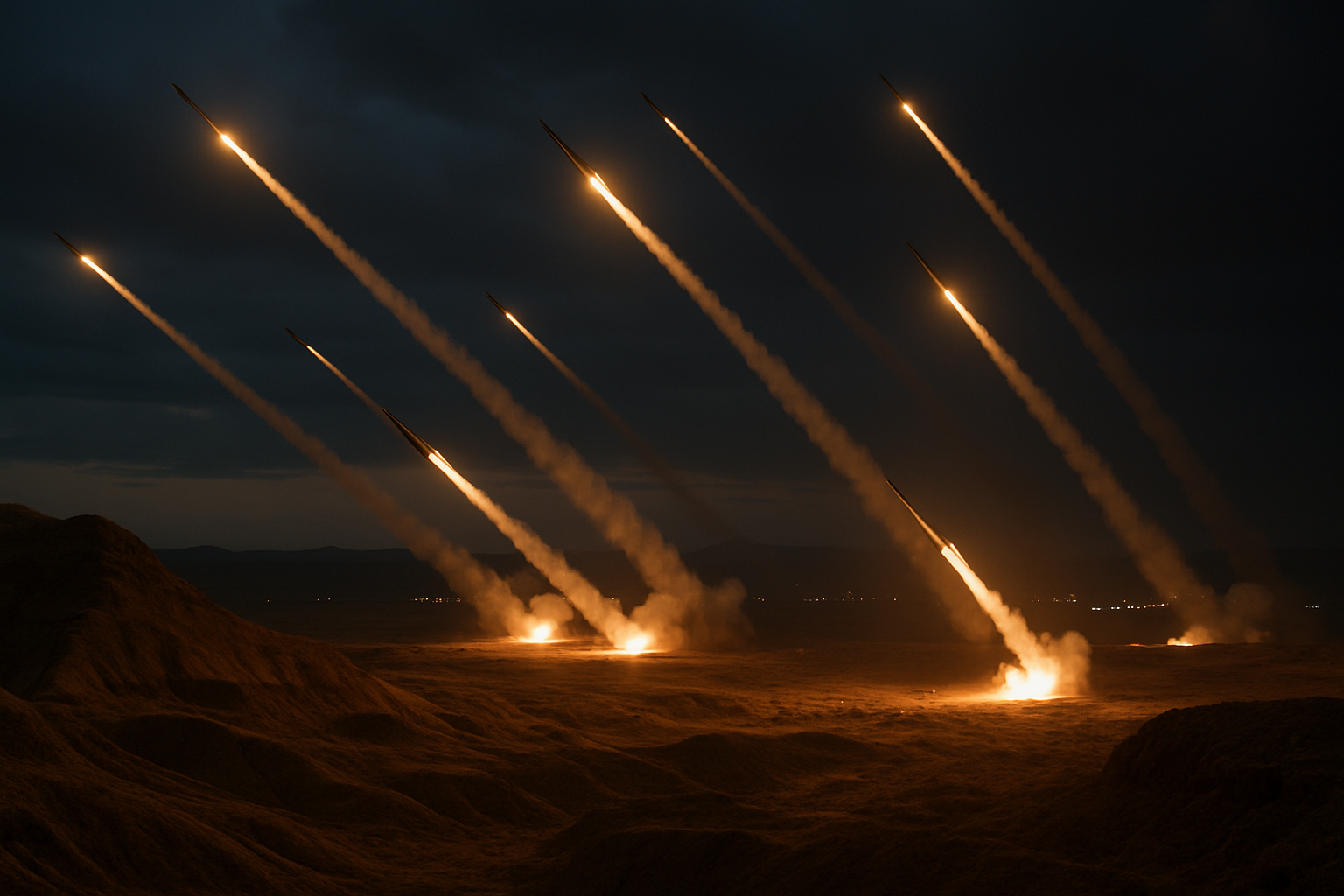
Yemen's Iran-backed Houthi rebels launched their first direct ballistic missile attack on Israeli military targets Saturday, dramatically expanding the ongoing Middle East conflict into a dangerous third theater as the war enters its fourth week.
Houthi military spokesman Yahya Saree announced the group had fired missiles at "sensitive Israeli military sites" in southern Israel, marking their formal entry into the conflict that began with Operation Epic Fury on February 28, 2026. The attack represents the most significant geographical expansion of the crisis since Iranian drones struck European territory in Cyprus.
Dangerous New Front Opens
The Houthi missile strike creates a third active front alongside the primary Iran-Israel conflict and the Lebanon-Israel theater involving Hezbollah. Intelligence assessments warn this expansion could overwhelm regional air defense systems and force Israel to divide its military resources across multiple theaters simultaneously.
According to multiple international sources, the Houthis command over 20,000 fighters and possess ballistic missiles, drones, and naval mining capabilities that could threaten critical Red Sea shipping routes through the Bab al-Mandab strait, which handles 12% of global trade.
"This represents the most dangerous expansion of the conflict yet, with implications that extend far beyond the Middle East to global commerce and energy security."
— Regional Security Analyst
Regional Coalition Under Strain
The Houthi entry severely strains the unprecedented regional coalition of Saudi Arabia, UAE, Qatar, and Egypt that had been supporting diplomatic efforts. Egyptian President Abdel Fattah el-Sisi condemned attacks on "sisterly Arab countries," warning of "comprehensive chaos" spreading across the region.
Saudi Arabia faces renewed threats from Yemeni missiles after successfully intercepting previous attacks, while the broader Gulf coalition must now contend with Iranian proxy forces operating from multiple directions.
Global Economic Impact Intensifies
The expansion to Yemen compounds already severe global disruptions from the Iran-Israel war. Oil prices have surged past $110 per barrel as Iran has effectively closed the Strait of Hormuz through naval mining, affecting 40% of global oil transit. The potential closure of the Red Sea route by Houthis could create an unprecedented global commerce disruption.
Aviation networks remain severely impacted with 18,000+ flights cancelled worldwide - the most extensive disruption since COVID-19. Eight Middle Eastern countries maintain simultaneous airspace closures, while Dubai International Airport, the world's busiest, remains shut down from missile damage.
Context of Escalating Crisis
The Houthi attack comes as the broader Iran-Israel conflict reaches critical intensity. The crisis began following the collapse of Geneva nuclear talks, despite achieving "broad agreement on guiding principles" - the most progress since the JCPOA breakdown in 2018. Fundamental disagreements over Iran's ballistic missiles and regional proxies versus US demands for comprehensive agreements proved insurmountable.
The war has already claimed over 787 Iranian civilian casualties according to the Iran Red Crescent, while regional retaliation has affected multiple countries including UAE casualties in Abu Dhabi and widespread damage across Gulf states.
Nuclear Diplomacy Collapse
The military escalation represents the complete breakdown of months-intensive nuclear negotiations. Iran had maintained its ballistic missiles and regional proxies as "red lines" excluded from nuclear-only talks, while the US insisted on comprehensive agreements addressing missiles, armed groups, and human rights issues.
Iran continues enriching uranium at 60% purity with over 400kg of weapons-grade material - sufficient for multiple nuclear weapons if weaponized. The nuclear governance crisis deepens amid the expiration of the New START treaty, marking the first time in over 50 years without US-Russia nuclear constraints.
International Response
The UN Security Council has convened multiple emergency sessions, with Secretary-General António Guterres calling this "the greatest test of multilateral cooperation in the modern era." The crisis represents the most dangerous international situation since the end of the Cold War.
European nations have been forced to activate unprecedented evacuation protocols, with Australia reporting 115,000 nationals trapped in affected areas and Germany coordinating the evacuation of 30,000 tourists. The EU activated its ESTIA evacuation mechanism for the first time in bloc history.
Template-Setting Implications
The rapid transition from diplomatic breakthrough to military escalation demonstrates the fragility of crisis management in the multipolar era. The expansion to include Houthi forces represents a critical test of whether regional conflicts can be contained or will inevitably broaden into wider theaters.
Success in containing the current escalation could provide a framework for nuclear crisis resolution in the 21st century, while failure may accelerate military solutions over diplomatic approaches, potentially encouraging nuclear proliferation globally and undermining diplomatic credibility for international crises.
Looking Ahead
The coming phase will be decisive in determining whether this remains a contained regional confrontation or evolves into a broader Middle Eastern war with global implications. Stakes include regional war prevention, global energy security, nuclear governance credibility, and the effectiveness of international law enforcement mechanisms.
The Houthi entry into the conflict represents a watershed moment that could reshape Middle Eastern geopolitics for decades, with implications extending far beyond current events to influence how the international community approaches territorial disputes and conflict resolution in the 21st century.