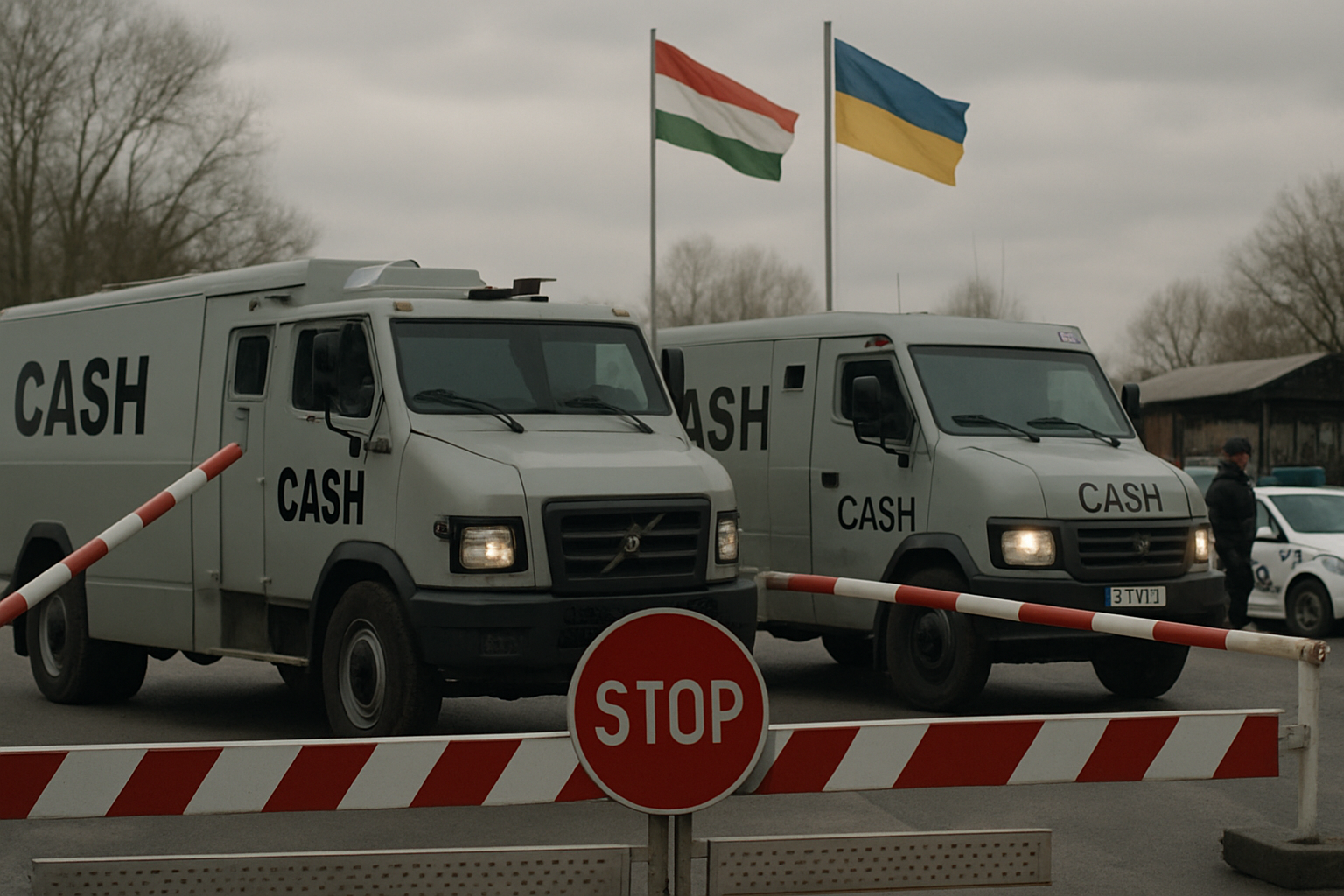
Hungarian authorities are maintaining their detention of seven Ukrainian banking employees along with approximately €82 million in assets, as Ukraine's Foreign Minister Andrii Sybiha demands immediate return of the seized property and calls for international partners to publicly condemn Budapest's actions.
The detention, which began March 5, 2026, involves employees of Ukraine's state-owned Oschadbank who were conducting a routine authorized banking operation transporting $40 million cash, €35 million euros, and approximately 9 kilograms of gold between Raiffeisen Bank Austria and Oschadbank. The transport was part of standard international currency transfer procedures when Hungarian authorities intercepted the two armored vehicles in Budapest.
Ukraine Demands Immediate Release
Minister Sybiha has escalated Ukraine's response, publicly calling on Hungary to "immediately return the seized property and valuables of Oschadbank" while urging Kyiv's international partners to respond to what he characterized as an unprecedented breach of banking protocols between allied nations.
The Ukrainian National Bank announced it is "initiating an independent audit of the processes and contractual relations between all parties involved in the transportation of funds and valuables from Austria to Ukraine via Hungary," signaling a comprehensive review of security arrangements for international financial operations.
"This represents a fundamental violation of international banking cooperation and threatens the security of Ukrainian state assets during a critical period for our nation's financial stability."
— Ukrainian Banking Official, speaking anonymously
Historical Context of Deteriorating Relations
The current crisis represents the culmination of months of escalating tensions between Ukraine and Hungary, rooted in broader disputes over energy policy and European Union decision-making. The relationship reached a breaking point in early March when Ukrainian President Volodymyr Zelensky issued an extraordinary threat to provide the address of an unnamed EU official—widely interpreted as targeting Hungarian Prime Minister Viktor Orbán—to Ukrainian Armed Forces over continued blockage of a €90 billion EU aid package.
The deterioration began in February 2026 when Hungary blocked both the EU's historic €90 billion loan package to Ukraine and the 20th sanctions package against Russia over the Druzhba oil pipeline dispute. Hungary, along with Slovakia, accused Ukraine of deliberately manipulating oil supplies as "political blackmail," while Ukraine maintained that Russian attacks had damaged pipeline infrastructure requiring repairs.
Banking Operation Under International Agreements
According to sources familiar with the operation, the cash transport was conducted under established international banking agreements between Raiffeisen Bank Austria and Ukraine's Oschadbank. GPS tracking data shows the vehicles were located in central Budapest near a Hungarian law enforcement facility when the detention occurred.
The operation involved sophisticated security protocols typical of international currency transfers, with advance notifications provided to relevant authorities. The seven Ukrainian citizens involved are experienced banking professionals responsible for high-value transport operations, not irregular money handlers as some Hungarian officials have suggested.
International Banking Security Implications
Banking experts warn that the detention sets a concerning precedent for international financial operations during wartime conditions. The incident raises fundamental questions about the security of Ukrainian state assets and the country's ability to access European financial markets through traditional channels.
The crisis demonstrates the weaponization of financial and energy interdependence during wartime, with Hungary using EU unanimity rules as leverage while Ukraine faces mounting pressure to maintain international banking relationships essential for its economic survival.
Money Laundering Investigation Controversy
Hungarian authorities have launched a criminal investigation claiming suspicion of money laundering, though Ukrainian officials dispute the charges as politically motivated. Hungary confirmed that the detained personnel will be "expelled from Hungary" following the investigation, raising questions about the application of money laundering laws to legitimate banking operations between NATO allies.
The investigation has been criticized by international observers as potentially undermining established protocols for cross-border financial transactions, particularly given the authorized nature of the banking operation and the involvement of reputable European financial institutions.
EU Unity Under Strain
The crisis exposes fundamental tensions within the European Union between member state sovereignty and collective action during wartime. Lithuania's Foreign Minister has warned that "the EU cannot become Budapest's hostage," while enhanced cooperation discussions are underway to potentially bypass unanimity requirements that have allowed Hungary to block critical Ukraine support measures.
The incident occurs against the backdrop of Hungary's broader pattern of blocking EU initiatives supporting Ukraine, including the €90 billion loan package and multiple sanctions packages against Russia. Prime Minister Orbán faces unprecedented electoral vulnerability in April 2026 elections, with his Fidesz party trailing opposition coalitions for the first time since 2010.
Diplomatic Resolution Efforts
International efforts to resolve the crisis are intensifying, with multiple EU member states expressing concern about the precedent being set for financial cooperation mechanisms during emergency conditions. The detained banking employees remain in Hungarian custody while diplomatic channels work to address what Ukraine characterizes as an illegal seizure of state assets.
The resolution of this crisis will have significant implications for future international banking cooperation, EU decision-making mechanisms under extraordinary circumstances, and the precedent for financial security during regional conflicts. Success in securing the immediate release of the detained personnel and assets could restore confidence in European financial integration mechanisms, while prolonged detention risks undermining international banking security protocols.
Broader Geopolitical Stakes
The detention occurs during a critical period for Ukrainian-European relations, with ongoing peace talks and reconstruction efforts requiring stable financial channels. The crisis tests European decision-making capacity under extraordinary circumstances and sets precedent for future financial cooperation mechanisms between EU members and partner nations during security emergencies.
As the standoff enters its fourth day, the international community watches closely to see whether diplomatic channels can resolve what has become a significant test of European solidarity and international banking cooperation during one of the continent's most challenging periods since World War II.