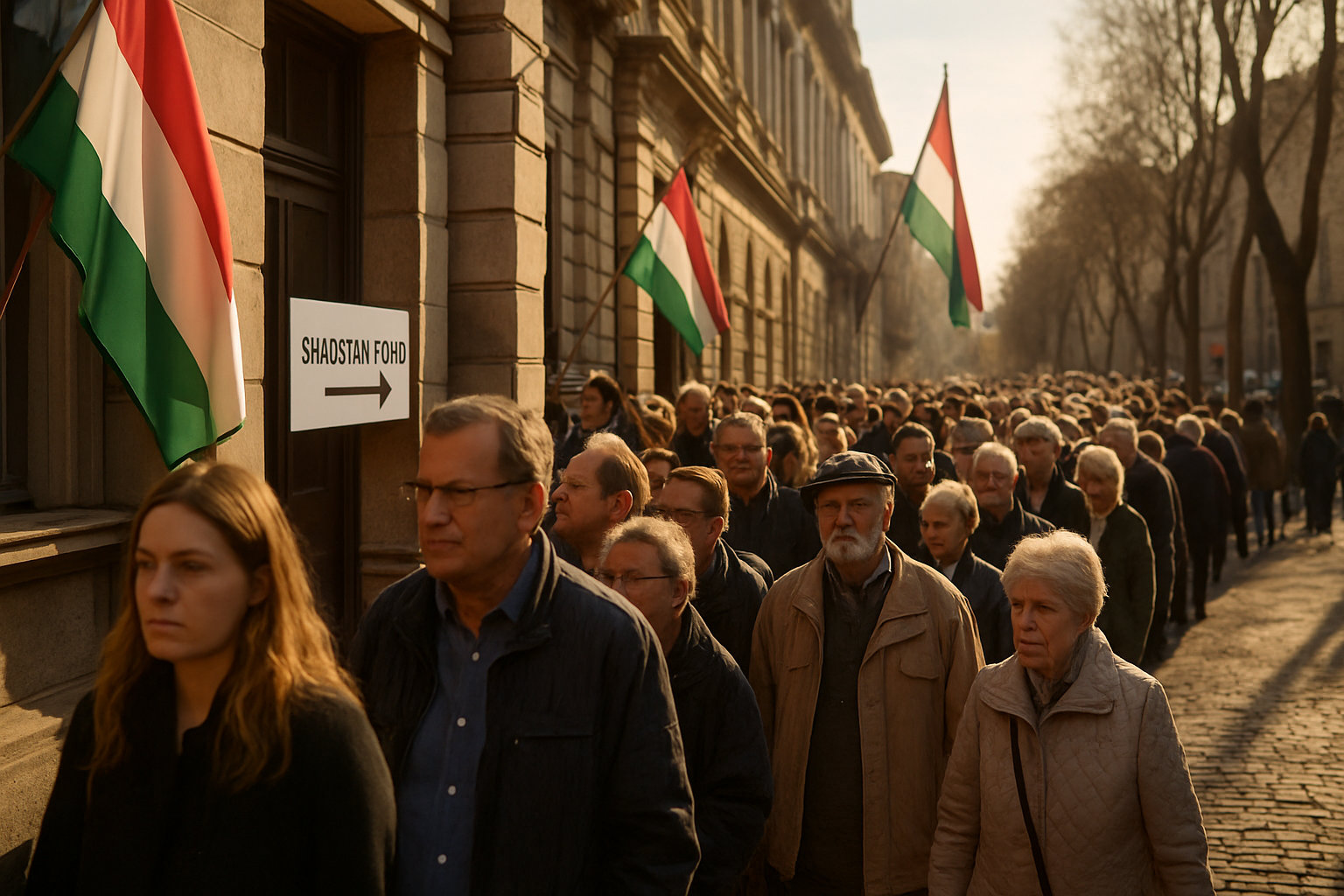
Hungarians flocked to polling stations in record numbers on Sunday, April 12, 2026, as Prime Minister Viktor Orban faced the most serious electoral challenge since returning to power in 2010, with turnout reaching nearly 78% by the time polls closed at 7 PM local time.
The historic voter participation marked a watershed moment in Hungarian politics, with turnout figures dramatically surpassing the previous record of 70.53% set in 2002. Opposition leader Péter Magyar's Tisza Party has emerged as a formidable challenger to Orban's Fidesz party, leading in polls for the first time in over a decade.
The Opposition's Historic Challenge
Magyar, a former government insider who burst onto the political scene just two years ago, has consolidated opposition forces behind a pro-European platform promising wealth taxes, euro adoption, and stronger EU and NATO ties. His movement gained unprecedented momentum with the organization of the "Greatest National March" in March 2026, which drew an estimated 500,000 participants—the largest opposition demonstration since 2010.
"This is now or never," said Peter, a 34-year-old voter in Budapest, reflecting the sentiment of many Hungarians who view this election as a referendum on their country's future direction.
— Swedish media reports
The opposition's breakthrough represents a crucial shift in Hungarian political dynamics, successfully escaping government media control through digital platforms and international coverage, particularly reaching younger demographics who have come of age during Orban's rule.
Record Turnout Signals Democratic Engagement
Data released throughout election day showed consistently high participation rates. By 1:00 PM local time, turnout had reached 54.14%—14 percentage points higher than the same time during the 2022 elections. French media reported that no polling institutes were planning exit polls, meaning results would only be known as votes were counted.
The surge in participation reflects the gravity many Hungarians attach to this election. After three years of economic stagnation and soaring living costs, coupled with reports of oligarchs close to the government amassing wealth, many voters expressed weariness with Orban's leadership.
International Stakes and Foreign Interference
This election has drawn unprecedented international attention, with documented evidence of dual foreign interference. Investigative journalist Szabolcs Panyi's VSquare reporting confirmed Russian operative teams supporting Fidesz—the first concrete evidence of Kremlin agents participating in European electoral campaigns.
Simultaneously, the Trump administration provided political backing through high-level diplomatic visits. US Vice President JD Vance visited Budapest just five days before the election, condemning what he called EU "shameless interference" while declaring Orban a "model for Europe."
EU Crisis Context
The elections occur against the backdrop of Hungary's ongoing confrontation with the European Union. Orban has maintained a blockade of a €90 billion Ukraine aid package over the Druzhba pipeline dispute, creating the deepest institutional crisis in EU history. The European Commission has frozen €19 billion in Hungarian funding over rule of law concerns.
Enhanced cooperation discussions have accelerated to bypass Hungary's unanimity requirements—a fundamental departure from consensus decision-making that could allow 26 member states to proceed without Hungary.
"EU cannot become Budapest's hostage," declared Lithuanian Foreign Minister Kestutis Budrys, reflecting growing frustration among European leaders.
— Lithuanian Foreign Ministry
Campaign Allegations and Security Concerns
The final week of campaigning was marked by controversy, with Serbian authorities discovering sophisticated explosive devices near the Balkan Stream/TurkStream pipeline exactly one week before the election. Opposition leaders dismissed the incident as "tactical panic-making," while Ukraine characterized it as a "false flag operation."
Both Fidesz and Tisza faced accusations of electoral irregularities, with Norwegian media reporting "massive allegations of election fraud" emerging as polls prepared to close.
Generational and Economic Divides
The election highlighted significant generational and economic divides within Hungarian society. Young voters, many experiencing their first opportunity to vote, showed strong support for Magyar's pro-European platform. The opposition successfully mobilized urban and educated voters frustrated with corruption allegations and economic stagnation.
Conversely, Orban retained support in rural areas and among older voters attracted to his sovereignty-focused messaging and warnings about external threats to Hungarian independence.
Template for 21st-Century Democracy
European officials described the Hungarian election as a template for "21st-century crisis management," with the world watching how democratic institutions adapt while preserving values under foreign interference and authoritarian pressure.
The election's outcome will determine Hungary's European integration trajectory for decades. An opposition victory would restore Hungarian EU alignment, lift the aid blockade, and remove Brussels' most persistent internal critic. Orban's survival with foreign backing could embolden similar interference operations across the continent.
Results and Implications
As polling stations closed and vote counting began, both camps expressed cautious optimism. Early projections from Romanian media suggested the opposition Tisza party had secured 55% while Fidesz received 38%, though official results were expected throughout the evening.
The unprecedented turnout itself represents a victory for democratic engagement, demonstrating that despite years of media control and institutional pressure, Hungarian citizens remain committed to expressing their political will through the ballot box.
Whatever the final outcome, this election has already transformed Hungarian politics, proving that sustained opposition organizing, digital resistance to media control, and pro-European messaging can challenge even well-entrenched authoritarian tendencies. The results will reverberate far beyond Hungary's borders, influencing EU decision-making, NATO cohesion, and the broader struggle between democratic governance and authoritarian populism in 21st-century Europe.