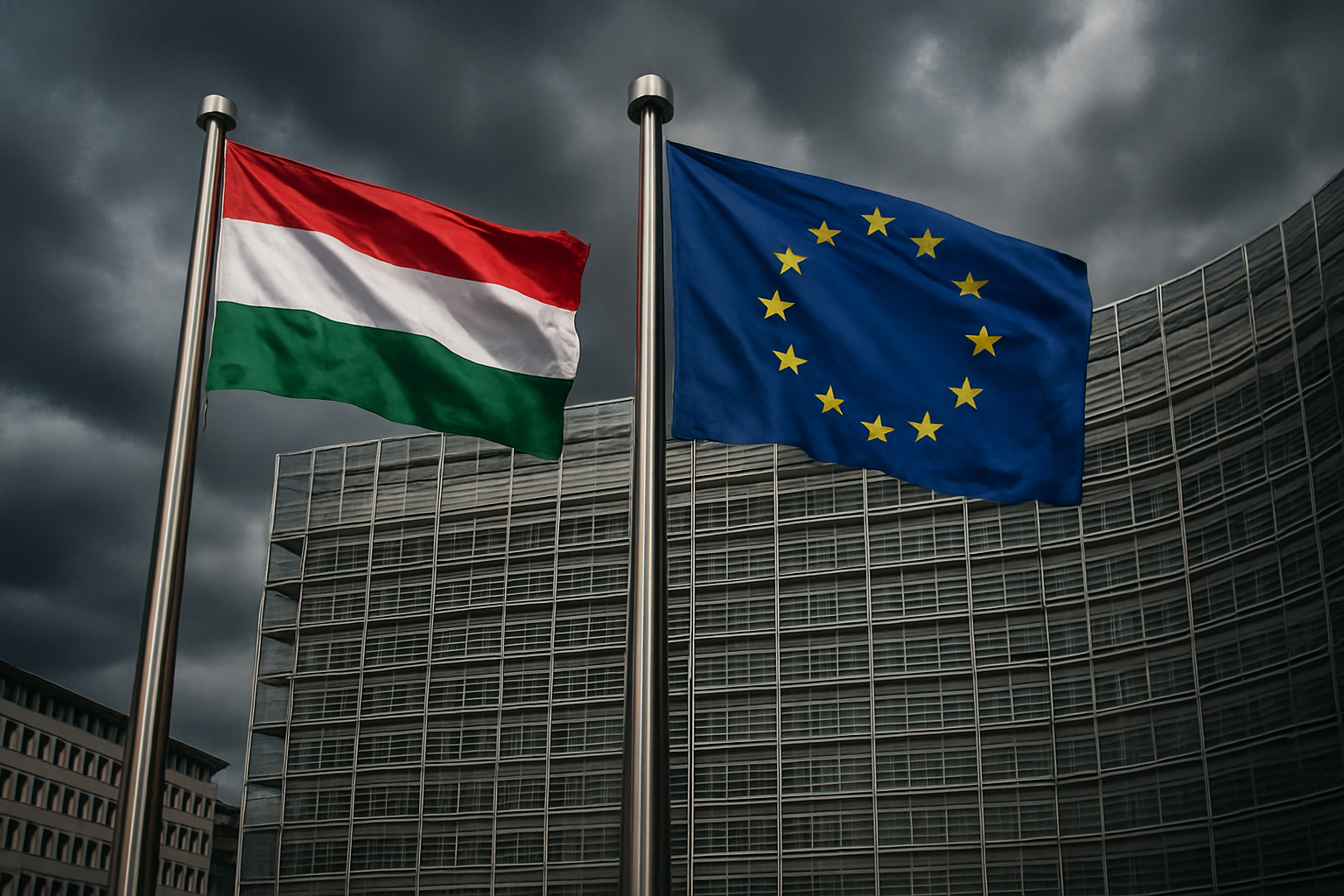
Hungary has threatened to block the European Union's 20th sanctions package against Russia and veto a historic €90 billion financial support package for Ukraine, creating the most severe diplomatic crisis within the EU since the conflict began nearly four years ago.
European Council President Antonio Costa issued an unprecedented letter to Hungarian Prime Minister Viktor Orbán on Monday, demanding Budapest honor its previous commitments to the massive Ukrainian loan package. The crisis comes as EU foreign ministers prepare for a critical vote on new sanctions, with Hungary's obstruction threatening to derail Europe's unified response just days before the war's fourth anniversary on February 24.
The Druzhba Pipeline Dispute
At the heart of Hungary's blockade lies the Druzhba oil pipeline crisis, which has been offline since late January. Hungarian Foreign Minister Péter Szijjártó accused Ukraine of deliberately manipulating oil supplies as "political blackmail," while Ukrainian officials maintain the pipeline was damaged in Russian missile attacks and requires urgent repairs.
Hungary and Slovakia remain the only two EU countries still dependent on Russian oil through Ukrainian territory under special sanctions exemptions. Slovakia has declared an oil emergency, releasing 250,000 tons from strategic reserves to supply the Slovnaft refinery—equivalent to one month's operational capacity.
"When leaders reach consensus, they are bound by their decision. Any violation undermines the foundations of European unity."
— Antonio Costa, European Council President
Stakes of the 20th Sanctions Package
The proposed sanctions represent the most comprehensive measures against Russia to date, including a complete ban on maritime services for Russian crude oil exports. The package would prohibit insurance, maintenance, port access, and technical support for Russian vessels, while adding 43 additional ships to the shadow fleet blacklist.
Intelligence estimates suggest over 600 vessels worldwide comprise Russia's sophisticated shadow fleet, using false documentation and complex ownership structures to evade existing restrictions. The new measures also activate anti-circumvention mechanisms, banning exports of digital control machinery and radio equipment to high-risk countries suspected of re-exporting to Russia.
Financial Package Under Threat
Hungary's veto threat extends to the €90 billion loan package—the largest EU financial assistance program ever for a single nation. The European Parliament approved the package with 458 votes in favor, 140 against, and 44 abstentions, but implementation requires unanimous Council approval.
Slovakia, Czech Republic, and Hungary have refused to participate in financing the loan, highlighting persistent East-West divisions within the EU. The package would provide crucial defense and reconstruction funding for Ukraine over the 2026-2027 period.
European Unity at Breaking Point
Lithuanian Foreign Minister Kestutis Budrys delivered a stark warning, declaring "The European Union cannot become Budapest's hostage" as Hungary threatens broader European interests. The crisis exposes fundamental tensions between national sovereignty and collective European action during wartime conditions.
German officials have criticized Hungary's approach, with Foreign Ministry representatives calling for maximum economic pressure on Russia as essential for sustainable Ukrainian peace. France and Italy have expressed cautious support for continued engagement with Moscow, while Eastern European nations largely back stronger sanctions enforcement.
"The EU must demonstrate that individual member states cannot hold the entire union hostage to their bilateral disputes."
— Kestutis Budrys, Lithuanian Foreign Minister
Energy Security Vulnerabilities Exposed
The crisis has revealed critical European energy vulnerabilities despite years of diversification efforts. Natural gas prices have surged 24% across Europe, while Hungary and Slovakia's continued dependence on Russian oil creates ongoing leverage for Moscow.
Ukraine has proposed alternative solutions, including the Odessa-Brody pipeline replacement coordinated through the European Commission. Croatia has offered Mediterranean route assistance, but implementation would require months or years and would only handle non-Russian crude.
Winter Humanitarian Pressure
The energy dispute occurs amid Ukraine's severe winter crisis, with over 1,170 buildings in Kyiv lacking heating during minus-30°C temperatures. Over 17.8 million Ukrainians are accessing winter support programs as Russia continues its systematic targeting of civilian infrastructure.
Slovak Prime Minister Robert Fico has issued ultimatums threatening to cut emergency electricity supplies to Ukraine unless oil transit resumes—a move that would directly impact Ukrainian civilians during life-threatening weather conditions.
Timing and International Context
Hungary's actions come at a particularly sensitive moment, as Geneva peace talks have shown mixed results with "significant progress" on ceasefire monitoring mechanisms but unresolved territorial disputes. The crisis threatens to undermine European credibility in ongoing diplomatic efforts while Russia accelerates territorial gains.
The timing coincides with President Trump's June 2026 peace deadline and planned Washington venue talks, potentially at the presidential level. European divisions may signal weakening resolve to Moscow, potentially affecting Ukraine's negotiating position in future territorial compromise discussions.
Additionally, the New START nuclear treaty expired February 5, 2026—the first time in over 50 years without US-Russia nuclear constraints—creating an unprecedented strategic environment where European unity becomes even more crucial.
Broader Implications for European Integration
The crisis represents a fundamental test of EU institutional mechanisms and the balance between national interests and collective European action. The requirement for unanimity in foreign policy decisions allows individual members to paralyze collective responses during critical moments.
Some EU officials are privately exploring "enhanced cooperation" alternatives that could allow willing member states to proceed with sanctions while bypassing holdouts. However, such mechanisms would represent a significant departure from traditional consensus-based decision-making and could set precedents for future policy divisions.
Political Calculations
Hungarian PM Viktor Orbán faces unprecedented electoral pressure with April 12, 2026 elections approaching—the first time since 2010 that his Fidesz party trails opposition coalitions in polling. The crisis provides an opportunity to demonstrate independence from Brussels while appealing to voters concerned about energy costs and national sovereignty.
Trump administration officials have provided explicit support for Orbán, with Secretary of State Marco Rubio recently declaring that Trump is "profoundly attached to your success." This American backing provides alternative legitimacy amid EU tensions.
The Path Forward
Resolution requires addressing both immediate technical issues and broader strategic challenges. Alternative pipeline routes, strategic reserve coordination, and emergency energy assistance could alleviate immediate pressures while preserving long-term Ukrainian support mechanisms.
The coming weeks will determine whether European leaders can find innovative solutions to preserve unity while addressing legitimate member state concerns. Success would demonstrate institutional resilience during wartime conditions, while failure could encourage further challenges to collective European foreign policy.
The stakes extend far beyond immediate policy questions to encompass the future of European integration, the credibility of international law enforcement, and the preservation of democratic solidarity against authoritarian pressure. As the war approaches its fourth anniversary, European unity faces its most severe test since the conflict began.