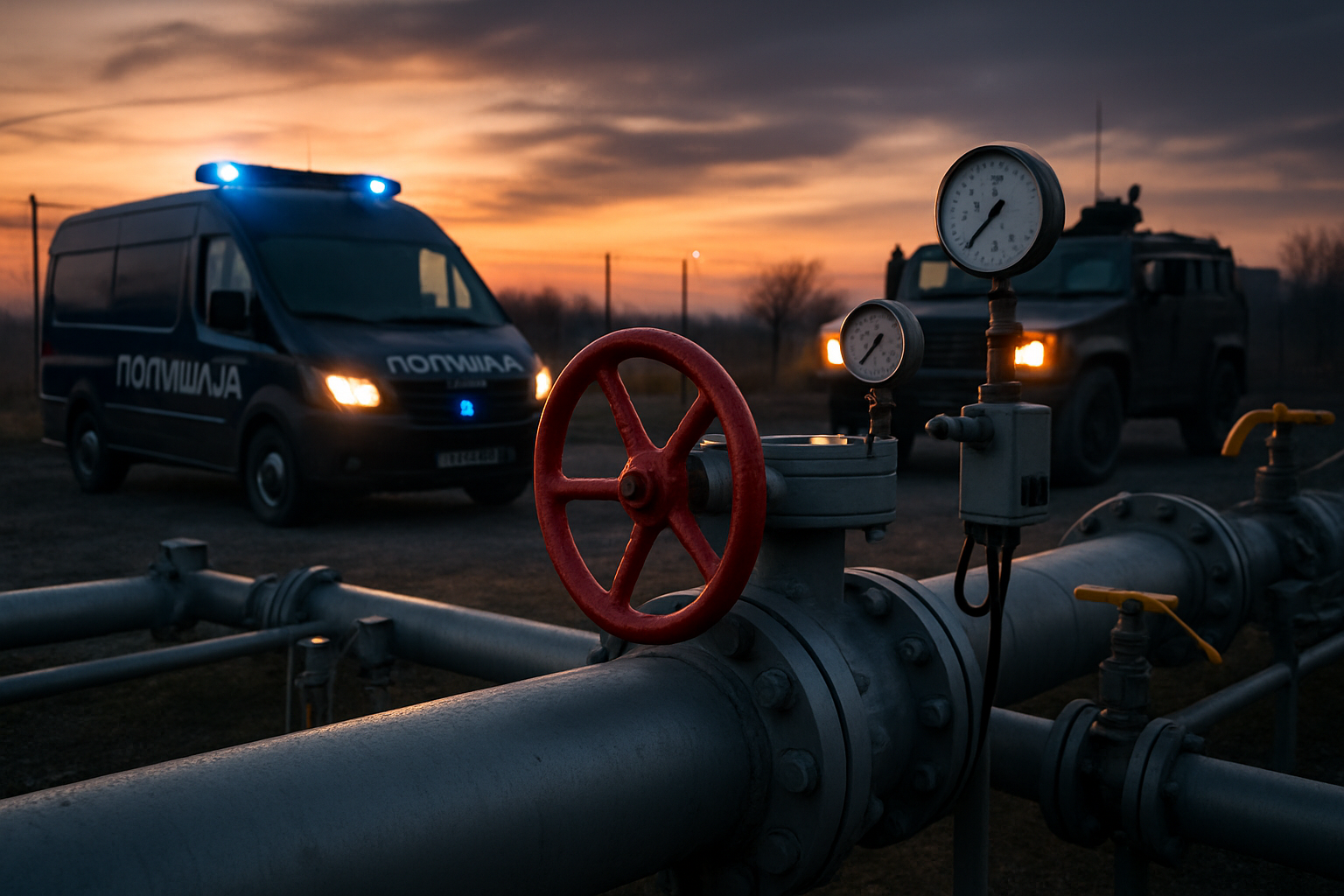
Hungarian Prime Minister Viktor Orbán convened an emergency session of the National Defense Council on April 6, 2026, after Serbian authorities discovered sophisticated explosives near a critical gas pipeline transporting Russian natural gas to Hungary, just six days before Hungary's pivotal parliamentary elections.
Serbian President Aleksandar Vučić announced that the army and police had found two backpacks containing what he described as explosives "of devastating force" near the Balkan Stream/TurkStream pipeline infrastructure in the village of Velebit, close to the Hungarian border. The discovery represents a significant escalation in threats to European energy infrastructure amid ongoing geopolitical tensions.
Discovery of Sophisticated Explosive Devices
According to multiple European sources, the explosive devices were discovered Sunday near the pipeline that serves as a vital energy artery carrying Russian gas through the TurkStream route from Turkey via Bulgaria to Serbia and Hungary. The pipeline transports approximately 15.75 billion cubic meters of gas annually, making it a critical component of Central European energy security.
Serbian authorities described the devices as professionally constructed with sophisticated detonation equipment, suggesting significant planning and resources were involved. Enhanced security protocols have been implemented along the entire pipeline route, with increased military patrols and surveillance measures now in place.
The timing of the discovery has raised particular concerns among European security officials, coming exactly one week before Hungary's April 12, 2026 parliamentary elections, where Orbán's Fidesz party faces its most serious electoral challenge since 2010.
Hungarian Response and Electoral Context
Prime Minister Orbán's immediate convening of the National Defense Council underscores the gravity Hungarian authorities place on the incident. The discovery comes as Orbán faces unprecedented electoral vulnerability, with recent polling showing Fidesz trailing opposition coalitions led by Péter Magyar's Tisza Party for the first time in over a decade.
"This incident represents a direct threat to Hungary's energy security and national sovereignty,"
— Austrian MEP Petra Steger, commenting on the pipeline discovery
Opposition leaders have dismissed the incident as potential "election campaign tactical panic-making," suggesting Orbán may be exploiting security fears for political benefit during the most challenging electoral contest of his career. The Tisza Party recently organized what it called the "Greatest National March," drawing 500,000 participants in the largest opposition demonstration since 2010.
European Energy Security Implications
The attempted sabotage highlights the vulnerability of European energy infrastructure at a time when the continent has been grappling with unprecedented energy challenges. The discovery follows months of energy crisis that saw oil prices surge above $100 per barrel for the first time since 2022, with natural gas prices increasing by 24% across Europe.
The Balkan Stream pipeline serves as one of the few remaining routes for Russian gas to reach Central Europe, making Hungary and Slovakia the only EU countries still dependent on Russian oil under special exemptions. This dependency has created ongoing tensions within European unity efforts, particularly regarding support for Ukraine.
In recent months, Hungary has been embroiled in disputes over the Druzhba oil pipeline, which has been offline since January 27, 2026. Hungary claims Ukraine deliberately manipulated oil supplies as "political blackmail," while Ukraine maintains the pipeline was damaged in Russian attacks requiring repairs.
International Reaction and Investigation
The incident has prompted calls for enhanced European cooperation on infrastructure security. Lithuanian Foreign Minister Kestutis Budrys previously warned that "the EU cannot become Budapest's hostage" in reference to Hungary's energy disputes, highlighting the broader implications for European solidarity.
Ukrainian Foreign Ministry spokesperson Heorhii Tykhyi categorically denied any Ukrainian involvement, stating "Ukraine has nothing to do with this incident" and characterizing the discovery as "most likely a Russian operation under false flag as part of Moscow's large-scale interference in Hungary's elections."
Swedish media reports suggest skepticism about the incident's authenticity, with some analysts believing it could be fabricated as part of an influence campaign. However, the sophisticated nature of the devices discovered argues against simple staging, according to security experts.
Regional Security Concerns
The pipeline sabotage attempt occurs against the backdrop of broader European security challenges. Recent months have seen a series of infrastructure incidents across Europe, including attacks on energy facilities and critical supply routes. The discovery near the Serbian-Hungarian border adds to concerns about coordinated efforts to destabilize European energy security.
Serbia finds itself in a challenging position, caught between maintaining Russian energy ties while seeking EU integration. The incident underscores the complex energy dependencies that continue to shape European geopolitics amid ongoing conflicts and sanctions regimes.
European security officials have been briefed on the discovery, with enhanced coordination protocols now in place for protecting critical infrastructure. Multiple intelligence agencies are cooperating in the ongoing investigation to determine the source and intended targets of the explosive devices.
Impact on Hungarian Elections
The timing of the discovery, exactly one week before Hungary's crucial elections, has intensified political debate about the incident's authenticity and implications. Orbán has built much of his political brand around protecting Hungarian sovereignty and security, making this incident potentially significant for electoral dynamics.
The opposition has demanded full transparency about the circumstances of the discovery and the government's response. Recent polling showing a tight electoral race makes every development potentially decisive in the final week before voting begins.
European observers are monitoring whether the incident will strain relationships between EU members or prompt enhanced energy security cooperation. The resolution could set important precedents for managing future infrastructure security challenges in the volatile geopolitical environment.
Looking Ahead
The attempted pipeline sabotage represents a watershed moment in European infrastructure security, highlighting vulnerabilities that extend far beyond Hungary's borders. As investigations continue, the incident tests European cooperation mechanisms and the effectiveness of security responses to critical infrastructure threats.
The outcome of Hungary's April 12 elections may significantly influence how this security challenge is addressed. An opposition victory could restore EU unity and remove a persistent critic of Brussels, while Orbán's survival would likely entrench the crisis and force consideration of enhanced cooperation mechanisms that fundamentally alter European decision-making structures.
As Europe grapples with energy security in an increasingly volatile geopolitical landscape, the foiled pipeline attack serves as a stark reminder of the ongoing threats to critical infrastructure and the need for robust collective defense mechanisms.