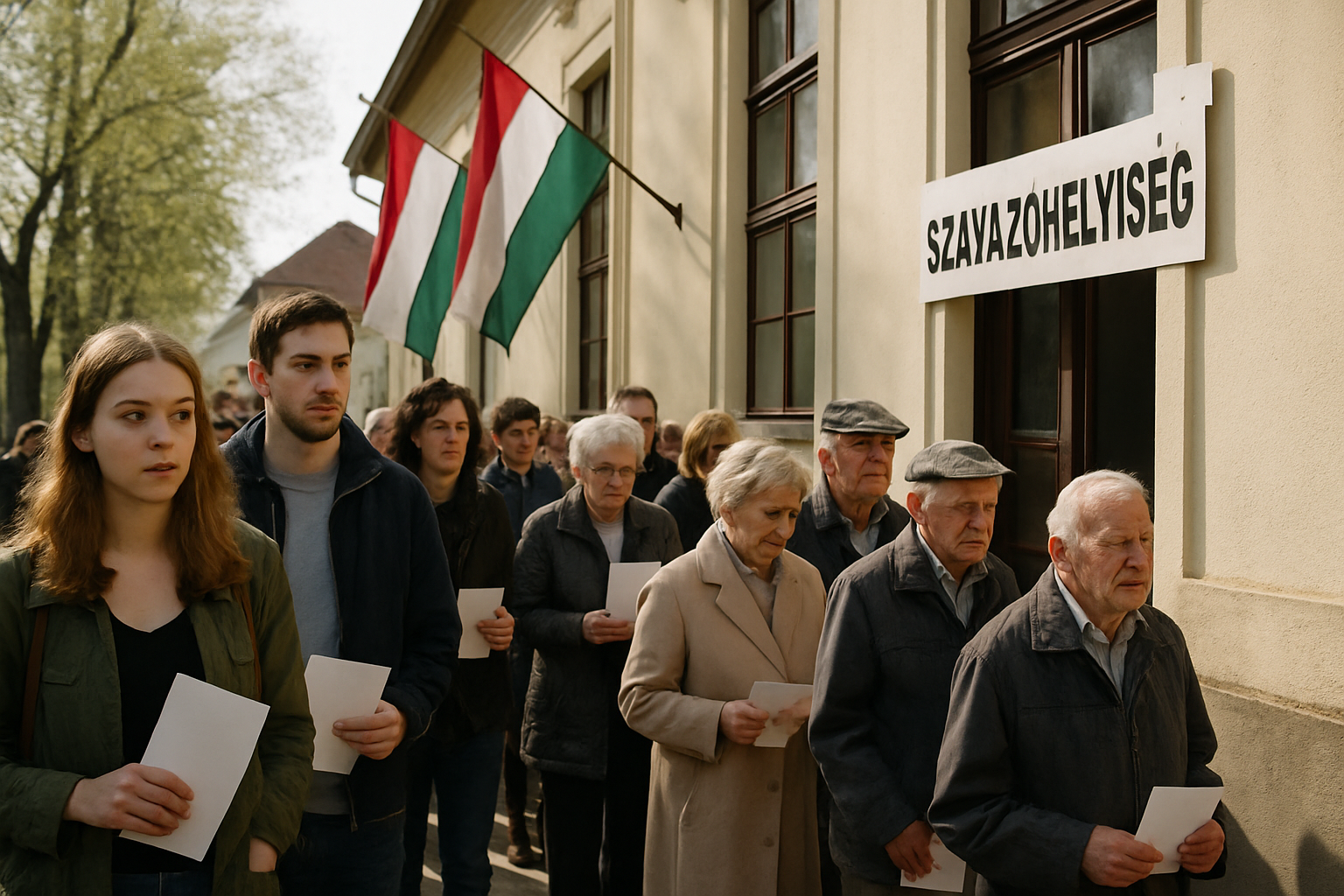
Hungarian voters are turning out in record numbers for crucial parliamentary elections that could end Prime Minister Viktor Orbán's 16-year grip on power, with opposition leader Péter Magyar emerging as the strongest challenger to Fidesz rule since 2010.
By midday Sunday, 54.14% of eligible voters had already cast their ballots, representing a dramatic 14 percentage point increase compared to the same time during the 2022 elections, according to official figures from the National Election Office. The surge in participation reflects the high stakes of an election that has captivated international attention and could reshape Hungary's relationship with the European Union.
Magyar's Tisza Party Gains Unprecedented Momentum
Péter Magyar, a 45-year-old former government insider who was virtually unknown two years ago, has consolidated opposition forces behind his Tisza Party with a pro-European platform promising wealth taxes, euro adoption, and stronger EU and NATO ties. This stark contrast to Orbán's nationalist sovereignty approach has resonated with voters frustrated by corruption allegations, economic stagnation, and what many describe as democratic fatigue.
The opposition leader organized the "Greatest National March" in March, drawing an estimated 500,000 participants to Budapest—the largest anti-government demonstration since 2010. Magyar's emergence as a credible alternative has created genuine electoral uncertainty for the first time in over a decade.
"We need fresh winds in this country. We've been under the same leadership for too long,"
— Csenge, 22-year-old voter in Budapest
Magyar himself cast his ballot early Sunday, declaring his readiness to bring about a "system change" in Hungary. Speaking to supporters, he emphasized his campaign's focus on restoring Hungary's position within mainstream European politics and ending what he termed the country's isolation from Brussels.
Unprecedented Foreign Interference Documented
This election has been marked by what analysts describe as unprecedented dual foreign interference. Investigative reporting by Szabolcs Panyi through VSquare revealed concrete evidence of Russian operative teams actively supporting Fidesz—the first documented case of Kremlin agents participating directly in European electoral campaigns.
Simultaneously, the Trump administration has provided explicit political backing for Orbán, with Vice President J.D. Vance visiting Budapest just five days before the election. Vance condemned what he called EU "shameless interference" while declaring Orbán a "model for Europe"—representing the most direct American intervention in an EU member state election in modern history.
EU Relations Crisis Reaches Breaking Point
The elections occur against the backdrop of Hungary's deepest crisis with EU institutions since joining the bloc. Orbán has maintained a blockade of a €90 billion Ukraine aid package over the Druzhba pipeline dispute, creating what Lithuanian Foreign Minister Kestutis Budrys called a situation where "the EU cannot become Budapest's hostage."
The European Commission has frozen €19 billion in Hungarian funding over rule of law concerns, while intelligence restrictions have been imposed following allegations that Foreign Minister Péter Szijjártó systematically leaked EU Council details to Russian Foreign Minister Sergei Lavrov.
Enhanced cooperation discussions have accelerated to bypass unanimity requirements—a fundamental departure from consensus decision-making that would allow 26 EU states to proceed without Hungary on critical policies.
Digital Resistance Breaks Media Control
Despite Orbán's extensive control over traditional media outlets, the opposition has successfully escaped government information monopolies through digital platforms and international coverage. This media breakthrough has been particularly effective in reaching younger demographics who consume news primarily through online channels.
The shift represents a crucial development undermining what had been one of Fidesz's most significant political advantages in rural and traditional markets throughout the country.
Energy Weaponization and Security Concerns
The election campaign was overshadowed by the discovery of sophisticated explosive devices near the Balkan Stream/TurkStream pipeline in Serbia exactly one week before voting began. Opposition leaders dismissed the incident as "tactical panic-making," while Ukraine characterized it as a "false flag operation" designed to influence the electoral outcome.
The pipeline carries 15.75 billion cubic meters of gas annually through the Turkey-Bulgaria-Serbia-Hungary route, representing critical Central European energy infrastructure. Hungary and Slovakia remain the only EU countries still dependent on Russian oil under special exemptions.
Historic Stakes for European Integration
The April 12 outcome will determine Hungary's relationship with the EU for decades to come. An opposition victory would restore Hungarian alignment with Brussels, lift the Ukraine aid blockade, and remove one of the EU's most persistent internal critics. Conversely, Orbán's survival with foreign backing could embolden similar interference operations continent-wide and accelerate enhanced cooperation mechanisms that would fundamentally alter European decision-making structures.
"This is our last chance for democracy in the country," said one voter outside a Budapest polling station, reflecting the sentiment expressed by many who see the election as a referendum on Hungary's democratic future.
— Anonymous voter, as reported by BreakingNews.ie
The election has been characterized by analysts as a template-setting moment for 21st-century democracy under foreign interference and authoritarian pressure. Senior EU officials describe Europe as "writing the template for 21st-century crisis management," with the world watching how democratic institutions adapt while preserving European values.
Generational Divide Emerges
Voters between 18 and 30—many of whom have never experienced leadership under anyone other than Orbán—appear increasingly drawn to the opposition's message of change. This "Generation Orbán" represents a crucial demographic that could determine the election's outcome, particularly given their higher participation rates in this election compared to previous contests.
The record turnout suggests that both sides have successfully mobilized their bases, though analysts note that high participation typically favors opposition parties in systems where the ruling party has enjoyed prolonged dominance.
International Monitoring and Implications
The election is being closely monitored by international observers, including OSCE missions with Portuguese representatives on the ground. The voting process is occurring under enhanced scrutiny given concerns about electoral integrity and foreign interference.
Beyond Hungary's borders, the results will have significant implications for EU decision-making capacity, NATO cohesion, and transatlantic relationships. The election outcome could influence the trajectory of populist movements across Europe and set precedents for how democratic institutions respond to foreign interference.
Results are expected to be announced later Sunday evening, with exit polls providing initial indications of what could be the most consequential Hungarian election since the end of the communist era. The high turnout suggests that Hungarian voters understand the historic significance of their choice, as they decide whether to continue with Orbán's populist nationalism or chart a new course toward European integration under Magyar's leadership.