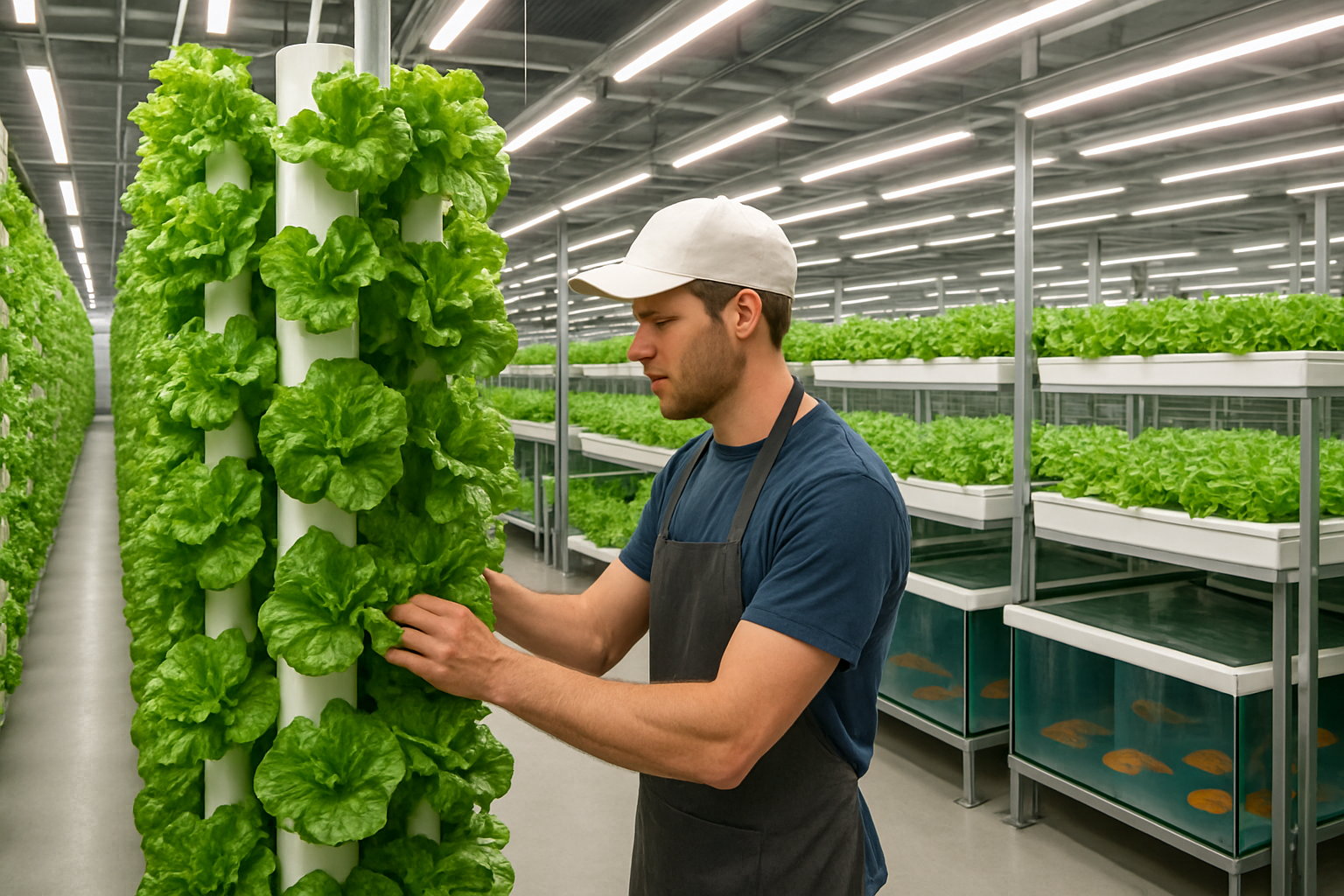
A groundbreaking agricultural revolution is transforming food production across Africa, as countries embrace innovative farming techniques including hydroponic and aquaponic systems to address mounting food security challenges during Earth's hottest recorded period.
In Eritrea's Mendefera sub-zone, livestock development expert Mr. Mehari Woldebruk has issued an urgent call for farmers to adopt hydroponic and aqua-ponic farming systems to ensure sustainable animal fodder production. Speaking at a February 20 agricultural development meeting, Woldebruk emphasized that these innovative systems offer significant advantages over traditional farming methods.
"Hydroponic and aqua-ponic farming systems save energy and water, are simple to produce, and play a significant role in sustainable agricultural development," Woldebruk explained. His recommendation comes as traditional farming practices face unprecedented challenges from climate change and water scarcity.
The Science Behind Soilless Agriculture
Hydroponic farming, a method of growing plants without soil using nutrient-rich water solutions, represents a fundamental shift from conventional agriculture. These systems allow farmers to precisely control nutrient delivery, optimize water usage, and achieve consistent harvests regardless of soil quality or weather conditions.
Aquaponics combines aquaculture (fish farming) with hydroponics, creating a symbiotic system where fish waste provides natural fertilizer for plants, while plants filter and clean the water for fish. This circular approach maximizes resource efficiency while producing both protein and vegetables.
"These systems represent the future of sustainable agriculture, particularly in regions facing water scarcity and climate unpredictability."
— Mr. Mehari Woldebruk, Livestock Development Expert
Global Context and Urgent Need
The push for agricultural innovation comes during an unprecedented climate crisis. January 2026 marked the hottest month in recorded history, extending a streak of 18 consecutive months exceeding 1.5°C above pre-industrial levels. This sustained warming is fundamentally altering traditional growing seasons and forcing rapid adaptation across global agricultural systems.
According to historical data from our archives, similar innovative approaches have been gaining momentum worldwide. Finland achieved breakthrough winter raspberry cultivation using controlled environment agriculture, while Papua New Guinea's mechanized farming operations are generating millions in revenue through advanced agricultural techniques.
Water Conservation Revolution
One of the most compelling advantages of hydroponic and aquaponic systems is their water efficiency. Traditional agriculture can require up to 10 times more water than hydroponic systems for the same crop yield. In aquaponic systems, water is continuously recycled through the fish-plant ecosystem, reducing water consumption by up to 90% compared to conventional farming.
This efficiency is crucial in regions experiencing increasing water stress. The Democratic Republic of Congo has successfully supported over 11,000 farmers through conservation-focused agricultural approaches, demonstrating how water-efficient farming methods can transform rural livelihoods.
Economic Transformation Potential
The economic implications of these farming innovations extend far beyond individual farms. Malaysia's Dr. Stephen Rundi Utom has pioneered "outcome-driven delivery" in agricultural development, transitioning from routine administration to results-focused approaches that position regions as major food producers and potential net exporters.
Early adopters of hydroponic and aquaponic systems report several economic benefits:
- Higher yields per square meter compared to traditional farming
- Reduced dependence on pesticides and herbicides
- Year-round production capabilities independent of seasonal variations
- Lower transportation costs due to proximity to urban markets
- Premium pricing for pesticide-free, locally grown produce
Overcoming Implementation Challenges
Despite the promise of these innovative farming methods, implementation faces significant challenges. Initial setup costs for hydroponic and aquaponic systems can be substantial, requiring investment in specialized equipment, pumps, grow lights, and monitoring systems.
Technical expertise is another critical factor. Farmers need training in system management, nutrient monitoring, pH balance, and troubleshooting. However, countries implementing comprehensive agricultural transformation programs have demonstrated that these challenges are surmountable with proper support systems.
Sierra Leone's agricultural transformation in Falaba District exemplifies community-based innovation. Women farmers like Adama Manasaray have successfully transitioned from individual upland farming to collective operations with government and international support, demonstrating how collaborative approaches can overcome individual resource constraints.
Integration with Traditional Knowledge
Successful agricultural innovation requires sophisticated integration of cutting-edge technology with traditional ecological knowledge and community-based management practices. The most effective programs respect existing community structures while introducing beneficial innovations.
Algeria's groundbreaking "Tamr Al-Aghanm" innovation demonstrates this approach by converting date waste into livestock feed, representing a circular economy solution that builds on traditional agricultural practices while embracing modern efficiency principles.
"The future of agriculture lies in combining traditional wisdom with modern innovation, creating sustainable systems that serve both communities and the environment."
— Agricultural Development Expert
Regional Success Templates
Across Africa, multiple countries are implementing successful agricultural innovation programs that could serve as templates for broader adoption of hydroponic and aquaponic systems:
Kenya's Nguruman irrigation scheme rehabilitation has benefited over 10,000 farmers, while Uganda's Teso region is experiencing a dramatic cattle farming comeback through modernized approaches. These initiatives demonstrate how strategic agricultural investment can transform entire regions.
The African Continental Free Trade Agreement (AfCFTA) is creating new opportunities for agricultural partnerships and knowledge sharing, enabling countries to leverage collective expertise in implementing innovative farming technologies.
Climate Adaptation Strategy
As global temperatures continue to rise, controlled environment agriculture offers crucial climate resilience advantages. Hydroponic and aquaponic systems provide protection from extreme weather events, drought, flooding, and other climate-related disruptions that increasingly threaten traditional agriculture.
These systems also enable agricultural production in previously unsuitable environments, including urban areas, arid regions, and areas with poor soil quality. This geographic flexibility is essential for maintaining food security as climate change alters traditional farming zones.
Food Security and Nutrition
The nutritional advantages of hydroponically and aquaponically grown produce can be significant. Controlled growing conditions allow for optimization of nutrient content, while the absence of soil-borne diseases reduces the need for chemical treatments that can affect food quality.
Fresh, locally grown produce from these systems can address malnutrition challenges in regions where traditional agriculture struggles to provide adequate nutrition year-round. The systems are particularly effective for growing leafy greens and herbs that are rich in essential vitamins and minerals.
Urban Agriculture Revolution
Hydroponic and aquaponic systems are particularly well-suited for urban environments, where traditional farming is impossible. Vertical farming installations can transform unused urban spaces into productive agricultural areas, bringing fresh food production directly to population centers.
This proximity reduces transportation costs, ensures fresher produce, and creates local employment opportunities. Urban agricultural systems also provide educational opportunities and can strengthen community connections to food production.
International Cooperation and Knowledge Transfer
The success of agricultural innovation increasingly depends on international cooperation and knowledge sharing. South-South cooperation is replacing traditional North-South aid relationships, with countries learning directly from peers facing similar challenges.
Bolivia's partnership with India in agricultural research exemplifies this trend, combining modern research capabilities with locally-adapted practices that respect community structures while introducing beneficial innovations.
Future Scaling Potential
The window for building resilient, equitable food systems is narrowing rapidly as climate change accelerates. However, the tools and knowledge exist for effective agricultural transformation through innovations like hydroponic and aquaponic systems.
Success depends on sustained political commitment, adequate funding, community engagement, and international cooperation. The diversity of approaches being implemented across different countries provides multiple pathways for adaptation and scaling.
Countries that successfully implement comprehensive agricultural innovation programs report improved community resilience, reduced long-term social service demands, and enhanced economic competitiveness through sustainable rural development.
The Path Forward
As Mr. Mehari Woldebruk's call in Eritrea demonstrates, the time for agricultural innovation is now. The convergence of climate pressures, technological advancement, and global cooperation creates unprecedented opportunities for transforming food production systems.
Hydroponic and aquaponic farming represent more than technological solutions—they embody a fundamental shift toward sustainable, efficient, and resilient agricultural systems that can ensure food security for growing populations while protecting environmental resources.
The success of these initiatives will depend on continued investment in education, infrastructure, and international cooperation. As countries across Africa and beyond embrace these innovative approaches, they are not just adapting to climate change—they are pioneering solutions that could transform global agriculture for generations to come.