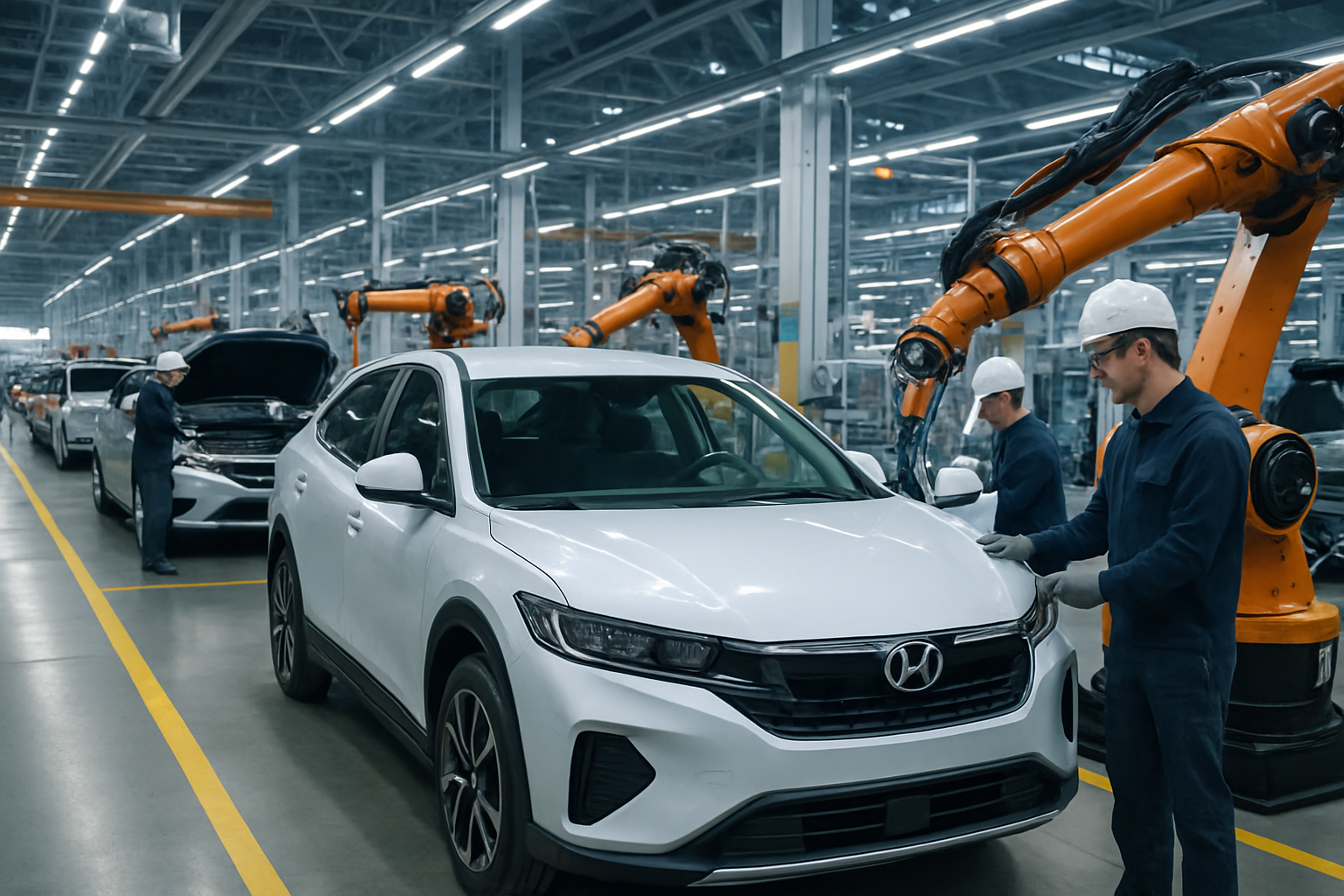
Hyundai Motor has emerged as the leader among foreign automakers fighting for market share in China's electric vehicle sector, launching a specialized Ioniq brand built around local technologies and strategic partnerships as the company reverses years of declining sales in the world's largest automotive market.
The South Korean manufacturer, which successfully reversed a six-year sales decline in 2025, announced it will soon introduce production models under the newly launched Ioniq brand specifically tailored for Chinese consumers. This marks a significant strategic pivot as Hyundai steps up its push into the competitive Chinese EV landscape.
Strategic Brand Evolution for Chinese Market
The newly launched Ioniq brand in China represents more than just a product line extension – it signals Hyundai's commitment to developing electric vehicles that address the specific preferences and requirements of Chinese consumers. This localization strategy comes as foreign automakers face intense pressure from domestic Chinese manufacturers who have achieved significant technological breakthroughs in recent years.
Chinese EV manufacturers have set new industry standards with innovations like BYD's Megawatt Flash Charging technology, which delivers 400 kilometers of range in just 5 minutes, and advanced battery systems that function effectively in extreme cold weather conditions down to -30°C. These technological advances have forced international competitors to reconsider their approach to the Chinese market.
Multi-Purpose Vehicle Market Expansion
Beyond Hyundai's strategic moves, the global automotive industry is witnessing significant developments in multi-purpose vehicle segments. Egyptian automotive markets are showcasing new model launches for 2026, including the Forthing T5 model 2027, which represents the growing demand for versatile family vehicles that combine functionality with modern features.
The multi-purpose vehicle segment has become increasingly important as consumers seek vehicles that can serve multiple roles – from daily commuting to recreational activities and family transportation. This trend is particularly pronounced in emerging markets where vehicle ownership patterns differ significantly from mature automotive markets.
Supply Chain Challenges and Market Dynamics
The automotive industry continues to face significant supply chain challenges that are reshaping competitive dynamics globally. China maintains control over 60% of critical materials production and 90% of refining capacity for lithium, cobalt, and rare earth elements essential for electric vehicle manufacturing. This dominance creates both opportunities and vulnerabilities for international automakers seeking to compete in the EV space.
"The newly launched Ioniq brand in China evolves beyond a simple product offering to represent our commitment to understanding and serving Chinese consumer preferences in the electric mobility era."
— Hyundai Motor Representative
Memory chip shortages continue to affect the automotive industry, with semiconductor prices experiencing sixfold increases that are expected to persist until 2027 when new fabrication facilities come online. These challenges particularly impact vehicle control systems and advanced electronic features that consumers increasingly expect in modern vehicles.
Global Electric Vehicle Adoption Acceleration
The timing of Hyundai's Chinese market strategy coincides with unprecedented global acceleration in electric vehicle adoption. Recent data shows remarkable growth patterns, with Bolivia achieving 2,700% growth in electric vehicle adoption, far exceeding the global average of 40% growth. Meanwhile, Asia-Pacific markets continue to lead global EV sales with 11 million vehicles sold annually – nearly double the rest of the world combined.
Infrastructure development is accelerating to support this growth. Austria has doubled its EV charging capacity with 1,000 additional stations, while Estonia leads European markets with 88% renewable electricity and continental Europe's largest battery storage system serving 90,000 households. These infrastructure investments create the foundation for sustained electric vehicle adoption across different market conditions.
Technology Convergence and Innovation
Recent battery longevity studies have exceeded industry predictions, with Tesla Model S vehicles from 2012-2014 retaining 85-92% of their battery capacity after 200,000+ miles of operation. Similarly, Nissan Leaf vehicles from 2011-2013 maintain 75-85% capacity retention after a decade of use, suggesting practical battery lifespans of 15-20 years. These findings significantly improve the total cost of ownership calculations for electric vehicles and support robust used EV markets.
Vehicle-to-grid technology is advancing rapidly, enabling electric vehicles to serve as mobile energy storage systems. This capability allows EVs to charge during off-peak renewable energy generation periods and discharge electricity back to the grid during high-demand periods, providing additional economic benefits to owners while supporting grid stability.
Regional Manufacturing and Market Strategies
Automakers are increasingly implementing regional manufacturing strategies to reduce supply chain vulnerabilities and improve market responsiveness. Toyota's decision to produce the electric 2027 Highlander at its Princeton facility, targeting the three-row SUV segment against competitors like the Kia EV9 and Hyundai Ioniq 9, exemplifies this trend toward localized production for key markets.
These regional approaches reflect broader industry recognition that successful electric vehicle adoption requires coordination across energy systems, infrastructure development, materials supply chains, and regulatory frameworks. The complexity of this transformation represents one of the most significant industrial shifts in modern history.
Climate Context and Policy Implications
The automotive industry's electric transformation occurs against a backdrop of accelerating climate change. January 2026 marked the 18th consecutive month of global temperatures exceeding 1.5°C above pre-industrial levels, demonstrating that human-induced climate change is now overriding natural climate variability. This context emphasizes the urgency of transportation electrification as both an environmental and economic necessity.
Policy responses vary significantly across markets. Canada returned electric vehicle incentives under Prime Minister Mark Carney's $9.7 billion automotive strategy, while China has implemented comprehensive safety regulations, including a ban on hidden door handles effective January 2027 that prioritizes functional safety over aesthetic design.
Market Outlook and Strategic Implications
Hyundai's success in China could serve as a template for other foreign automakers seeking to compete effectively in the world's largest EV market. The company's approach of developing locally-focused brands while leveraging global technological expertise represents a balanced strategy for navigating complex international market dynamics.
The convergence of technological advancement, environmental urgency, economic incentives, and evolving consumer preferences is creating conditions for accelerated transformation across the automotive industry. Success in this environment requires sustained international cooperation, strategic technology and infrastructure investments, and adaptive management approaches that can respond to rapidly changing market conditions.
As the automotive industry continues its historic transformation toward sustainable mobility, companies like Hyundai that can successfully balance global technological capabilities with local market understanding are best positioned to thrive in the emerging electric vehicle landscape. The success of these strategies will significantly influence the pace and scope of global transportation electrification during this decisive decade for climate action.