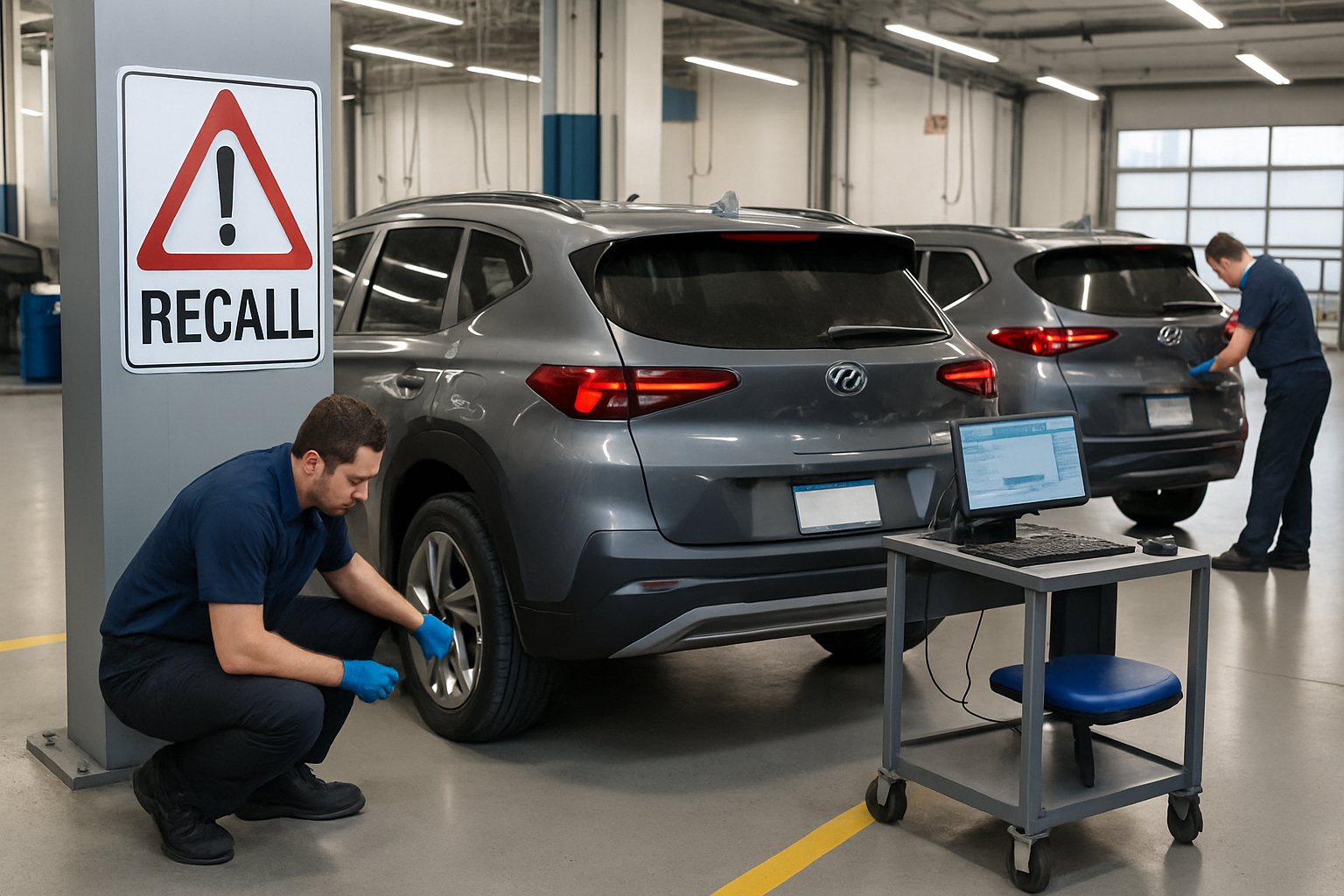
South Korean automotive giant Hyundai Motor has announced a significant recall of 69,060 three-row SUVs across the United States and Canada following critical safety concerns related to defective seat folding mechanisms that pose serious risks to passengers, particularly children.
The recall, affecting Hyundai's popular three-row SUV models, stems from a dangerous defect in the system designed to prevent second and third-row seats from folding onto occupants or objects. According to reports from AzerNews, the malfunction could result in serious injury or death, particularly to children who may be unable to escape from compromised seating areas.
Critical Safety System Failure
The defective mechanism represents a fundamental failure in automotive safety design. The affected vehicles' seat folding systems are supposed to include sensors and mechanical stops that prevent the seats from collapsing when passengers or objects are detected in their path. However, investigations have revealed that these protective systems can fail under certain conditions, creating potentially fatal scenarios.
Industry safety experts emphasize that such mechanical failures in family vehicles represent some of the most serious automotive safety concerns, as they directly impact the most vulnerable passengers - children and elderly individuals who may lack the physical capability to respond quickly to dangerous situations.
Tragic Precedent Drives Global Action
The Hyundai recall comes amid broader automotive industry scrutiny following recent child fatality incidents linked to vehicle safety system failures. The announcement specifically references a child's death, though detailed circumstances remain under investigation by safety authorities in both countries.
This tragedy echoes similar incidents that have prompted automotive manufacturers worldwide to reassess safety protocols for family-oriented vehicles. The incident has also triggered reviews by safety regulators in multiple countries, reflecting the global nature of automotive safety standards and the interconnected supply chains that affect vehicle safety worldwide.
Industry-Wide Safety Review
The Hyundai recall represents part of a broader pattern of automotive safety concerns that have emerged throughout 2026. Historical context from our investigation reveals that the automotive industry has faced unprecedented challenges this year, including supply chain disruptions, memory chip shortages causing sixfold price increases in vehicle control systems, and increasing regulatory pressure for enhanced safety standards.
China's recent announcement of a comprehensive ban on hidden door handles in vehicles, effective January 2027, demonstrates the global shift toward prioritizing functional safety over aesthetic design. This regulatory change affects major manufacturers including Tesla, BYD, NIO, and XPeng, who must now redesign vehicles to include mechanical release systems that function independently of electrical systems.
Technical Analysis of the Defect
According to automotive safety engineers familiar with the recall, the defective seat folding mechanism involves multiple potential failure points. The system typically relies on a combination of electronic sensors, mechanical locks, and hydraulic or pneumatic actuators to control seat movement safely.
When functioning properly, these systems should detect the presence of passengers or objects and prevent seat folding operations. However, the recalled vehicles may experience sensor malfunctions, mechanical component failures, or software glitches that override safety protocols.
Consumer Response and Legal Implications
The recall has prompted immediate action from consumer safety advocates who have long warned about the risks associated with complex mechanical systems in family vehicles. Legal experts suggest that affected families may pursue civil litigation against Hyundai, particularly in cases where injuries have occurred due to the defective systems.
The recall also raises questions about pre-market safety testing protocols and whether current automotive safety standards are adequate for increasingly complex vehicle systems. Consumer Reports has noted that electric vehicles and hybrid systems - which often feature more sophisticated electronic controls - have appeared prominently on lists of unreliable vehicles in 2026, including several Hyundai and Kia models.
Global Automotive Safety Context
The Hyundai recall occurs during what industry analysts describe as a critical period for automotive safety standards globally. The industry faces multiple simultaneous challenges: supply chain constraints affecting critical materials (with China controlling 60% of production and 90% of refining capacity for lithium, cobalt, and rare earth elements), technological transformation toward electric vehicles, and increasing regulatory pressure for enhanced safety measures.
Recent automotive industry developments include Toyota's major US recall affecting 550,000 Highlander and Highlander Hybrid vehicles due to defective second-row seat reclining mechanisms, demonstrating that seat-related safety issues affect multiple manufacturers and represent a broader industry challenge.
Manufacturer Response and Repair Procedures
Hyundai has announced that all affected vehicle owners will receive official recall notifications with detailed instructions for obtaining free repairs at authorized dealerships. The company has stated that replacement parts are available and that trained technicians will perform comprehensive inspections and repairs of the defective seat folding mechanisms.
The recall repair process is expected to involve complete replacement of the electronic control modules, sensor systems, and mechanical components associated with the seat folding mechanism. Hyundai estimates that repairs will take approximately 2-3 hours per vehicle and has committed to providing loaner vehicles where necessary.
Regulatory Oversight and Investigation
Safety regulators in both the United States and Canada have launched comprehensive investigations into the circumstances surrounding the recall. The National Highway Traffic Safety Administration (NHTSA) and Transport Canada are coordinating their efforts to ensure that all safety aspects of the defective systems are thoroughly examined.
These investigations will likely examine Hyundai's internal safety testing procedures, quality control processes, and the timeline of when the company first became aware of the defect. Such investigations typically result in recommendations for industry-wide improvements to prevent similar incidents.
Impact on Hyundai's Safety Reputation
The recall represents a significant challenge to Hyundai's reputation for safety and reliability, particularly as the company has been gaining market share in North America through its expanded SUV lineup and electric vehicle offerings. Hyundai's recent successes, including the Palisade SUV winning the 2026 Canadian Car of the Year Award, demonstrate the company's growing prominence in family vehicle segments.
Industry analysts note that how Hyundai handles this recall - in terms of communication transparency, repair efficiency, and preventive measures - will significantly impact consumer confidence in the brand's commitment to safety.
Broader Transportation Safety Crisis
The Hyundai recall occurs within the context of what safety experts describe as a global transportation safety crisis. Throughout 2026, multiple countries have experienced significant transportation-related fatalities, with motorcyclists alone representing 41% of traffic fatalities despite comprising a smaller percentage of road users.
Successful safety models include Sweden's Vision Zero approach, the Netherlands' Safe System design philosophy that accounts for human error, and Australia's urban speed management programs that have achieved significant fatality reductions. These models emphasize comprehensive approaches that combine technology, infrastructure improvements, and systemic safety thinking.
Future Implications for Automotive Safety
The Hyundai recall is expected to influence future automotive safety standards, particularly for family vehicles with complex mechanical systems. Safety experts predict that regulatory authorities will implement more stringent pre-market testing requirements for seat mechanisms, electronic control systems, and other safety-critical components.
The incident also highlights the importance of robust quality control processes as vehicles become increasingly complex with the integration of electric powertrains, autonomous driving features, and sophisticated electronic systems. As the industry transitions toward electrification - with January 2026 marking the 18th consecutive month of global temperatures exceeding 1.5°C above pre-industrial levels - maintaining safety standards during rapid technological change becomes increasingly critical.
Consumer Safety Recommendations
Automotive safety experts recommend that owners of affected Hyundai vehicles immediately contact their local dealerships to schedule recall repairs. Until repairs are completed, they advise extreme caution when operating seat folding mechanisms, ensuring that no passengers - particularly children - are in areas that could be affected by unexpected seat movement.
The incident serves as a reminder of the importance of regular vehicle safety inspections, staying informed about manufacturer recalls, and understanding the operation of complex vehicle systems, particularly in family vehicles where the safety of vulnerable passengers is paramount.
As the automotive industry continues its historic transformation toward electrification and increased automation, the Hyundai recall underscores the critical importance of maintaining unwavering focus on fundamental safety principles that protect human life above all other considerations.