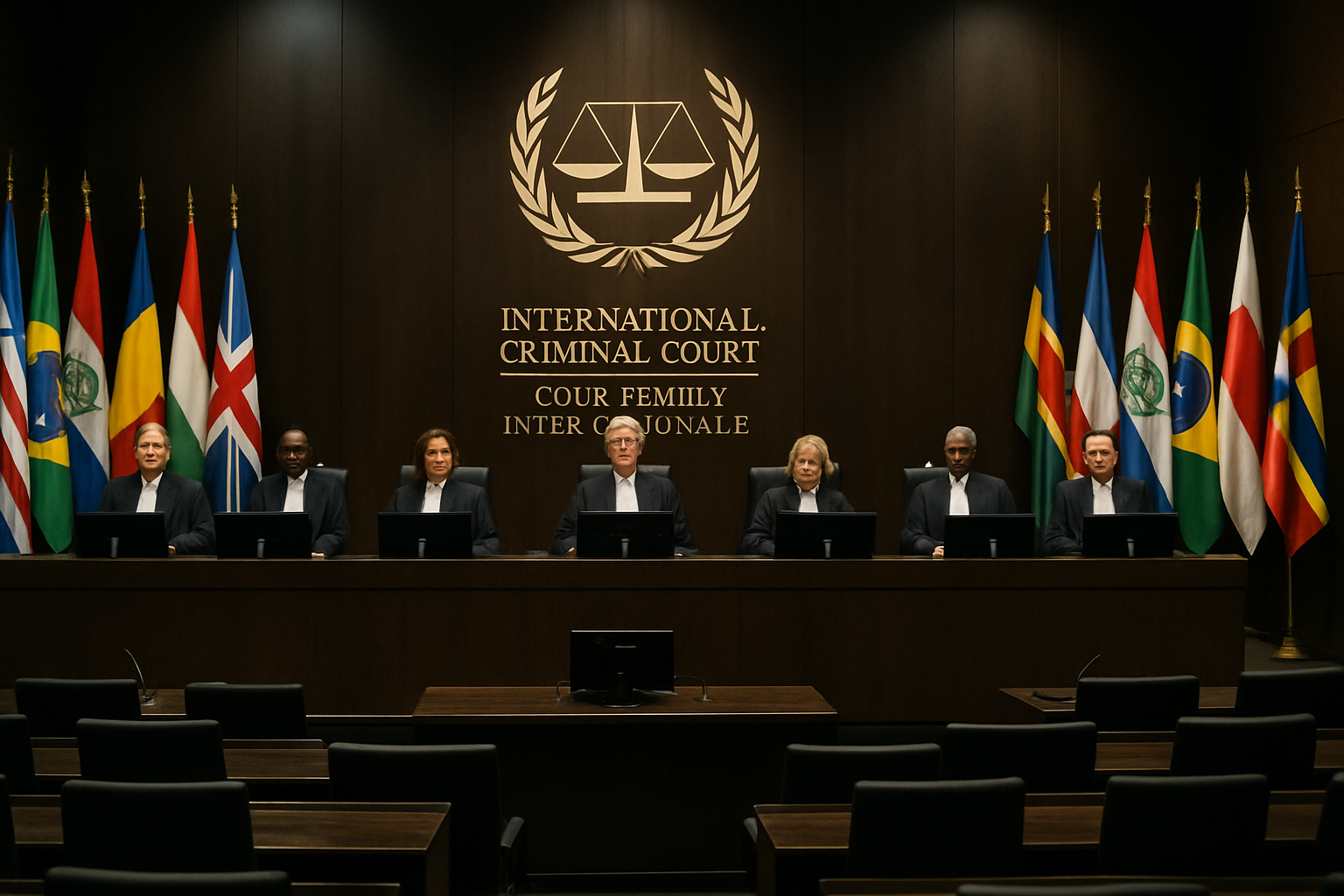
The International Criminal Court in The Hague has commenced historic hearings against former Philippine President Rodrigo Duterte, marking a watershed moment in international criminal justice as judges assess whether there are substantial grounds to proceed to full trial for crimes against humanity.
The proceedings, which began Monday February 23, 2026, represent the ICC's most significant case involving a Southeast Asian leader, with profound implications for accountability in the Philippines and the broader application of international criminal law. Duterte faces three counts of crimes against humanity allegedly committed during his tenure as both president and mayor of Davao City.
Victims Find Voice in International Forum
More than 500 victims have been granted participation rights in the proceedings, providing them with an unprecedented platform to seek justice after what they describe as years of systematic persecution. The hearings are taking place despite Duterte's absence from The Hague, as the former president has refused to participate in what he consistently characterizes as illegitimate proceedings.
The victims' participation represents a crucial development in international criminal law, allowing those most affected by alleged atrocities to have their voices heard directly by ICC judges. Legal observers note this victim-centered approach marks a significant evolution from earlier international tribunals that focused primarily on prosecutorial evidence.
"These proceedings offer hope for accountability after years of impunity," said Maria Santos, whose son was killed during anti-drug operations in 2017.
— Victim's testimony, ICC proceedings
Context of the Allegations
The charges stem from Duterte's controversial "war on drugs" campaign, which resulted in thousands of deaths during his presidency from 2016 to 2022. International human rights organizations have documented systematic killings, enforced disappearances, and torture allegedly carried out by Philippine security forces and vigilante groups during this period.
According to court documents, the prosecution alleges that Duterte's policies constituted a widespread and systematic attack against the civilian population, meeting the legal threshold for crimes against humanity under the Rome Statute. The case encompasses both his presidential tenure and his earlier period as mayor of Davao City, where similar policies were allegedly implemented.
The Duterte family continues to maintain significant political influence in the Philippines, with his daughter Sara Duterte serving as Vice President until her recent presidential campaign announcement. This ongoing political relevance makes the ICC proceedings particularly sensitive for Philippine domestic politics and international relations.
International Legal Significance
Legal experts emphasize that these hearings represent a critical test for the ICC's effectiveness in addressing alleged crimes by sitting or former heads of state. The court's ability to proceed despite non-cooperation from the accused and his government demonstrates the evolving strength of international criminal justice mechanisms.
The proceedings occur against a complex backdrop of Philippine relations with the international community. While current President Ferdinand Marcos Jr. has taken a more cooperative stance toward international institutions compared to Duterte's openly hostile approach, the Philippines officially withdrew from the ICC in 2019, though this does not affect the court's jurisdiction over crimes allegedly committed before that date.
The case also highlights broader questions about state sovereignty versus international accountability. The ICC's jurisdiction in this matter relies on the principle that the most serious crimes of international concern cannot go unpunished, even when national authorities are unwilling or unable to prosecute.
Regional and Global Implications
The Duterte hearings are being closely monitored throughout Southeast Asia, where several governments have implemented similar hard-line approaches to drug enforcement. The proceedings could establish important precedents for how international law applies to anti-narcotics policies that result in widespread civilian casualties.
Human rights organizations across the region view the case as a crucial test of whether international justice mechanisms can effectively address state-sponsored violence. The outcome could influence how other governments in the region balance domestic security policies with international legal obligations.
The proceedings also demonstrate the ICC's expanding reach into Asia, traditionally a region where international criminal justice has had limited penetration. Success in this case could encourage more Asian states to engage constructively with international accountability mechanisms.
Political Ramifications in the Philippines
Within the Philippines, the ICC proceedings remain deeply polarizing. Duterte maintains substantial popular support in many regions, particularly in Mindanao, where his tough-on-crime approach resonates with voters concerned about security and order. His supporters view the ICC case as foreign interference in Philippine domestic affairs.
However, human rights advocates and families of victims see the proceedings as their best hope for accountability after years of what they characterize as systematic impunity. The Philippine judicial system, they argue, has been unable or unwilling to adequately investigate and prosecute those responsible for alleged crimes.
The political implications extend beyond Duterte himself to the broader Philippine political landscape. Sara Duterte's presidential ambitions could be affected by the proceedings' outcome, particularly if they result in damaging revelations about the family's political methods and governance approach.
Legal Challenges and Procedural Issues
The ICC faces significant challenges in prosecuting a case involving a former head of state who refuses to cooperate. Gathering evidence, securing witness testimony, and ensuring victim protection all become more complex when the accused government and its successors provide limited assistance.
Prosecutors must rely heavily on documentary evidence, witness statements collected by international investigators, and testimony from victims and civil society organizations. The court has developed sophisticated procedures for handling non-cooperation, but such cases inevitably face greater evidentiary challenges.
The hearings will determine whether prosecutors have assembled sufficient evidence to meet the court's standard for proceeding to full trial. Judges must find reasonable grounds to believe that crimes within the court's jurisdiction were committed and that the accused bears individual criminal responsibility.
International Support and Opposition
The proceedings have drawn support from major human rights organizations and several governments that view them as essential for upholding international criminal law. The European Union, traditional allies of the Philippines, and international legal scholars have generally endorsed the ICC's jurisdiction and approach.
However, some governments, particularly in Asia, remain skeptical of international criminal justice mechanisms, viewing them as potentially undermining state sovereignty. China and several ASEAN members have expressed concerns about external interference in domestic governance matters.
The United States, while not an ICC member, has taken a measured approach, supporting accountability for serious international crimes while maintaining concerns about the court's potential overreach. This complex international dynamic affects both the political context of the proceedings and their potential impact.
Looking Forward
The current hearings are expected to continue for several weeks as judges evaluate the evidence and legal arguments presented by prosecutors. Their decision on whether to authorize full proceedings will likely come within months and will be closely scrutinized by legal experts, government officials, and civil society organizations worldwide.
If authorized, a full trial could take years to complete and would represent one of the ICC's most high-profile cases. Such proceedings would likely generate sustained international attention and could influence both Philippine domestic politics and broader international approaches to criminal accountability.
For the victims participating in the proceedings, the hearings represent their first opportunity to seek formal justice through international mechanisms. Regardless of the ultimate outcome, their participation marks a significant milestone in the evolution of victim-centered approaches to international criminal justice.
The Duterte case thus stands as more than a single accountability proceeding – it represents a critical test of whether international criminal justice can effectively address allegations against powerful political figures in an increasingly complex global political environment.