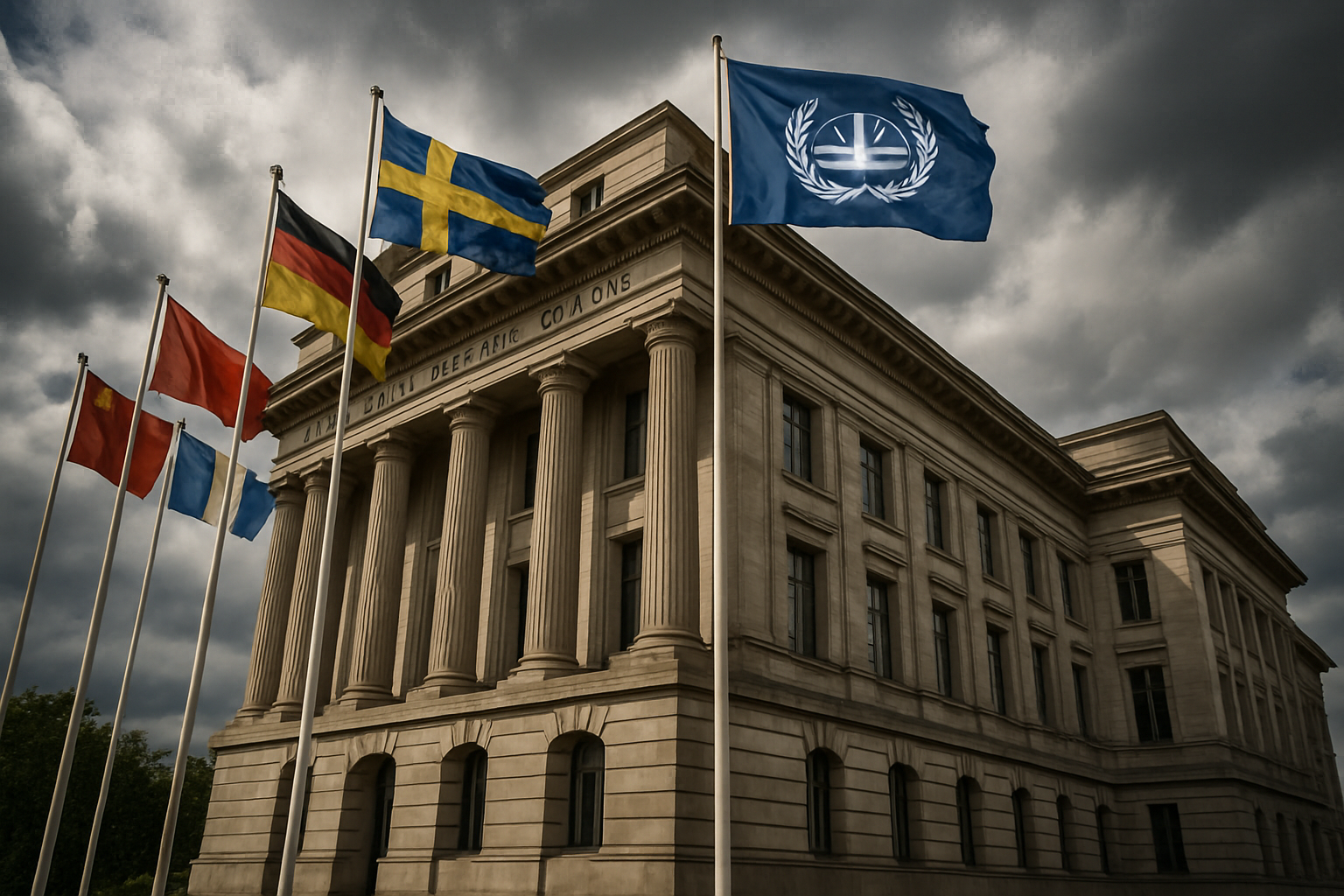
The International Criminal Court Appeals Chamber delivered a decisive blow to former Philippine President Rodrigo Duterte's legal strategy on Wednesday, April 22, rejecting all grounds raised in his petition to dismiss crimes against humanity charges on jurisdictional grounds, clearing the path for a potential trial that could reshape international criminal law in Southeast Asia.
The Appeals Chamber's ruling represents the removal of what legal experts describe as "the last roadblock" to proceedings against Duterte for systematic killings during his controversial "war on drugs" campaign from 2016-2022, as well as earlier allegations during his tenure as Davao City mayor. The decision elicited applause from victims of the drug war who gathered tearfully at the University of the Philippines in Quezon City to listen to the historic hearing.
Final Legal Corner Exhausted
The chamber voted separately on various issues, with unanimous decisions on most matters and only one dissenting vote from Judge Gocha Lordkipanidze of Georgia—the same judge who dissented in similar 2023 proceedings. The comprehensive rejection of Duterte's jurisdictional challenge means, in the words of legal observers, "there's no other legal corner to turn to now."
Duterte's defense team had challenged the ICC's authority to proceed, citing the Philippines' withdrawal from the Rome Statute in 2019. However, the court maintained its jurisdiction over crimes allegedly committed before the withdrawal, upholding the principle that state parties cannot escape accountability for pre-existing violations through strategic departures from international treaties.
Unprecedented Victim Participation
The proceedings have been marked by the largest victim participation in ICC history, with over 500 victims granted formal participation rights. This represents an evolution from the court's earlier prosecutorial-focused approach to a more victim-centered model of international justice. The participants include families of those killed in anti-drug operations, communities affected by vigilante killings, and civil society organizations that documented alleged violations.
"This is a historic moment for all those who have suffered under systematic violence masquerading as law enforcement policy."
— Legal Observer at University of the Philippines
The breadth of victim participation reflects the scope of allegations against Duterte, which prosecutors characterize as a "widespread and systematic attack against the civilian population" meeting the threshold for crimes against humanity under the Rome Statute.
Case Background and Evidence
The charges stem from Duterte's "war on drugs" campaign during his presidency (2016-2022) and earlier allegations from his time as Davao City mayor. Prosecutors allege Duterte played a "pivotal" role in systematic murders, enforced disappearances, and torture carried out by security forces and vigilante groups.
The prosecution's case relies on documentary evidence, international investigations, victim testimonies, and civil society documentation, as Duterte has refused to participate in the proceedings, calling them "illegitimate." This non-cooperation has forced prosecutors to develop innovative evidence-gathering techniques that may serve as templates for future international criminal cases.
Three Counts of Crimes Against Humanity
Duterte faces three counts of crimes against humanity involving murder, spanning both his presidential term and his earlier period as Davao City mayor. The prosecution alleges these represent only a "fraction of the real death toll" from policies that systematically targeted perceived drug users and dealers.
Political Ramifications
The legal proceedings continue to cast a shadow over Philippine politics, particularly affecting Vice President Sara Duterte, Rodrigo's daughter, who announced her candidacy for the 2028 presidential election. She has framed the ICC proceedings as "foreign interference" in Philippine affairs, though current President Ferdinand Marcos Jr. has taken a more cooperative stance with international institutions.
The Duterte family maintains significant influence, especially in the Mindanao region, but the ongoing ICC proceedings have become increasingly polarizing within Philippine society. The case represents a critical test of whether international criminal law can effectively address alleged state-sponsored violence in democratic societies.
Regional and International Implications
The case is being closely monitored throughout Southeast Asia, where several governments have implemented similar hard-line anti-narcotics policies. Legal experts suggest the proceedings could establish crucial precedents for international law's application to state anti-narcotics campaigns that result in civilian casualties.
The European Union and human rights organizations have expressed support for the proceedings as upholding international criminal law, while some Asian governments have viewed the case skeptically as potentially undermining sovereignty. The United States has maintained a measured approach, supporting accountability while expressing concerns about potential judicial overreach.
Path Forward to Trial
With the jurisdictional challenge now definitively resolved, the case moves toward potential trial proceedings. If prosecutors meet the evidentiary threshold during confirmation hearings, a full trial could commence—potentially lasting years as one of the ICC's most high-profile cases.
The trial would likely proceed in absentia given Duterte's stated refusal to participate. This scenario would test the ICC's ability to conduct meaningful proceedings without the accused's cooperation, while demonstrating the court's commitment to accountability regardless of a defendant's participation.
Evidence Gathering Challenges
The prosecution faces significant challenges in evidence gathering given the Philippine government's non-cooperation under Duterte's presidency. However, investigators have developed sophisticated methodologies combining digital forensics, satellite imagery, witness testimony, and civil society documentation to build their case.
Historical Significance
The proceedings represent the first potential prosecution of a Southeast Asian leader for crimes against humanity, marking a watershed moment for international criminal law in the region. The case tests the ICC's effectiveness in addressing powerful political figures and its ability to deter future state-sponsored violence.
For international justice advocates, the ruling demonstrates the persistence of legal accountability even when faced with non-cooperation and political resistance. The extensive victim participation and innovative prosecution methods may influence how future international criminal cases are conducted.
Looking Ahead
The coming months will be crucial as judges determine whether substantial grounds exist for proceeding to full trial. The decision will not only affect Duterte's legal fate but could influence the trajectory of Philippine politics and set important precedents for international criminal law's evolution in the 21st century.
As victims and their families await the next phase of proceedings, the April 22 ruling stands as a significant milestone in the long journey toward accountability for alleged systematic violence. The ultimate resolution of this case will likely influence both the development of international criminal law and the ongoing debate over sovereignty versus accountability in an interconnected world.